


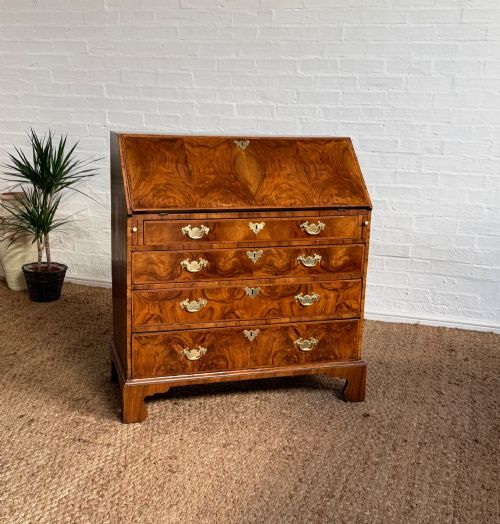
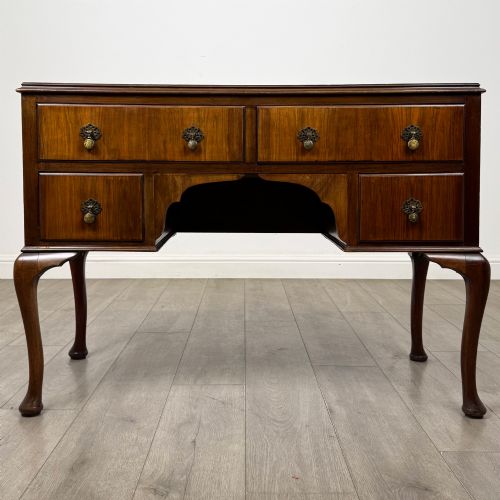
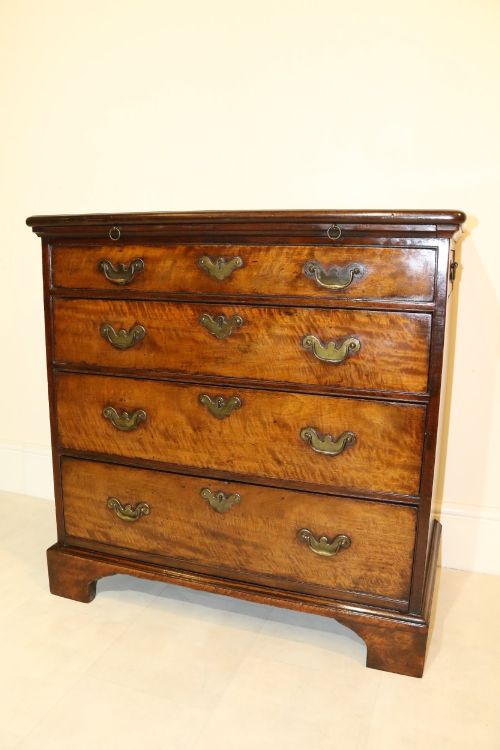
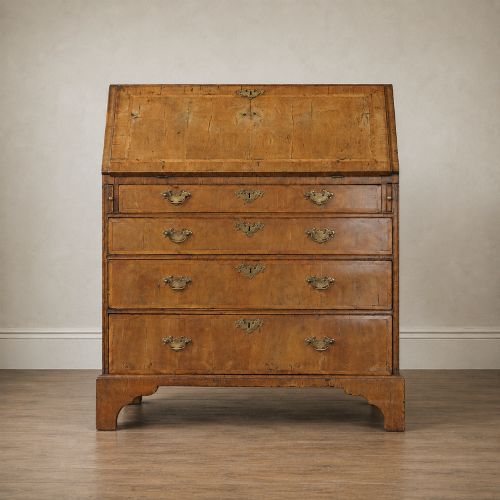
Walnut Bureau Drawers
Walnut bureau drawers combine functional writing compartments and deep storage, spanning 18th-century Georgian craftsmanship through to later Edwardian interpretations.
Walnut Bureau Drawers
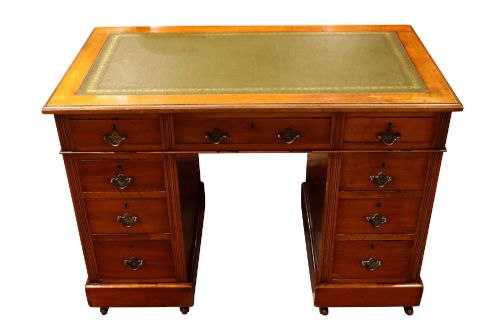
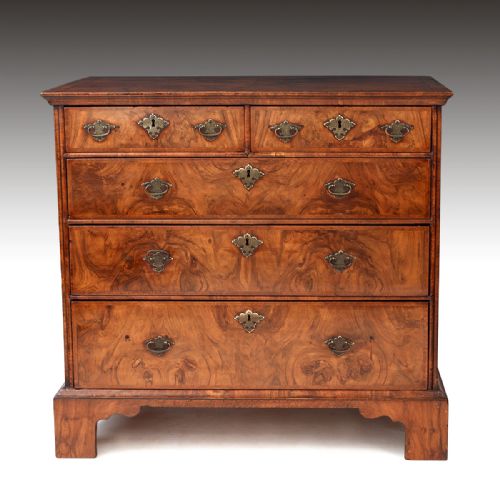
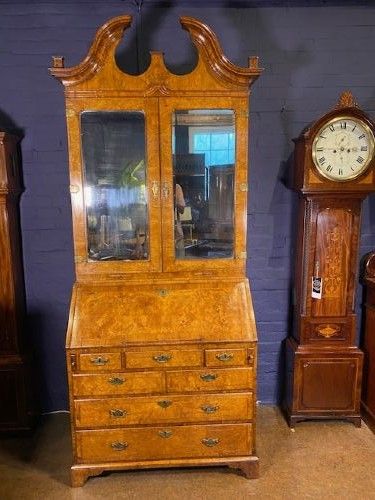
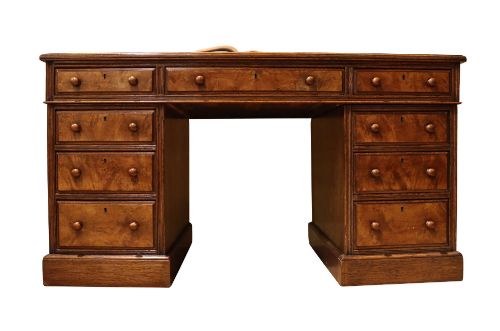
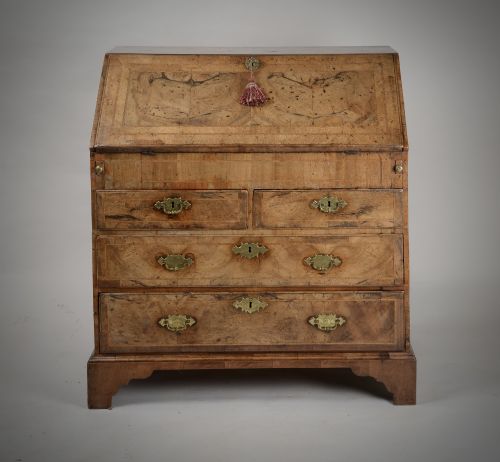
When people search for walnut bureau drawers, they are typically looking at a diverse group of writing cabinets, fall-front bureaux, and chests of drawers incorporating dedicated writing surfaces. These pieces range from early 18th-century Queen Anne and George I examples to later Victorian, Edwardian, and 1930s reproductions or adaptations. The forms encompass everything from compact kneehole desks and bachelor's chests to towering bureau bookcases and serpentine chests of drawers.
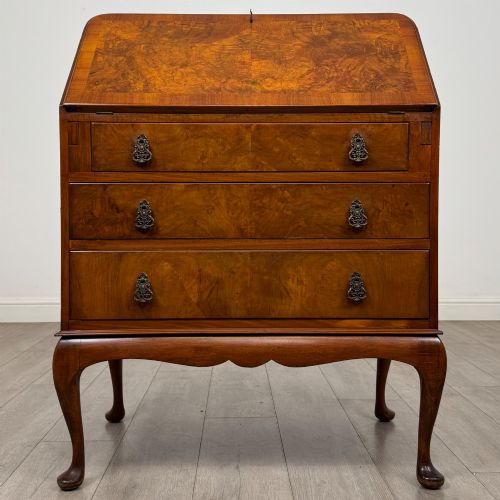
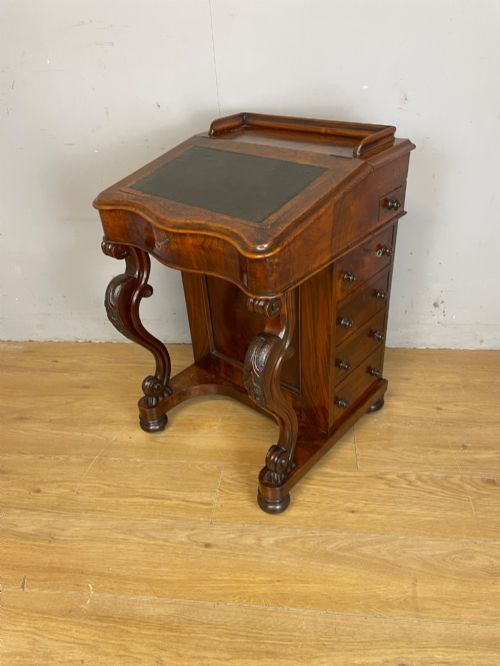
The most common pieces to meet on this page are 18th-century figured walnut bureaux alongside later Edwardian and 1930s burr walnut chests and desks. Bureau bookcases and fall-front writing cabinets appear frequently, reflecting the enduring demand for dual-purpose furniture that conceals pigeonholes and secret compartments behind a sloping lid. Buyers also encounter pedestal desks and Davenport desks featuring rich timber grains and fitted leather writing surfaces.
Materials and Construction
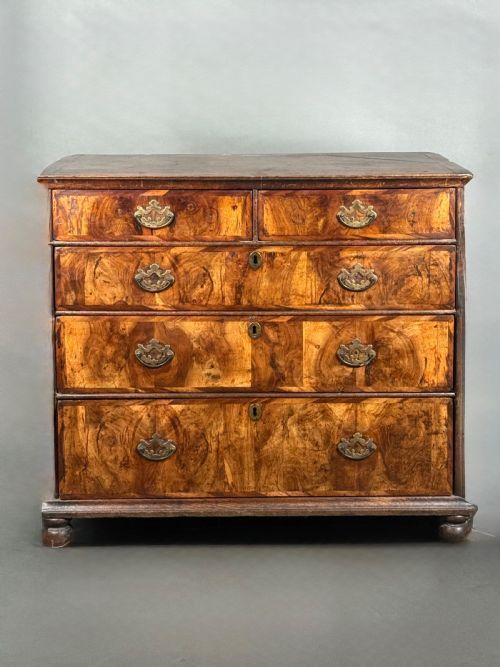
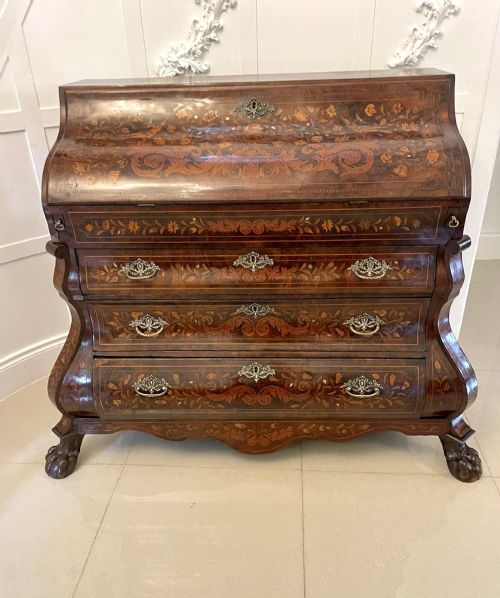
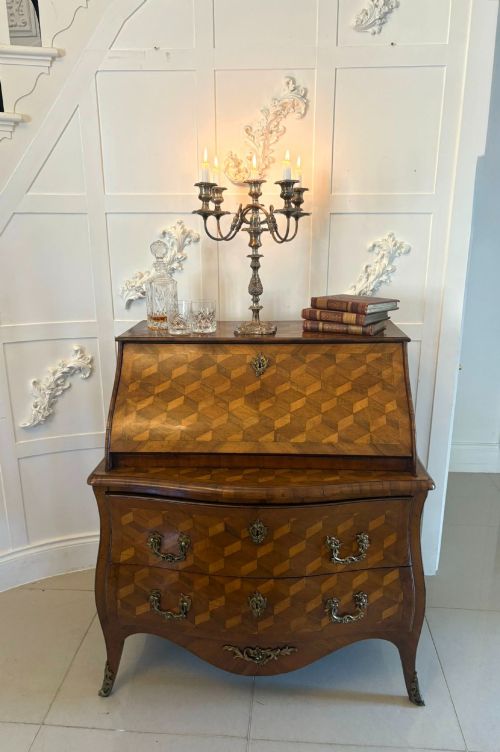
Cabinetmakers constructed these pieces primarily using solid oak or fruitwood carcases overlaid with carefully selected walnut veneers and burr walnut, which created dynamic, highly figured grain patterns across the front of the drawers. Timber selection was paramount, allowing craftsmen to utilise matching veneers for book-matching or symmetrical decorative effects. Floral marquetry and parquetry inlay further enhanced the external surfaces on specialised continental and English pieces.
Secondary materials played a crucial structural and decorative role, with brass drop handles, escutcheons, and bracket or cabriole feet completing the assembly. Leather inserts appeared frequently on the writing surfaces of desks and fall-front drawers, while glass and mirror glass featured in the upper doors of bureau bookcases. Joinery techniques included dovetail joints for the drawer construction and intricate internal partitions for secret compartments.
Some antique bureaux include hidden spring-release compartments designed for stashing private letters and small valuables.
Assessing Quality and Execution
The standard of walnut bureau drawers is defined by the depth and movement of the timber grain, particularly the use of highly figured burr walnut or meticulous marquetry inlay across the fall front and drawer faces. Superior pieces display seamless veneer matching and careful preservation of original patination, whereas lesser examples may show heavy restoration, replacement hardware, or flat timber surfaces lacking visual texture.
The Walnut Bureau Drawers Glossary
- Bureau
- A sloping front desk that opens to reveal a writing surface and internal pigeonholes. These often sit above multiple graduated drawers.
- Burr Walnut
- Timber taken from the gnarled growths of a walnut tree, prized for its swirling, highly decorative grain patterns.
- Marquetry
- Decorative veneer patterns formed by fitting together small pieces of different woods, sometimes incorporating floral or geometric motifs.
- Kneehole Desk
- A compact pedestal desk featuring a central recess for the user's legs, flanked by banks of small drawers.
- Fall Front
- A hinged writing flap that drops down to a horizontal position to serve as a desk surface.
Walnut Bureau Drawers: Frequently Asked Questions
What is inside a walnut bureau?
Opening the fall front reveals an arrangement of small pigeonholes, decorative small drawers, and occasionally hidden compartments known as secret drawers.
Beneath this fitted interior, multiple external drawers provide functional storage for documents and household items.
How do I identify a Georgian bureau?
Georgian pieces typically display straightforward proportions, finely figured walnut veneers, and solid oak drawer linings with hand-cut dovetails.
They often feature bracket feet and traditional brass hardware that reflect the aesthetic standards of the 18th century.
Where should I place a bureau?
These pieces suit living rooms, studies, or hallways where their compact footprint and fold-down writing surface can be utilised daily.
Keep them away from direct sunlight and strong heat sources to protect the delicate walnut veneer and leather inserts.
What is a bureau bookcase?
A bureau bookcase combines a lower writing bureau with an upper glazed cabinet designed for storing books and displaying decorative items.
This taller form was popular in the 18th century as a space-saving piece of multi-functional furniture.