


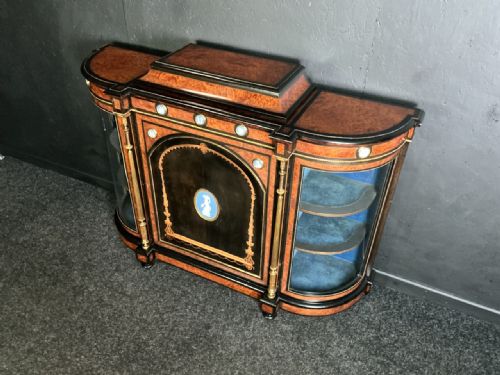
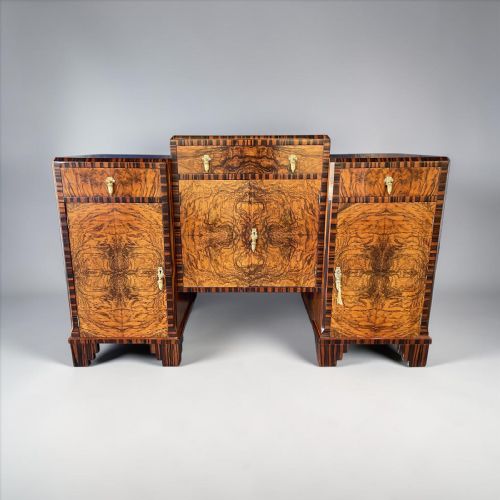
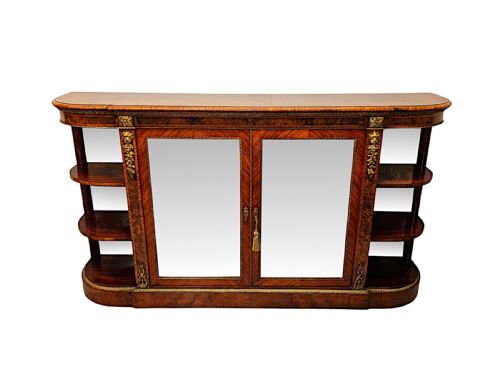
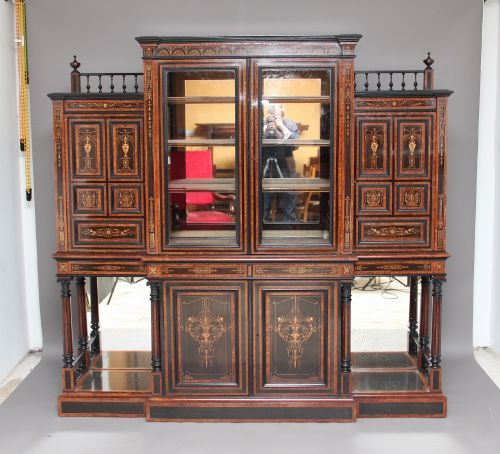
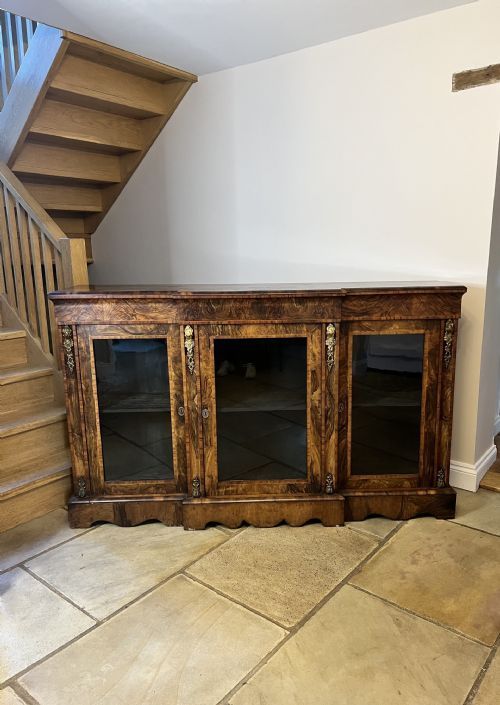
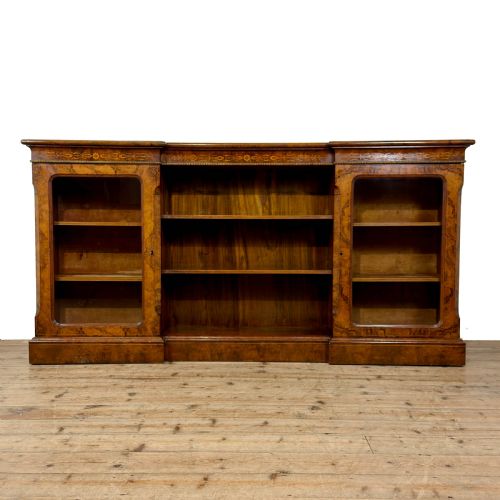
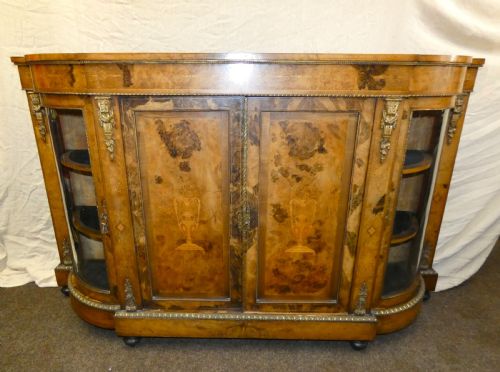
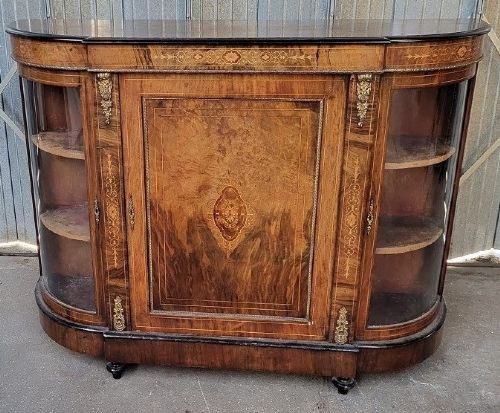
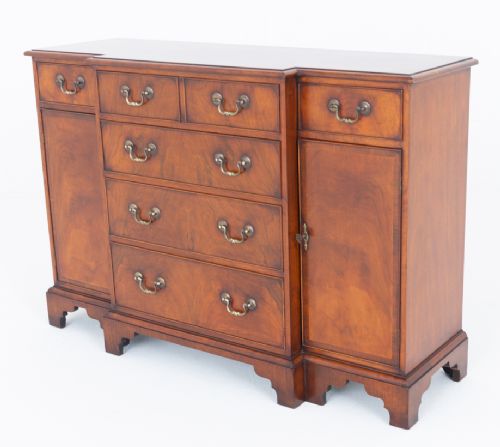
Walnut Breakfront Credenza
A walnut breakfront credenza is a statement cabinet combining rich burr veneers and glass display space, prized for anchoring a formal room.

Walnut Breakfront Credenza
A walnut breakfront credenza is primarily defined by its prominent central section that projects forward from recessed flanking cabinets, creating a distinct architectural profile. These sophisticated pieces emerge chiefly from Victorian workshops spanning the mid-to-late nineteenth century, though variations extend into the twentieth century with Art Deco and revival styles.
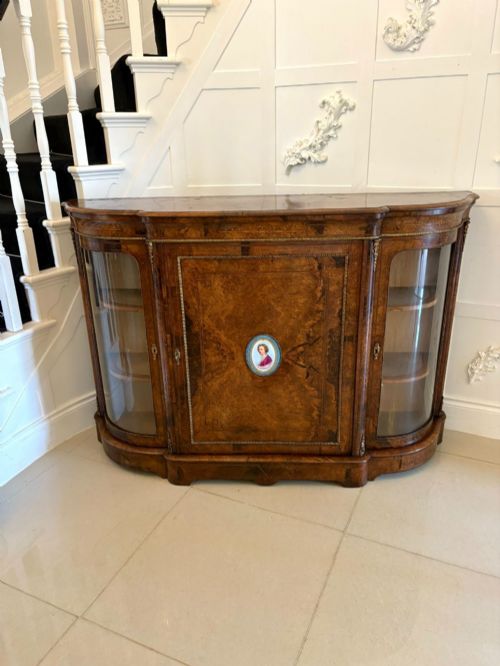
Buyers encountering this selection will most frequently meet nineteenth-century Victorian examples constructed in figured burr walnut, often housing central glazed doors flanked by curved side cabinets. Alongside standard credenzas, the inventory encompasses related breakfront forms such as display cabinets, bookcases, and sideboards sharing the characteristic multi-tiered facade.
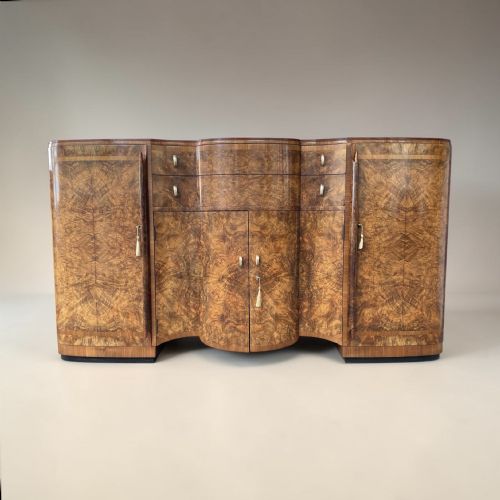
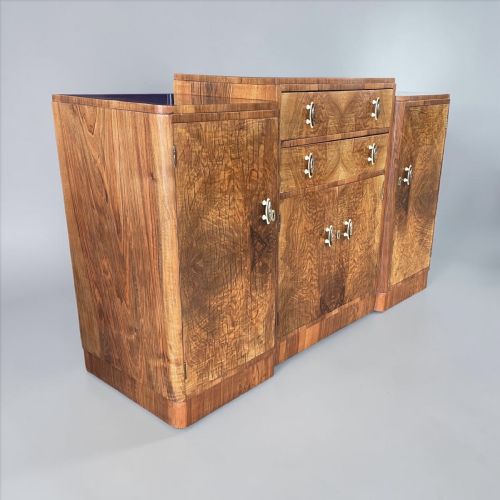
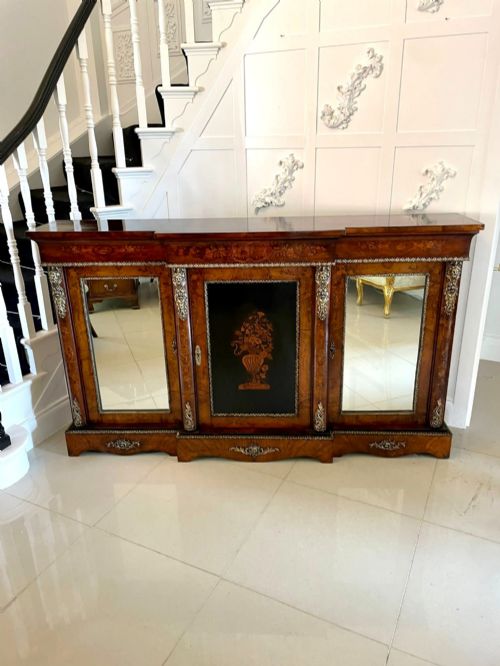
The stylistic lineage stretches from austere mid-Victorian marquetry pieces to ornate iterations mounted with ormolu, porcelain plaques, and intricate boxwood stringing. Later twentieth-century interpretations introduce streamlined Art Deco sideboards and Georgian Revival bookcases, broadening the scope beyond traditional nineteenth-century credenzas.
How They Were Made
Cabinetmakers built these pieces using substantial timber carcasses faced with highly figured burr walnut veneers selected for their swirling grain patterns. Artisans applied delicate boxwood and satinwood inlays using marquetry techniques to form geometric or floral motifs across the expansive door panels and friezes.
Mounts cast in ormolu and applied porcelain plaques served as decorative highlights, framing the central doors and accentuating the architectural breakfront silhouette. Glass panels, often leaded or glazed within timber frameworks, were fitted to display compartments designed to showcase precious collections.
Walnut Breakfront Credenza Retail Price Guide 2026
Typical asking prices for walnut breakfront credenza among the pieces listed under this phrase on Sellingantiques today, from the lower quarter to the upper quarter. They describe what is for sale here now, not the wider market.
Listings feature walnut breakfront credenzas spanning the Victorian, Edwardian, and Art Deco periods, utilising materials such as ormolu, porcelain, and velvet.
What Varies in Quality
The calibre of a walnut breakfront credenza rests heavily on the selection and symmetry of the burr walnut veneers, where book-matched grain creates a harmonious visual rhythm across the doors. Superior examples display meticulous hand-cut marquetry and crisp, fire-gilded ormolu mounts rather than mass-produced cast metal elements.
Structural integrity and internal fittings distinguish the finest iterations, particularly those retaining original velvet linings, functional brass locks, and specialised internal drawers like fitted secretaires. Cabinet-making finesse is evident in the seamless movement of curved doors and the tight tolerances of the breakfront joints.
Maurice Adams·Gillows·Lamb of Manchester·Gillow·Maple & Co.
The Walnut Breakfront Credenza Glossary
- Breakfront
- An architectural furniture design where the central section projects forward from the flanking outer cabinets. This configuration adds depth and visual rhythm to large credenzas and bookcases.
- Burr Walnut
- A specialised wood cut from walnut tree growths, producing swirling, knotty grain patterns highly prized for decorative veneer work. It forms the primary visual surface on nineteenth-century credenzas.
- Ormolu
- Gilded bronze or brass ornamentation applied to furniture for decorative contrast. High-quality mounts are finely chased and fire-gilded to achieve a rich metallic lustre.
- Marquetry
- The art of applying small pieces of veneer to a structure to form decorative patterns or pictures. Craftsmen utilise contrasting woods like boxwood and satinwood to create detailed floral designs.
- Secretaire
- A writing drawer or compartment integrated into a cabinet's interior, often dropping down to reveal small pigeonholes and leather surfaces. Its presence denotes a multi-functional piece intended for a library or drawing room.
Walnut Breakfront Credenza: Frequently Asked Questions
Where were walnut credenzas placed?
These large cabinets typically stood against the main wall of a Victorian drawing room or formal dining parlour. Their primary function was both decorative, displaying porcelain and glassware behind glass panels, and practical, offering concealed storage.
Because of their substantial length and projecting central section, they required generous wall space away from direct sunlight to protect the walnut veneer and polished finish from fading.
How do I identify a Victorian credenza?
Victorian examples frequently showcase figured burr walnut veneers paired with elaborate boxwood marquetry and cast ormolu mounts. Many feature a serpentine or breakfront outline with curved side cabinets enclosing velvet-lined shelving.
Examining the interior construction, drawer linings, and backboards reveals the hand-craftsmanship typical of nineteenth-century workshops before mass production standardised cabinet making.
Can I use a breakfront bookcase for storage?
The deep lower cupboards and adjustable shelving inside these cabinets offer substantial room for books, linens, or modern household items. The central breakfront section usually provides the deepest storage capacity.
Care should be taken not to overload antique timber shelves, and the interior environment should remain stable to protect delicate veneer and antique glass.