



Walnut Box Toilet Mirror
A walnut box toilet mirror sits on a dressing table, offering a glass surface to check your reflection while housing small valuables in its fitted base.
Walnut Box Toilet Mirror
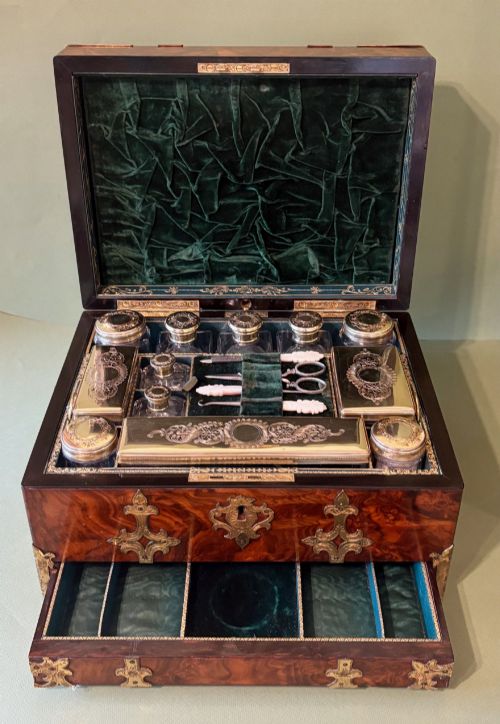
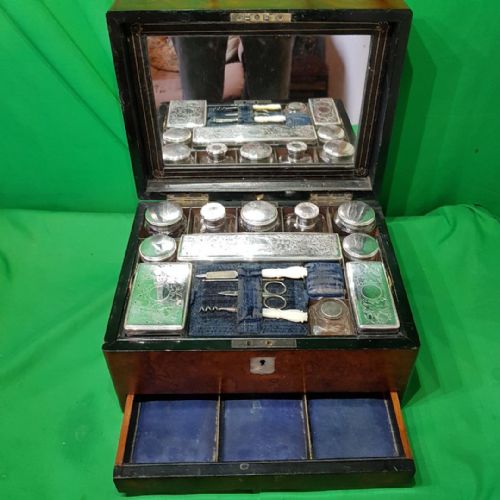
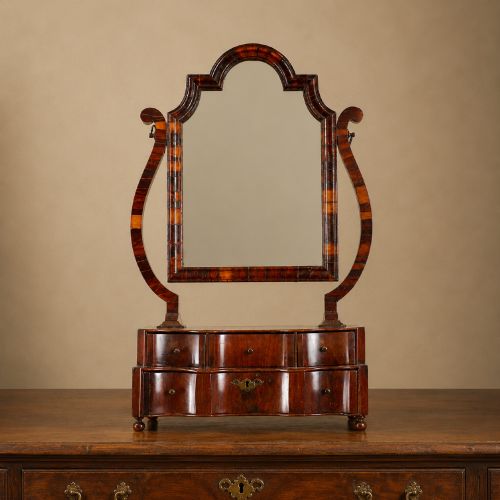
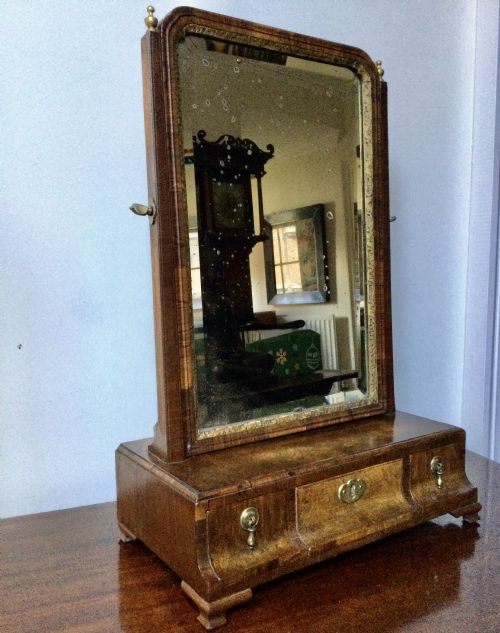
A walnut box toilet mirror combines a small swing mirror with a box base containing drawers or compartments. You will encounter examples spanning the eighteenth and nineteenth centuries, with forms ranging from Queen Anne and Georgian periods to Victorian interpretations.
The objects appear under several names in the listings, including dressing table mirrors, dressing glasses, and dressing cases. Eighteenth-century pieces dominate the selection, often featuring simple box stands, while later nineteenth-century versions introduce marquetry and travel compartments.
How they were made
Cabinetmakers constructed the frames and box bases using solid walnut or burr walnut veneers applied to secondary timbers. Glass mirror plates were silvered by hand and held within adjustable wooden frames supported by upright arms.
Brass fittings such as swing screw knobs, hinges, and escutcheons secure the moving parts and drawer fronts. Some pieces incorporate detailed marquetry work or contrasting stringing lines in woods like laburnum.
The listings feature walnut box toilet mirrors primarily from the Georgian and Victorian eras, incorporating materials such as brass, giltwood, and velvet.
What varies in quality
The choice of timber grain defines the visual appeal, particularly where figured burr walnut or patterned marquetry is selected for the box base. Finer examples maintain crisp mouldings and well-proportioned mirror frames that balance the weight of the base.
Original mirror glass and period brass hardware contribute to the integrity of a piece. The precision of the drawer dovetails and the smooth operation of the swing mechanism separate standard workshop output from exceptional cabinetwork.
The Walnut Box Toilet Mirror Glossary
- Burr walnut
- A prized wood veneer showing knotted growth patterns that create swirling, decorative textures across the surface. Cabinetmakers utilised this timber for prominent panels on high-status boxes and furniture.
- Swing mirror
- A glass plate mounted on pivots between two upright posts, allowing the user to tilt the angle of reflection. This assembly sits directly on top of the storage box.
- Marquetry
- Inlays of patterned wood veneers forming decorative scenes or geometric motifs across the cabinet exterior. Dutch makers applied this technique to several eighteenth-century examples.
- Escutcheon
- A protective metal plate surrounding a keyhole on the drawer front of the box base. These fittings are typically cast in brass.
Walnut Box Toilet Mirror: Frequently Asked Questions
How do I date a walnut toilet mirror?
Examine the construction methods of the box base, including the dovetails and the type of secondary wood used inside the drawers. Eighteenth-century examples generally display simpler lines and hand-cut joints compared to Victorian revivals.
Look closely at the mirror plate and the brass hardware. Replacement glass and modern screws are common, whereas original bevelled glass and period swing pins indicate earlier manufacture.
What is the difference between a dressing mirror and a toilet mirror?
The terms are often used interchangeably in historical descriptions to denote a portable mirror designed for a dressing table. Both types combine a swinging glass frame with a low wooden stand or box.
Some variations include small drawers for cosmetics or jewellery, occasionally described as dressing cases or bureau mirrors when incorporating a slant-front writing compartment.
Where should I place a box mirror in my home?
These mirrors function well on top of a chest of drawers, a side table, or a dedicated dressing surface. Their compact box bases require minimal surface area while providing small storage compartments.
Keep them away from direct sunlight and damp environments to protect the walnut veneer and the silvered backing of the glass plate.
Are the mirror plates usually original?
Many surviving pieces retain their original glass, which can exhibit light foxing, minor silver loss, or subtle distortion. These characteristics reflect the age and manufacturing methods of early mirror production.
When a mirror plate appears exceptionally clear and lacks any signs of age, it has likely been replaced during the long history of the object.