
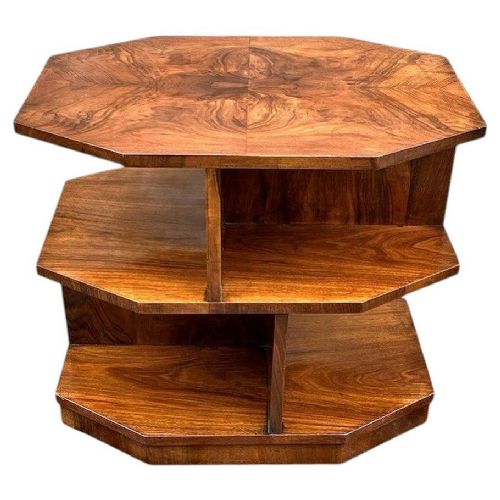
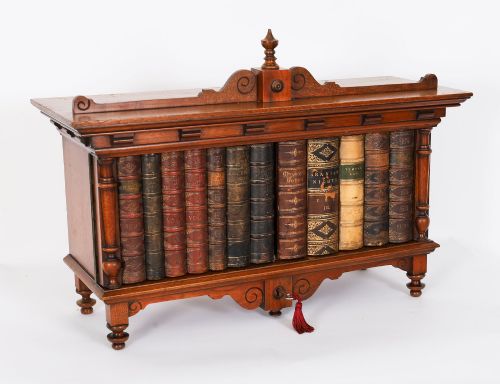
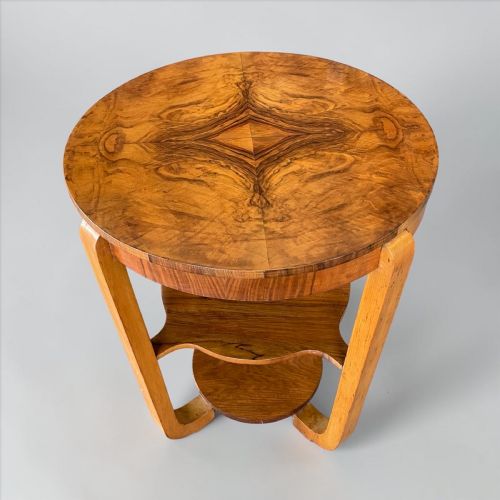
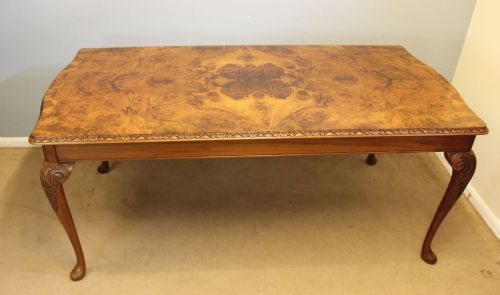


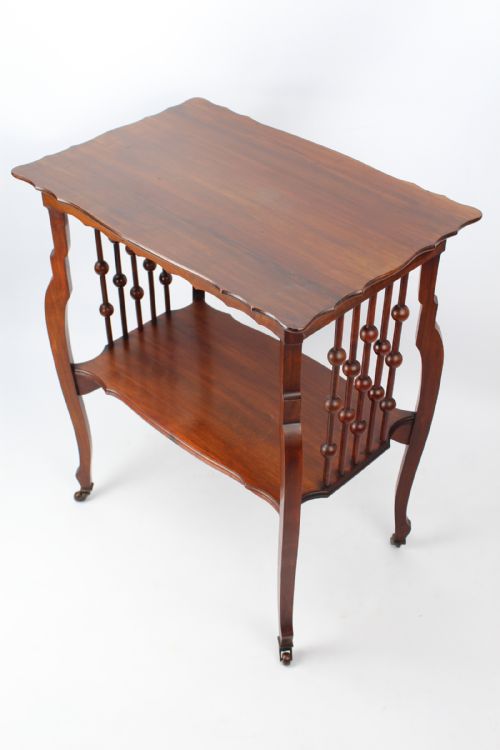


Walnut Book Table
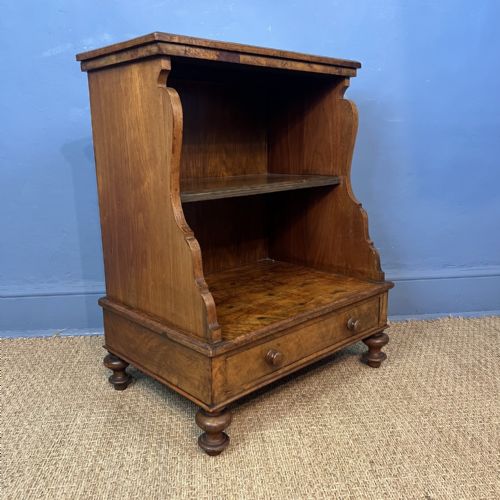
A walnut book table brings together a practical surface for reading and storage for volumes, spanning periods from the Georgian era through to Art Deco.
Walnut Book Table
A walnut book table serves as both a functional reading surface and an integrated storage piece for volumes, appearing across periods from the Georgian era to the mid-twentieth century. These pieces combine timber surfaces with built-in shelving, rotating bookstands, or lower tiers designed to hold reading material close at hand.
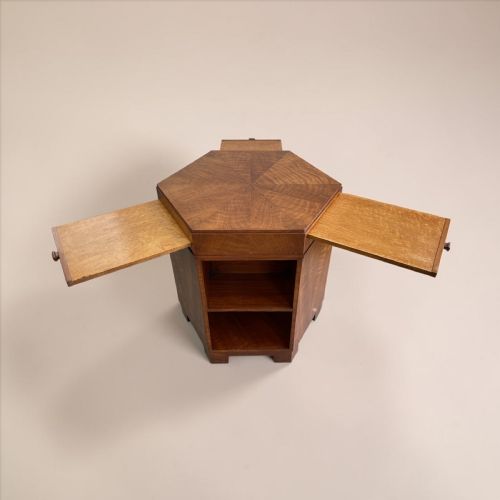
Buyers browsing this selection encounter various formats, most notably Victorian revolving book tables and Art Deco sectional or drum designs. The inventory also includes bedside cabinets, occasional tables, and library tables incorporating walnut timber alongside brass details or marquetry.
Originating primarily from British and French workshops, these items reflect the shifting domestic habits of the nineteenth and early twentieth centuries. Whether rotating for easy volume selection or standing with fixed open shelves, each piece addresses the storage of books within domestic sitting rooms and studies.
How they were made
Construction relies heavily on solid walnut and burr walnut veneer applied to secondary timbers, creating rich grain patterns across tabletops and shelves. Cabinetmakers utilised book-matching techniques to mirror the natural figure of the wood, particularly on circular and oval tops.
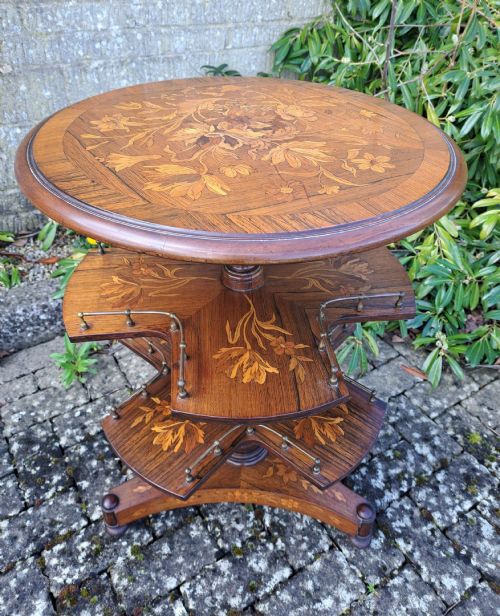
Inlay work and metal components frequently accompany the woodwork, including fruitwood, tulipwood, and brass inlays, alongside ormolu mounts on continental examples. Revolving mechanisms incorporate metal spindles and ball bearings to allow smooth rotation of tabletop book chambers.
Finishing methods involved French polishing to accentuate the deep brown tones and figuration of the burr walnut veneer. Structural joints typically employ traditional dovetails and mortise and tenon construction, ensuring stability for weight-bearing shelves and loaded revolving tiers.
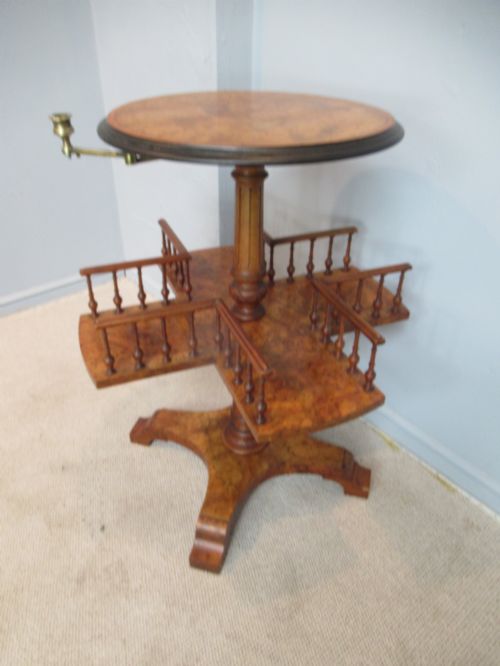
Several revolving book tables include hidden candle sconces, ready for late-night reading sessions before the invention of electric light.
What varies in quality
The selection of timber veneer determines the visual impact of the piece, with matched burr walnut and figured grain representing the higher end of craftsmanship. Plain timber surfaces without deliberate grain arrangement or matched veneers generally indicate simpler domestic production.
The precision of the joinery and the smoothness of mechanical elements, such as revolving book drum spindles or adjustable shelf mechanisms, separate standard examples from finer commissions. Heavy brass fittings, intricate marquetry, and well-executed parquetry further distinguish superior workshops from mass-produced items.
Proportion and structural integrity define the balance of the table, ensuring that rotating tiers remain level and open shelves support weight without sagging. The preservation of the original polish and surface patina also influences the overall character of the piece.
Gillows·Harrods Of London·Heals
The Walnut Book Table Glossary
- Burr walnut
- A prized timber harvested from the wart-like growths on walnut trees, yielding highly figured, swirling grain patterns. Cabinetmakers sliced this wood into thin veneers for decorative tabletops.
- Revolving bookcase
- A freestanding or table-standing unit mounted on a pivot and cross-base, allowing the user to spin the compartments to access different titles. These often feature vertical partitions to keep volumes upright.
- Marquetry
- The art of applying fitted pieces of wood veneer to a structure to form decorative pictures or geometric patterns. Dutch floral examples frequently utilise this technique on walnut surfaces.
- Book-matching
- A woodworking technique where adjacent veneer leaves are opened like a book to create a symmetrical mirrored pattern across a surface. This method highlights the natural figure of walnut.
- Parquetry
- A geometric mosaic of wood pieces used for decorative surfaces on tables and cabinet doors. It relies on precise angles and contrasting timber tones.
Walnut Book Table: Frequently Asked Questions
What is a revolving walnut book table?
A revolving walnut book table is a compact piece featuring built-in compartments designed to rotate on a central pivot base. This mechanism allows readers to access multiple directions of shelving from a single seated position.
Such items gained popularity in Victorian and Edwardian libraries and drawing rooms where floor space was at a premium. They combine the utility of a small side table with accessible storage for frequently consulted volumes.
How do I distinguish between Victorian and Art Deco walnut tables?
Victorian walnut book tables typically exhibit heavier carving, turned columns, burr walnut veneers, and traditional details like brass castors or marquetry inlay. Their forms lean towards ornate curves and traditional revival styles.
Art Deco examples, dating around nineteen-thirty, favour cleaner geometric lines, figured walnut without excessive ornamentation, and sometimes industrial touches like chrome. They reflect a streamlined aesthetic distinct from nineteenth-century revivalism.
Where should I place a walnut book table at home?
These tables suit placement beside an armchair, reading chair, or sofa where books and periodicals are kept within arm's reach. Revolving variants work well beside seating areas or in the centre of a room where 360-degree access is practical.
Smaller cabinet or tiered versions also function effectively as bedside tables or occasional surfaces in studies. Their compact footprints allow them to fit into corners or between larger pieces of furniture.
How do I care for burr walnut veneer?
Burr walnut veneer requires protection from direct sunlight and excessive heat sources to prevent the wood from drying out or warping. Regular dusting with a soft, dry cloth maintains the surface without abrasive chemical buildup.
Occasional application of appropriate wax polish helps nourish the timber and preserve the historic finish. Avoiding excess moisture is essential for protecting both the veneer and the underlying structure.