





Brown Walnut Book Table
A brown walnut book table is a sturdy piece designed to hold volumes near a chair, built from rich timber during the nineteenth and early twentieth centuries.
Brown Walnut Book Table
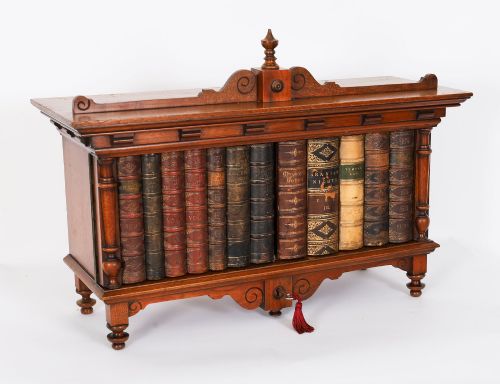
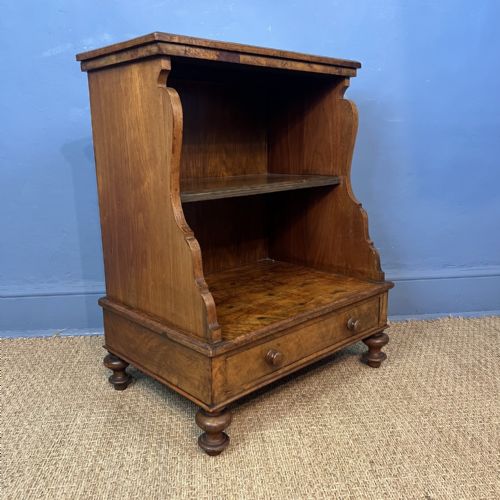
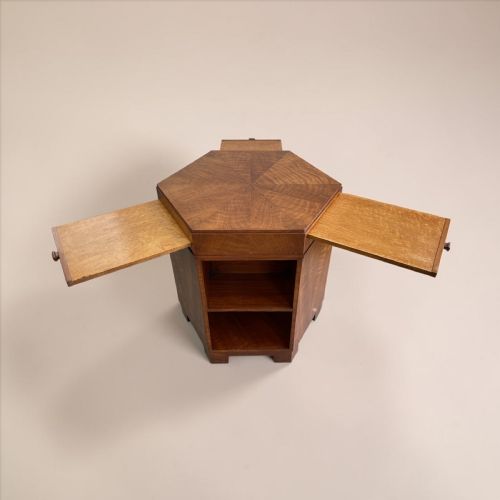
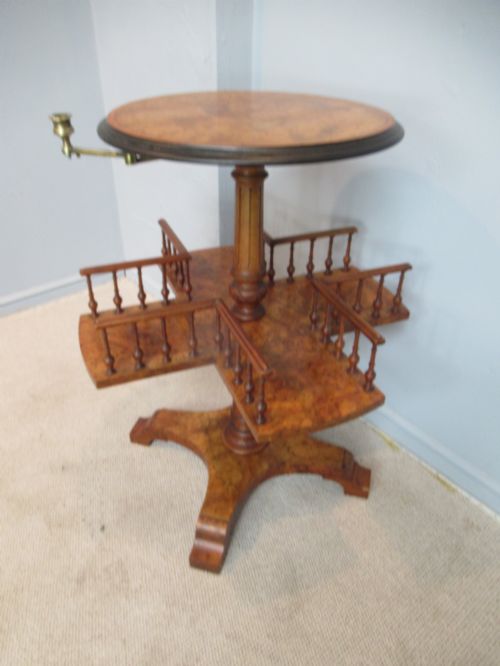
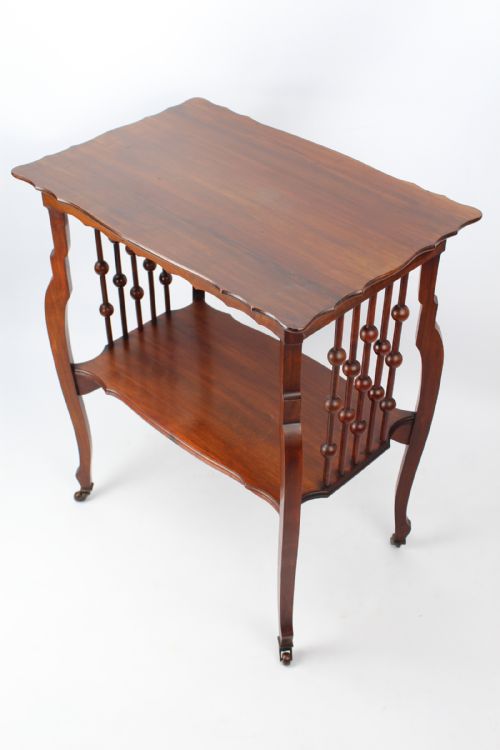
A brown walnut book table brings together timber utility and domestic storage across periods ranging from the Victorian era to the Art Deco decades. Buyers examining this page will encounter rotating stands, bedside cabinets with open shelves, and low bookcases designed to keep volumes close to hand.
The versions most commonly met here stem from the nineteenth century and the nineteen-thirties, showing styles from Victorian arts and crafts to French provincial influences. These pieces range from compact bedside tables to larger revolving bookstands and library tables.
Materials and construction
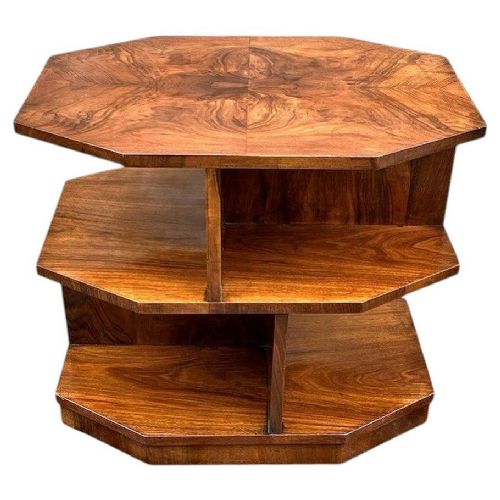
Makers utilised solid walnut alongside burr walnut and figured walnut veneers to create striking grain patterns across flat surfaces and curved tiers. Brass fittings and leather inserts appear on selected library and occasional tables to provide functional contrast to the dark wood.
Joinery techniques varied from traditional cabinetmaking used in Victorian workshops to the streamlined forms seen in nineteen-thirties pieces. Veneers were carefully applied over supportive timber cores to highlight the natural figuring of the walnut.
Judging quality in walnut furniture
The distinction between ordinary and superior pieces rests on the choice of timber and the precision of the grain matching across the surfaces. Burr walnut and figured walnut veneers demand expert application to ensure longevity and visual depth.
Construction integrity defines the upper tier, where drawers operate smoothly and revolving mechanisms turn without resistance. Finer examples display careful attention to proportion and finish, maintaining the structural strength required for holding heavy books.
Gillows
The Brown Walnut Book Table Glossary
- Burr walnut
- A specialised timber cut from tree growths that produces intricate, swirling grain patterns. It was frequently used for veneers on high-status tables and cabinets.
- Revolving bookcase
- A freestanding book stand mounted on a rotating base designed to grant access to multiple volumes from a seated position. These often feature slatted or open sides.
- Whatnot
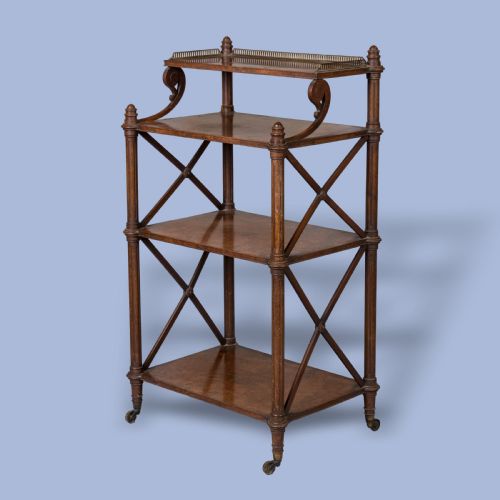
- A multi-tiered piece of open shelving used for displaying or storing books and small objects. Pieces of this type typically stand on slender upright supports.
- Veneer
- A thin layer of decorative wood applied over a secondary timber base. This technique allows cabinetmakers to display striking grain figures without relying entirely on solid scarce woods.
- Tilt top table
- A table featuring a mechanism that allows the surface to be folded vertical when not in use. This design originated to save space in smaller domestic rooms.
Brown Walnut Book Table: Frequently Asked Questions
What is a brown walnut book table?
A brown walnut book table is a wooden furnishing designed to hold reading material within easy reach of a chair or bed. These items combine surface space with open shelving or rotating compartments.
They appear in various styles from the Victorian period through the nineteen-thirties, reflecting the domestic habits of their respective eras.
How do I date a walnut book table?
Dating these pieces involves examining the construction methods, handle styles, and overall aesthetic details. Victorian examples often display hand-carved elements or arts and crafts simplicity.
Nineteen-thirties pieces typically show Art Deco geometric lines, figuration in the veneers, and simpler silhouettes without heavy ornamentation.
Where should I place a revolving bookcase?
A revolving bookcase functions best beside an armchair, sofa, or desk where books need to be accessed frequently from a stationary seat. Their rotating base allows them to sit comfortably in corners or beside beds.
Ensure there is enough clearance around the piece for the rotating section to turn freely without hitting walls or other furniture.
How do I care for walnut veneer?
Walnut furniture requires protection from direct sunlight and excessive heat to prevent the wood and veneers from drying out or fading. Dust the surfaces regularly with a soft, dry cloth.
Avoid using abrasive cleaning products or silicone polishes, as these can damage the polished finish over time.