





Open Shelf Book Table
An open shelf book table provides accessible storage for volumes and small items while anchoring a room with period timber.
Open Shelf Book Table
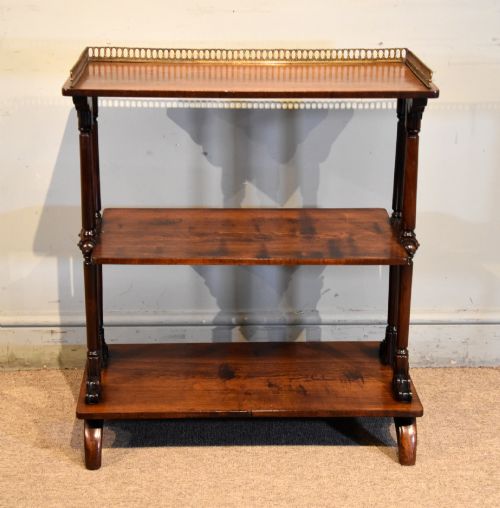
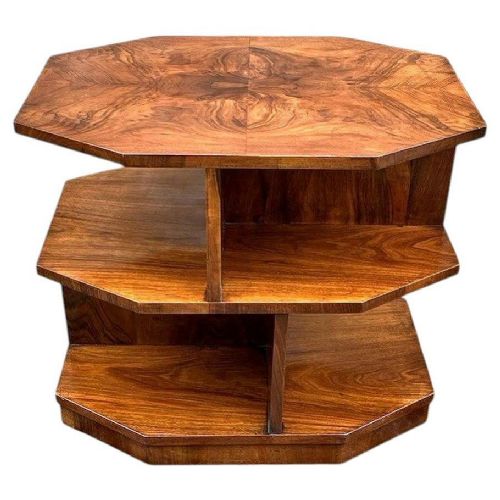
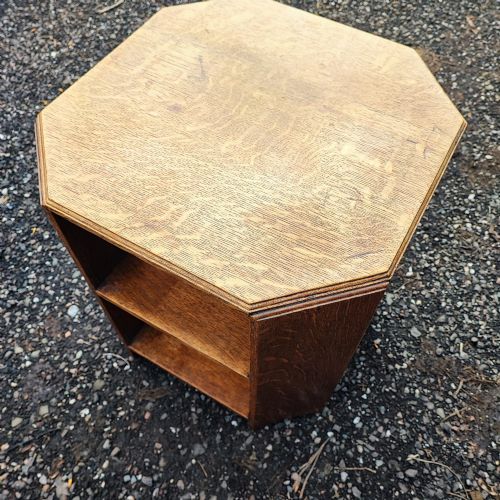
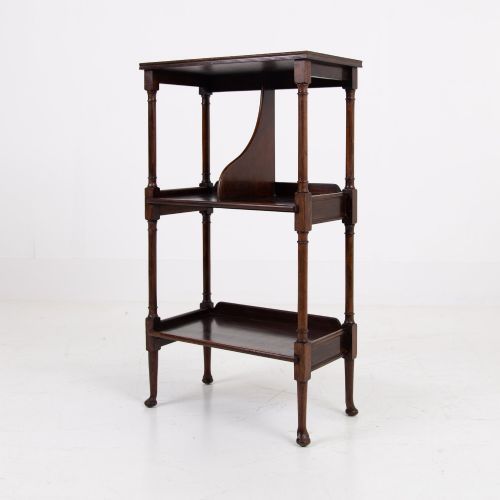
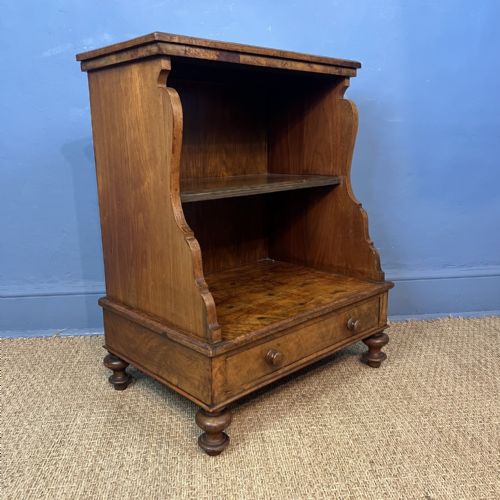
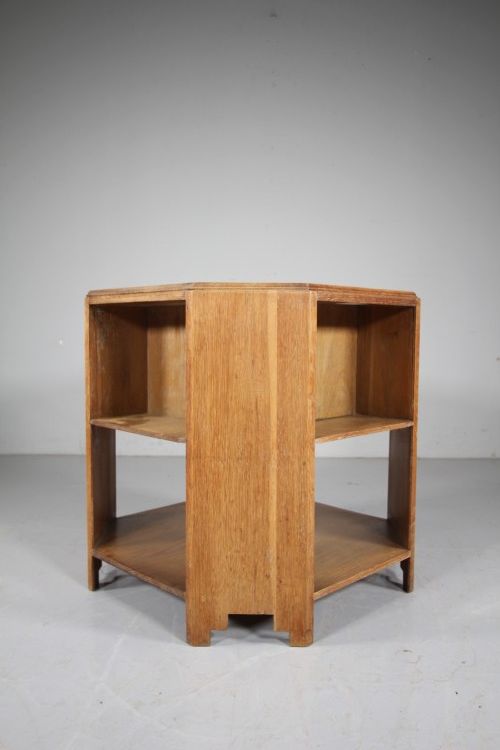
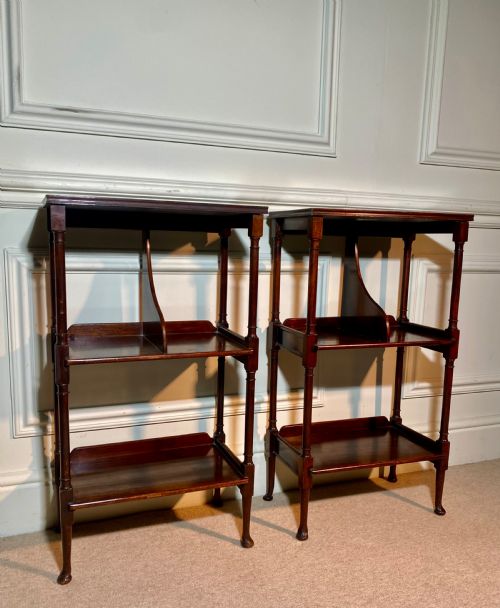
An open shelf book table combines the function of a compact bookcase with the surface utility of a side table or low cabinet. You encounter forms ranging from tiered whatnots and étagères to low bedside stands and sectional tables.
The pieces on this page span the nineteenth and early twentieth centuries, drawing on Regency, Victorian, Edwardian, and Art Deco design traditions. Makers utilised established formats like the four-tier whatnot or the slope-shelf bookcase to keep daily reading close to hand.
Meticulous proportions distinguish these works from later reproductions, offering functional display surfaces alongside open compartments. They suit alcoves, bedside settings, and seating areas where enclosed storage feels too heavy.
How they were made
Cabinetmakers constructed these pieces primarily in mahogany, oak, walnut, rosewood, and maple, often applying burr or figured walnut veneers to visible surfaces. Solid timbers provided structural integrity for uprights and tiers, while specialised veneers added rich grain patterns.
Joinery techniques matched the period, incorporating fine dovetails for drawers and secure housing for shelves and brass mounts. Surfaces were finished to highlight the natural tone and figure of the wood rather than masking the material.
Open Shelf Book Table Retail Price Guide 2026
Typical asking prices for open shelf book table among the pieces listed under this phrase on Sellingantiques today, from the lower quarter to the upper quarter. They describe what is for sale here now, not the wider market.
Listings feature pieces spanning the nineteenth century through the Art Deco era of the 1930s, constructed in oak, walnut, and mahogany.
What varies in quality
Quality rests in the selection of timber veneers and the crispness of the joinery where shelves meet uprights. A finer example employs choice burr walnut or figured mahogany with balanced grain matching across the tiers.
Structural refinement separates standard production from superior cabinet work, seen in the subtlety of turned supports and the precision of fitted drawers. The weight and stability of the frame indicate the care taken during construction.
Heals
The Open Shelf Book Table Glossary
- Étagère
- A set of open shelves for displaying ornaments, closely related to the whatnot. French in origin, it prioritises display space over enclosed storage.
- Veneer
- A thin layer of finely figured wood applied to a base timber of lesser quality. Figured walnut and burr walnut were frequently utilised to create decorative surfaces.
- Sectional
- Composed of distinct modular parts that assemble together. This construction method allows for flexible arrangement in domestic spaces.
Open Shelf Book Table: Frequently Asked Questions
Where should I place an open shelf book table?
These tables suit smaller spaces such as beside a bed, beside an armchair, or within an alcove where closed furniture feels too heavy.
Their open tiers allow you to keep frequently read volumes and small decorative objects within arm's reach while maintaining an airy feel in the room.
How do I care for antique timber surfaces?
Keep wooden pieces away from direct heat sources and strong sunlight to prevent the timber and veneers from drying out or fading. Regular dusting with a dry, soft cloth preserves the polished finish without the need for heavy silicones or waxes.
What is the difference between a whatnot and an étagère?
While both describe multi-tiered open shelving units, a whatnot traditionally refers to English domestic shelving designed for books and ornaments. An étagère often carries slightly more decorative French stylistic connotations, though the terms frequently overlap in listings.
Can these tables hold heavy books?
Most pieces are built from sturdy timbers like oak, mahogany, or walnut with solid uprights designed to support standard book weights. However, tiered whatnots and multi-tier shelves are generally better suited for moderate collections rather than heavy folio volumes.