






Walnut Bombe Desk
A walnut bombe desk brings serpentine curves and rich timber grain to a room, offering a functional writing slope alongside generous storage.
Walnut Bombe Desk
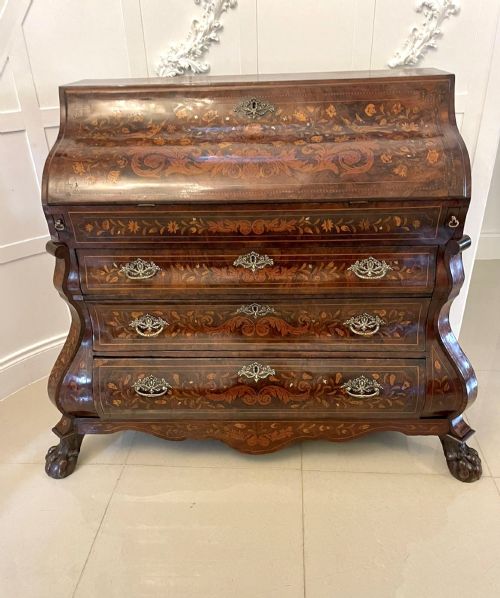
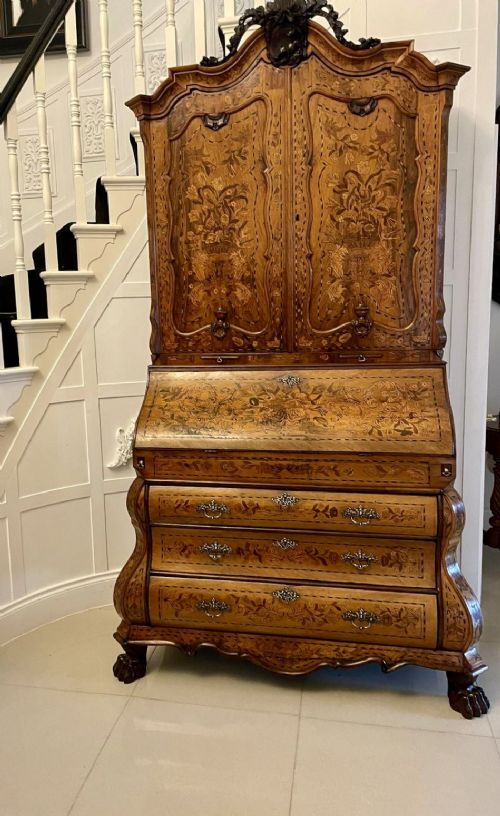
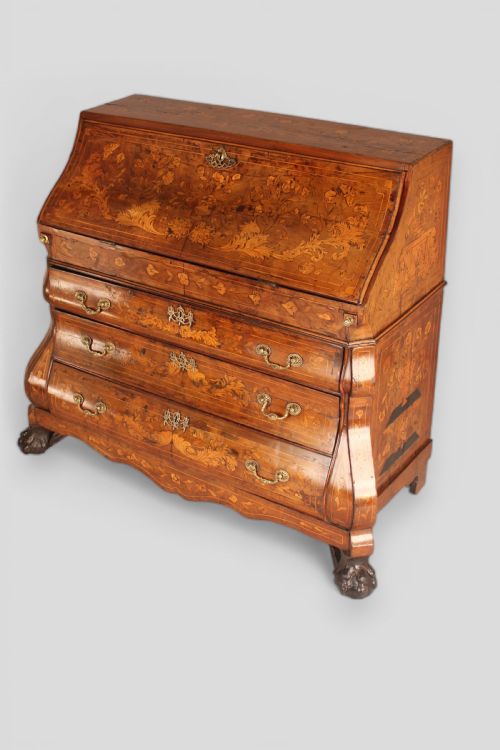
A walnut bombe desk presents a distinctive swelling profile, curving outward from top to bottom in a manner characteristic of continental cabinet-making. These pieces function as writing bureaux and writing desks, often extending upward into tall bureau bookcases or cabinets with fitted interiors.
The version most commonly met on this page is the Dutch bureau or bureau bookcase, heavily associated with the eighteenth century. Examples from this period display rich burr walnut surfaces and elaborate floral marquetry inlay.
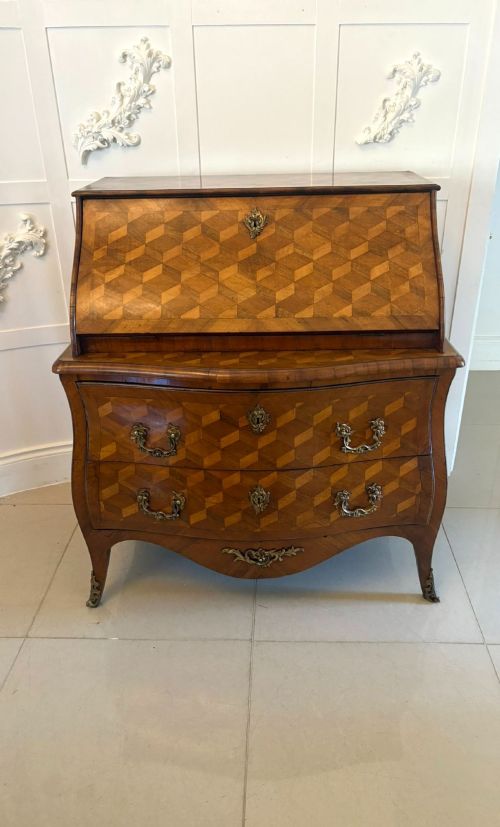
While eighteenth-century Georgian and Dutch pieces dominate, later interpretations also appear, including nineteenth-century revivals and early twentieth-century pieces. These later works maintain the signature swelling front and sloping writing flap while reflecting the manufacturing methods of their respective eras.
How they were made
Cabinet-makers constructed these forms using sturdy primary woods like oak or fruitwood as a carcase, applying figured veneers of walnut and burr walnut across the curved surfaces. This technique allowed craftsmen to showcase intricate wood grain patterns that solid timber could not achieve uniformly.
Marquetry and parquetry ornamentation involved cutting delicate pieces of fruitwood and other contrasting timbers to form floral displays and geometric patterns across the sloping lid and drawers. Brass hardware, including drop handles and keyhole escutcheons, secured the drawers and provided functional accents against the dark wood.
Walnut Bombe Desk Retail Price Guide 2026
Typical asking prices for walnut bombe desk among the pieces listed under this phrase on Sellingantiques today, from the lower quarter to the upper quarter. They describe what is for sale here now, not the wider market.
Secret drawers hidden behind miniature sliding panels reward anyone patient enough to explore the interior compartments.
What varies in quality
The visual impact of a walnut bombe desk depends heavily on the selection and matching of the veneer. Pieces at the top of the range display symmetrical burr walnut figures and meticulously executed floral marquetry that wrap seamlessly around the complex swelling angles of the carcase.
Construction nuance dictates longevity, particularly in how the curved drawers and fall-front writing slopes align with the main frame. Superior examples demonstrate expert joinery that accommodates timber movement without compromising the smooth contours of the bombe shape.
Morison of Edinburgh
The Walnut Bombe Desk Glossary
- Bombe
- A swelling, bulging contour characteristic of continental furniture, where the front and sides curve outward toward the base. This silhouette requires advanced joinery and shaping techniques.
- Marquetry
- Decorative inlay work using various coloured woods to create pictorial designs, commonly floral motifs in these pieces. Craftsmen fit the thin veneer pieces together like a puzzle before applying them to the carcase.
- Burr walnut
- Timber taken from a walnut tree outgrowth, producing intricate, swirling grain patterns. It is highly prized for decorative veneer work on high-status furniture.
- Bureau bookcase
- A writing bureau combined with a shelved upper cabinet enclosed by doors. This form provides both a working surface and substantial display storage.
Walnut Bombe Desk: Frequently Asked Questions
How do I maintain the wood surface?
Apply a traditional beeswax polish sparingly and buff with a soft cloth to nourish the walnut grain.
Keep the piece away from direct sunlight and central heating sources to prevent the veneer from drying and cracking.
What is inside the writing flap?
Lowering the sloping flap reveals a fitted interior containing small drawers, pigeonholes, and frequently a concealed central compartment.
This compartment was traditionally used for storing confidential papers and valuables.
How do I distinguish eighteenth-century pieces?
Examine the secondary woods inside the drawers, such as oak or fruitwood, and look for hand-cut dovetail joints.
Eighteenth-century examples typically show organic irregularity in the hand-engraved brass hardware and subtle variations in the marquetry.
Where should I place this furniture?
Position the piece against a flat wall in a study, drawing room, or hallway where its volumetric profile can be appreciated from multiple angles.
Ensure adequate clearance around the desk to allow the fall-front flap to open comfortably without obstruction.