
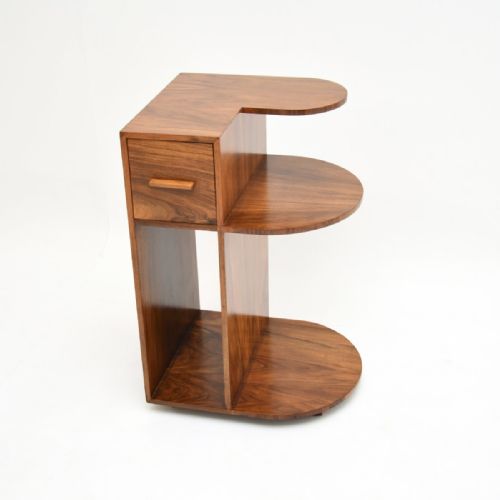
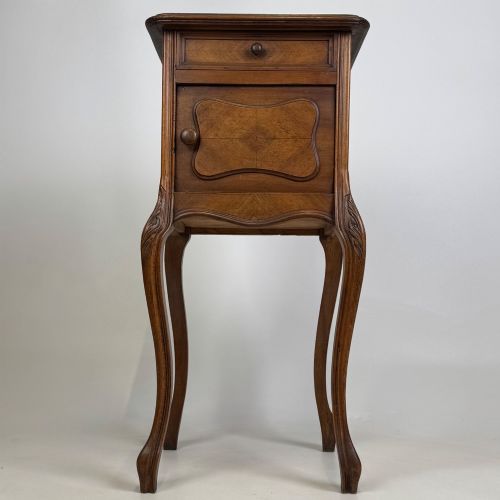
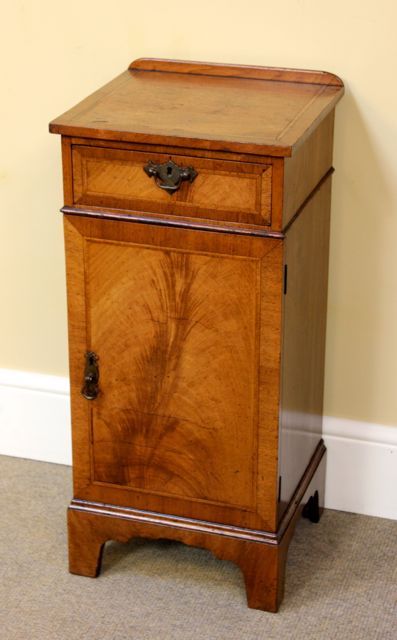
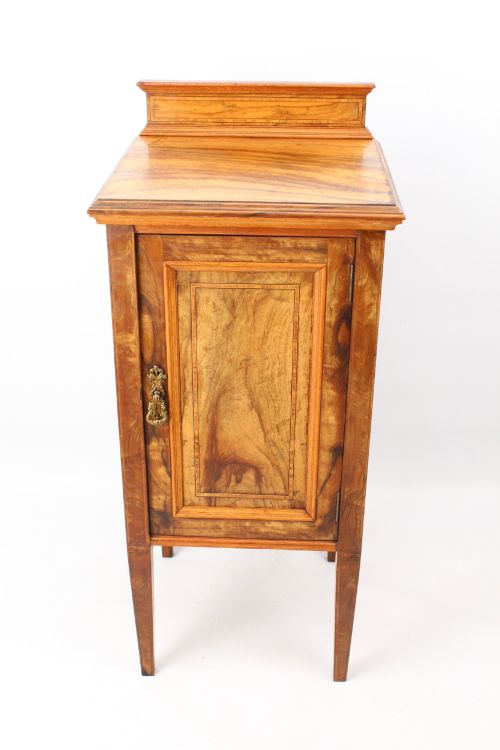
Walnut Bedside Nightstand
A walnut bedside nightstand brings practical surface space and rich grain patterns directly beside the bed.
Walnut Bedside Nightstand
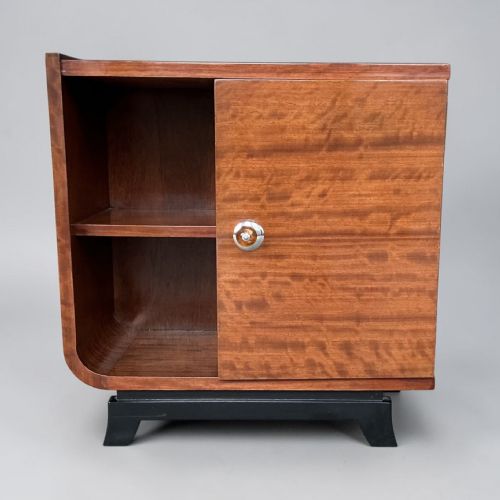
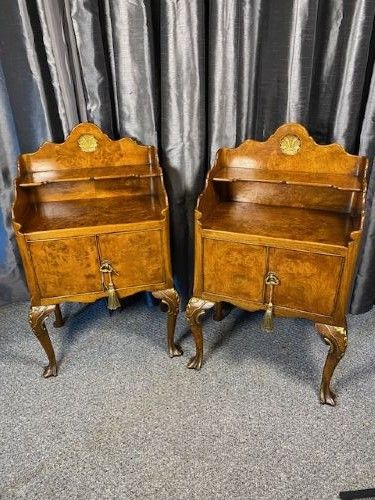
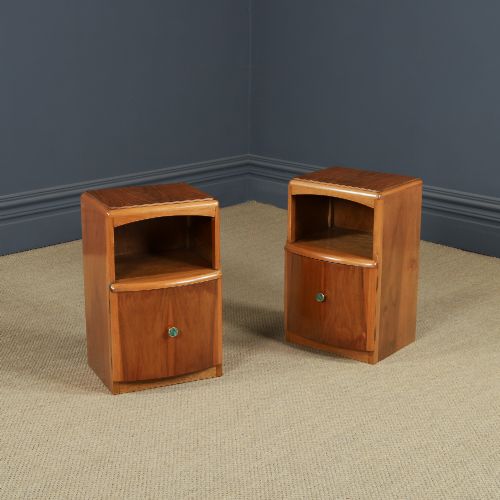
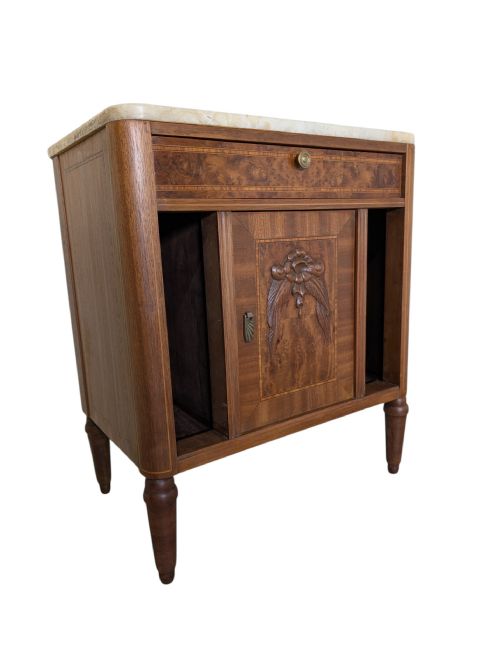
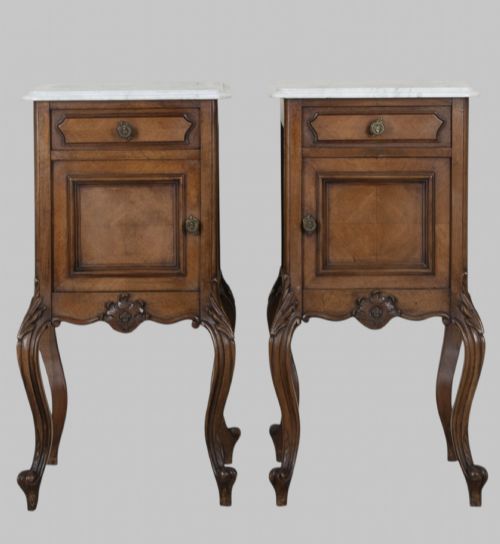
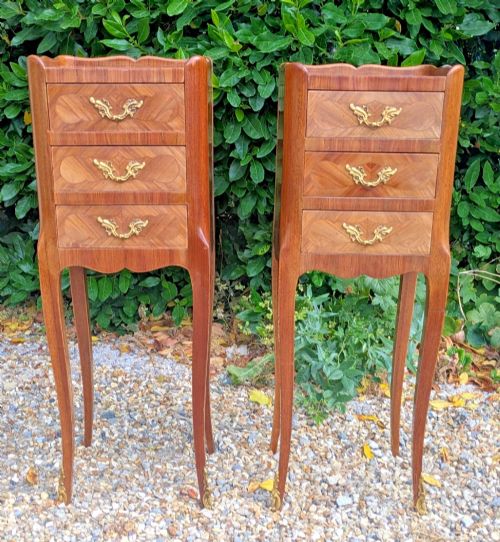
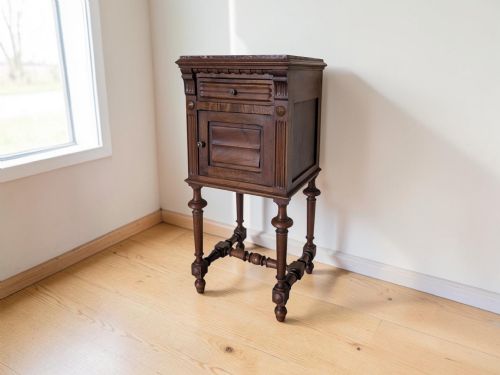
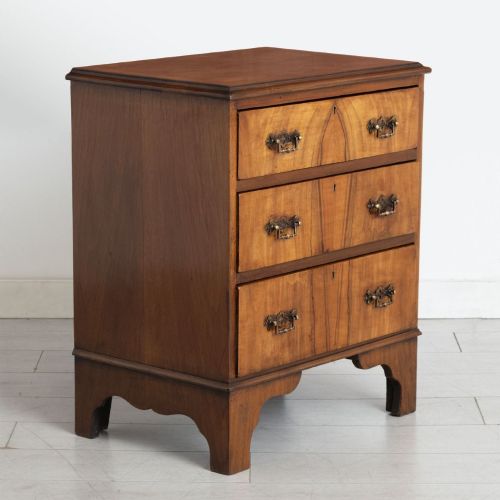
A walnut bedside nightstand serves as a compact bedside storage piece, spanning forms such as enclosed cabinets, small chests of drawers, and open tables.
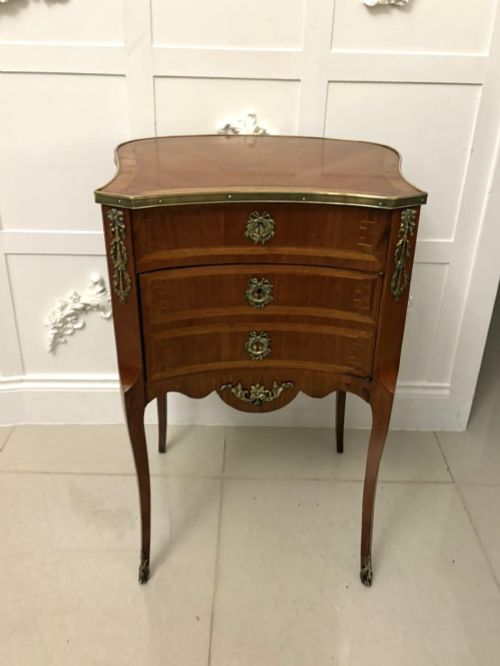
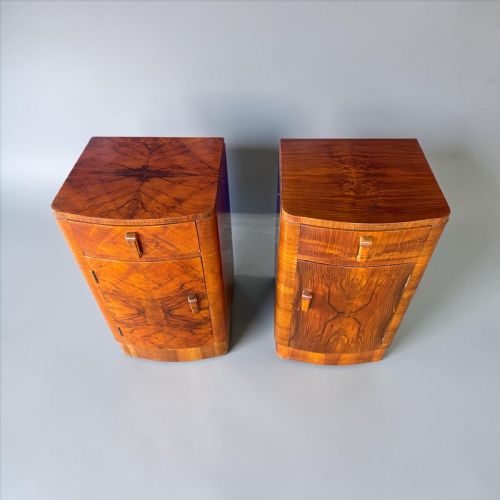
The selections here range from streamlined Art Deco examples to ornate Victorian and Edwardian iterations influenced by French regional styles.
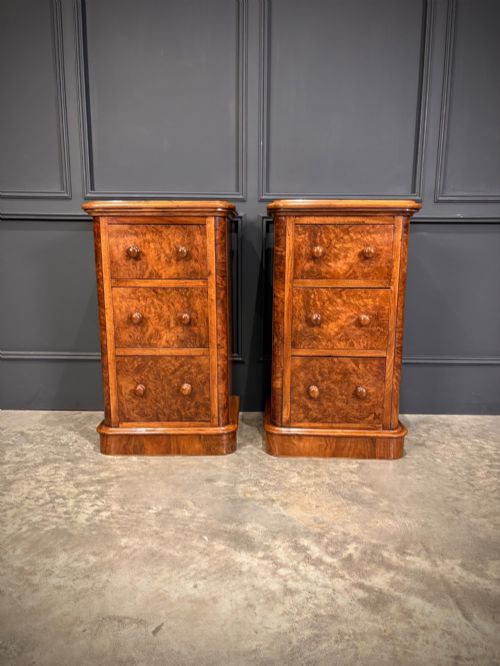
Buyers frequently encounter matching pairs alongside single cabinets, originating across English, French, and Italian workshops.
Materials and Construction
Cabinetmakers utilised solid walnut alongside burr walnut and figured walnut veneers to create highly decorative patterned surfaces.
Internal structures often incorporate secondary timbers, while finer pieces integrate marble tops, brass fittings, and ormolu mounts.
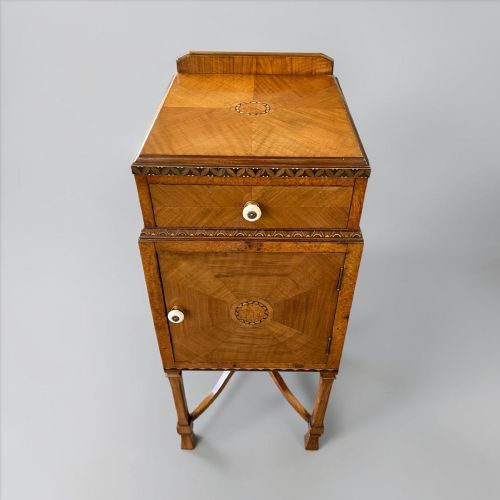
Marquetry inlay and specialised veneering techniques define the decorative exterior finishes across the various production periods.
Listings span multiple decades, incorporating Victorian burr walnut, Edwardian inlaid designs, and streamlined 1930s Art Deco forms.
Evaluating Quality
Quality rests upon the selection of the timber grain, where symmetrical burr walnut veneer and crisp marquetry distinguish finer outputs from plain examples.
Construction methods dictate durability, evident in the precision of drawer joinery, the integration of heavy marble slabs, and the quality of brass or ormolu hardware.
Maple And Co·Walter Carter Harrods·Gill And Reigate·Gillow And Co
The Walnut Bedside Nightstand Glossary
- Burr walnut
- A specialised wood cut from the abnormal growths of a walnut tree, yielding swirling, highly decorative grain patterns.
- Chevet
- A French term for a small bedside table or nightstand designed to sit alongside a bed.
- Marquetry
- The art of applying decorative pieces of veneer to a structure to form intricate geometric or floral designs.
- Ormolu
- Gilded bronze furniture mounts utilised extensively on French and revival pieces during the nineteenth and early twentieth centuries.
- Pot cupboard
- A traditional enclosed bedside cabinet originally designed to house a chamber pot.
Walnut Bedside Nightstand: Frequently Asked Questions
What is a walnut bedside nightstand?
A walnut bedside nightstand is a small piece of bedroom furniture designed to hold bedside essentials while displaying the rich brown tones and grain patterns characteristic of walnut timber. These pieces function as miniature storage units, offering surface areas for lamps and books alongside enclosed cupboards or drawers.
Designs vary from minimalist Art Deco geometric shapes to heavily carved Victorian pot cupboards and elegant Queen Anne revival models with cabriole legs. They provide functional storage while introducing traditional warmth and texture into contemporary or period bedrooms.
How were antique nightstands used?
Historically, these compact cabinets served practical domestic purposes within the bedroom before indoor plumbing became universal, often housing a chamber pot behind a lower door. As domestic habits changed, they evolved to support bedside lighting, clocks, and personal reading materials.
Today, they perform identical bedside duties, offering concealed storage for clutter and a convenient surface within arm's reach of the mattress. Their modest proportions also allow them to function successfully as small lamp tables in living rooms or hallways.
How do I identify Art Deco nightstands?
Art Deco walnut nightstands typically date from the 1920s and 1930s, featuring streamlined silhouettes, curved bow fronts, and symmetrical burr walnut veneers. They frequently omit heavy ornamentation in favour of clean architectural lines and geometric visual balance.
These pieces often utilise contrasting wood tones or subtle banding rather than carved motifs. Their hardware tends to be understated or integrated directly into the curved woodwork of the drawers and doors.
Are walnut nightstands available as pairs?
Yes, many walnut bedside cabinets and nightstands survive as matching pairs, particularly those produced during the Edwardian period and the 1930s. Finding a matching pair requires careful matching of the wood grain and proportions, which were standard practice for high-end bedroom suites.
Single cabinets also appear frequently, originating from earlier Victorian or French provincial traditions where nightstands were not strictly produced in matching sets. Pairs command strong interest from buyers seeking symmetry on both sides of a bed.