


Figured Walnut End Table
These figured walnut end table pieces bring rich timber grain and period charm to a room.
Figured Walnut End Table
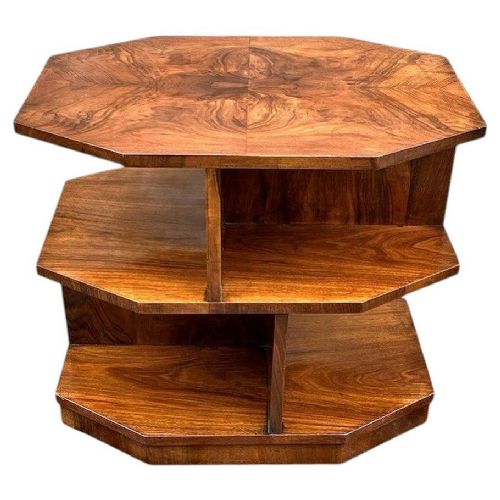
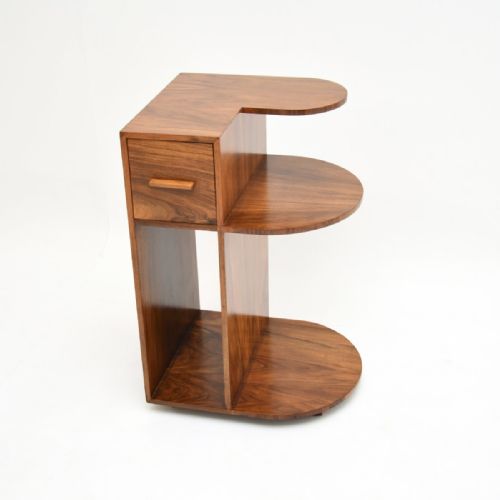
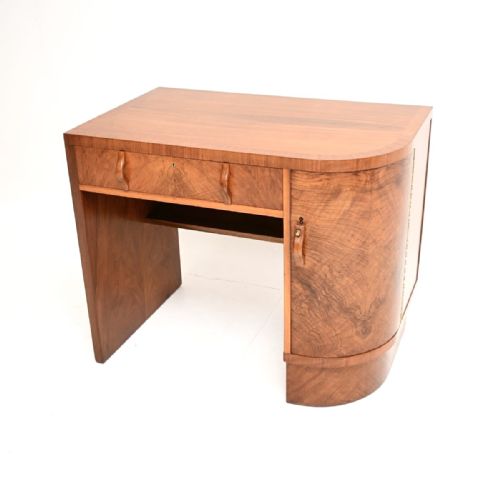
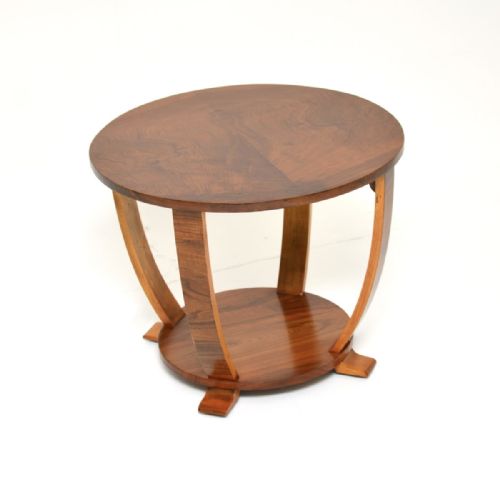
A figured walnut end table brings distinct grain patterns into domestic spaces, appearing across Edwardian and Art Deco periods. Buyers seeking a figured walnut end table most frequently encounter side tables, occasional pieces, and desks dating from the nineteen-twenties and nineteen-thirties.
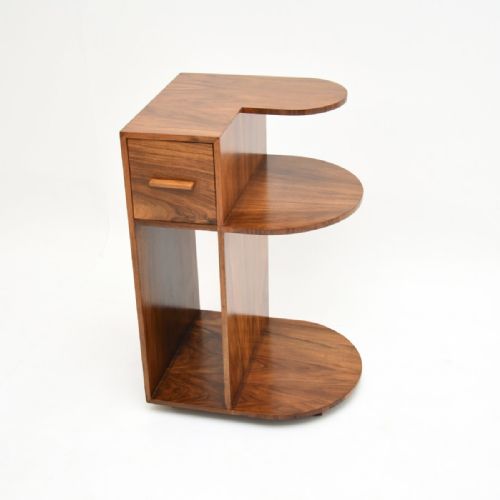
Makers and workshops constructed these items using walnut veneer and solid wood, often shaped as three-tier occasional tables, bedside units, and compact side tables. The selection spans distinct design movements, notably the clean lines of Art Deco alongside earlier Edwardian traditions.
How they were made
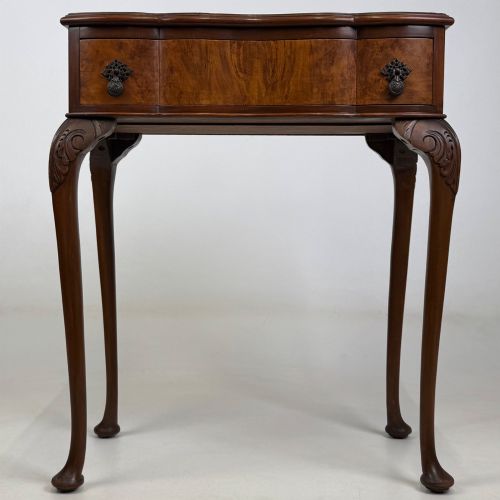
Craftsmen utilised walnut veneer and figured walnut veneer over solid wood substrates, arranging the distinctive timber grain for decorative effect. Brass hardware frequently complemented the warm brown tones of the wood across various table forms.
Cabinet makers applied specialised veneering techniques to highlight the natural patterns inherent in the timber. Workshops paired this figured wood with secondary timbers such as maple to construct functional domestic furniture.
Some Art Deco tables feature illuminated tops to showcase the walnut grain.
What varies in quality
The visual impact depends largely on the choice and matching of the veneer across the top surface. Finer examples display symmetrical grain patterns that make the most of the timber's natural movement and colour.
Construction methods distinguish standard production from superior cabinet work, particularly in the handling of edges, drawers, and multi-tiered structures. The integration of brass elements and secondary woods also marks the distinction between workshop tiers.
Maurice Adams
The Figured Walnut End Table Glossary
- Figured walnut
- Timber exhibiting highly decorative grain patterns, achieved through specific cuts of the walnut tree. Cabinet makers select these sections to create striking visual surfaces on tabletops.
- Art Deco
- A design style prominent in the nineteen-twenties and nineteen-thirties, characterised by sleek geometric forms and streamlined shapes. Pieces from this era often feature bold figured wood veneers.
- Edwardian
- The period spanning the early twentieth century up to nineteen-ten, known for reviving earlier furniture styles with lighter proportions. Items from this time exhibit traditional joinery alongside refined timbers.
Figured Walnut End Table: Frequently Asked Questions
What is a figured walnut end table?
A figured walnut end table is a compact occasional or side table featuring decorative wood veneer. These pieces date primarily from the Edwardian and Art Deco eras.
They function as practical surfaces for lamps and bedside items while displaying rich timber grain. Most examples originate from the early twentieth century.
How do I date a figured walnut end table?
Dating relies on stylistic markers such as the geometric lines of Art Deco pieces from the nineteen-thirties or the lighter proportions of Edwardian furniture. Materials like brass and maple often accompany the walnut.
Examining the construction methods and veneer application provides further clues to the period of manufacture. Surviving pieces span from the Edwardian era through to nineteen-thirty.
Where should I place a figured walnut end table?
These tables suit sitting rooms as side or occasional pieces, and smaller variants work well as bedside stands. Their decorative grain patterns make them focal points in a room.
Keep them away from direct heat sources to protect the wood veneer and polish over time. Pairing them with period lighting enhances their aesthetic appeal.
What materials are used in these tables?
Makers constructed these tables using walnut and figured walnut veneer over solid wood bases. Secondary timbers such as maple occasionally appear in the internal structure.
Brass hardware frequently provides functional and decorative accents on drawers and tiers. The primary focus remains on the decorative qualities of the walnut timber.