
Walnut Bedside Drawers
Walnut bedside drawers combine compact bedside utility with warm wood grain, offering practical nighttime storage in Victorian, Edwardian and Art Deco forms.
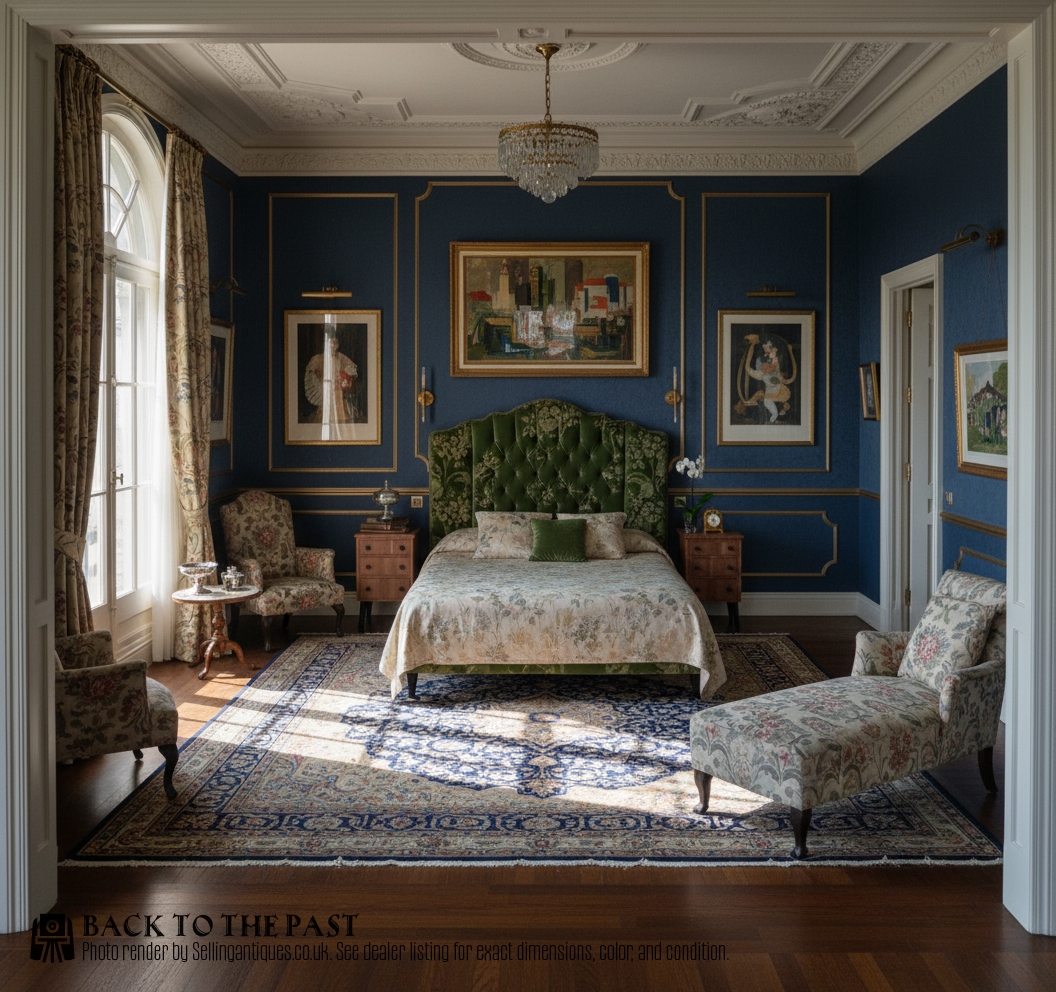
Walnut Bedside Drawers
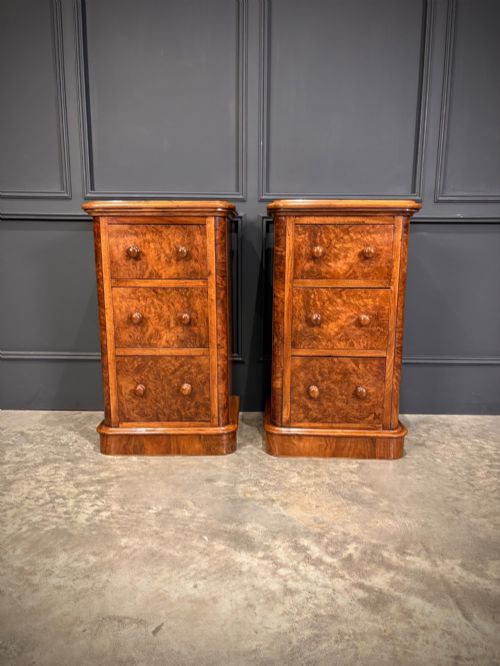
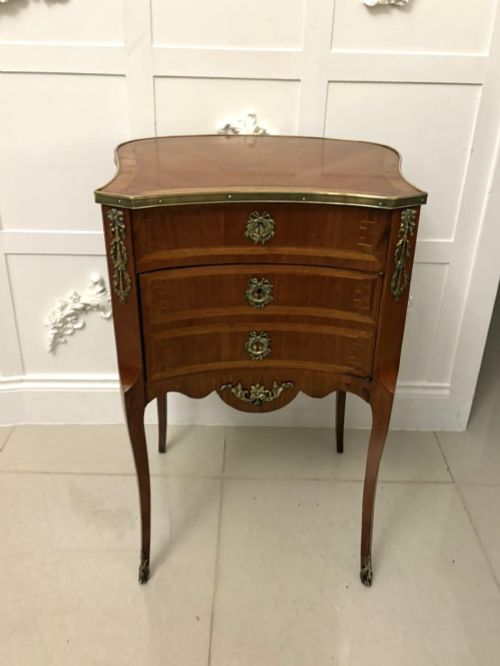
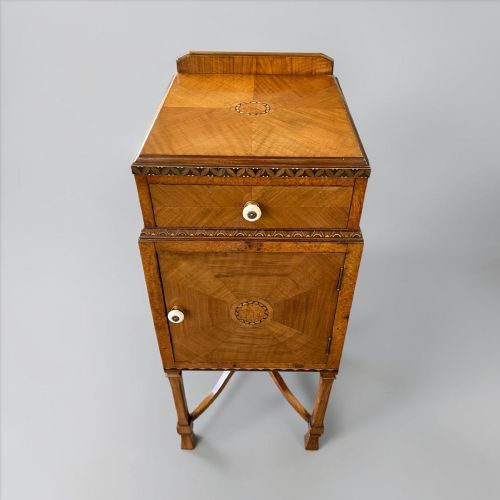
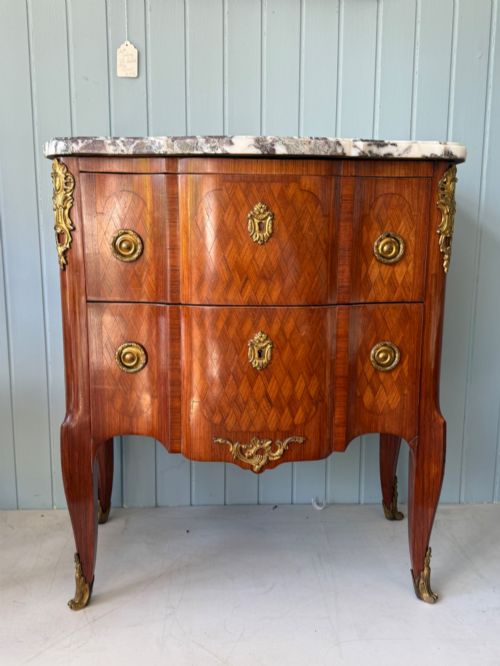
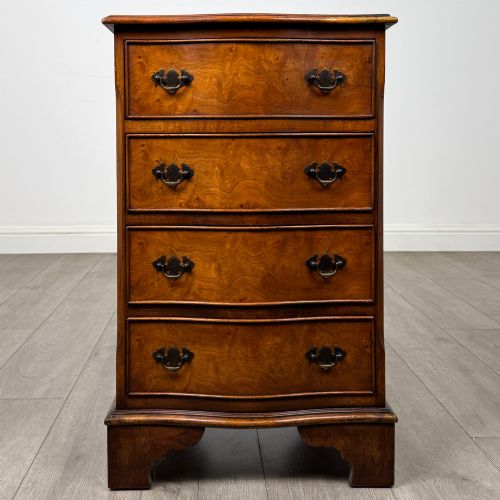
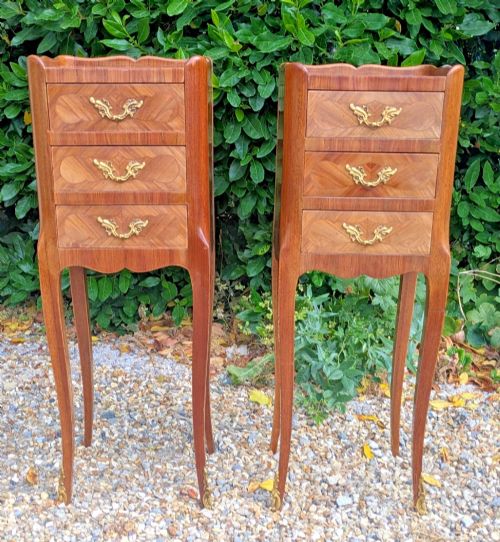
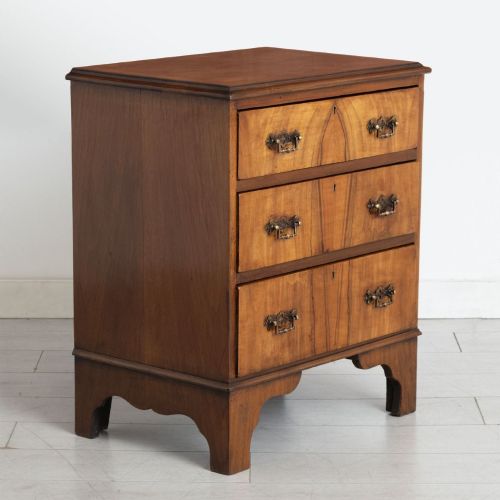
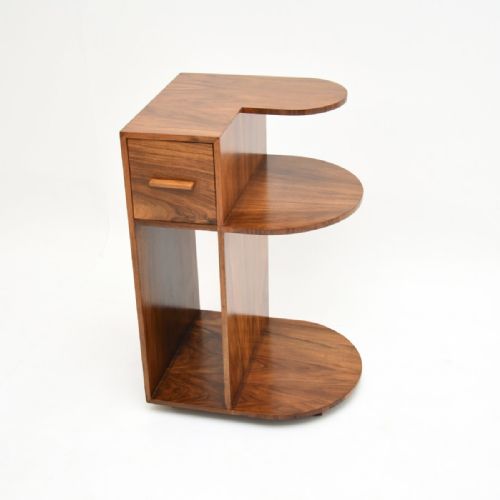
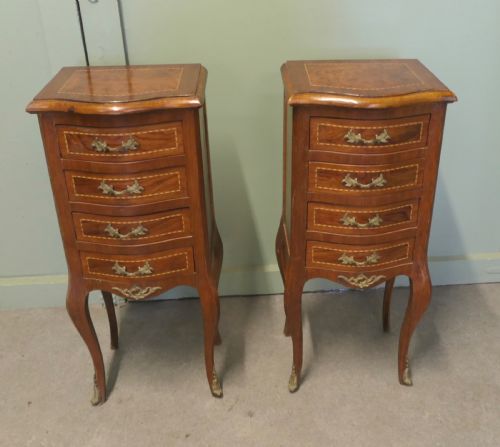
Walnut bedside drawers span the Victorian, Edwardian and Art Deco periods, encompassing compact chests, cabinets and lamp tables. These small case pieces originate from British and continental workshops, often found as matched pairs or individual nightstands.
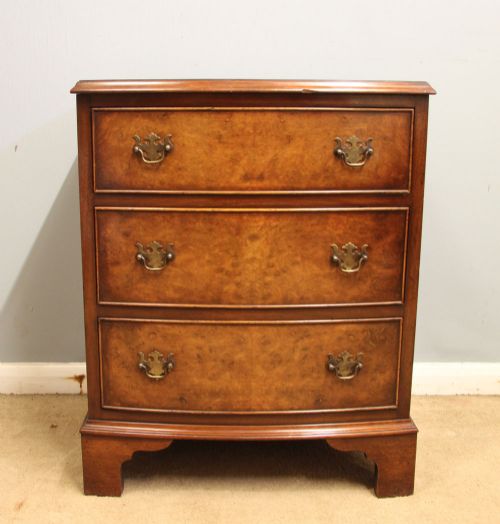
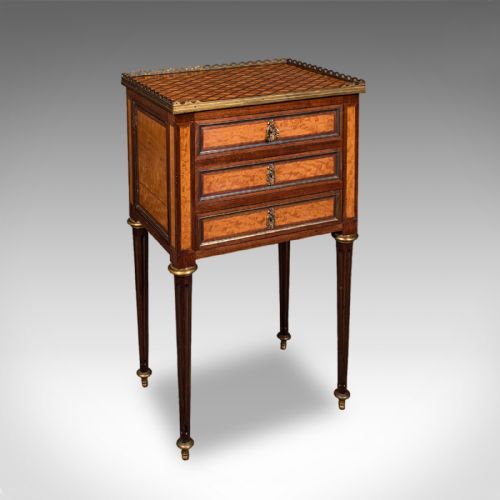
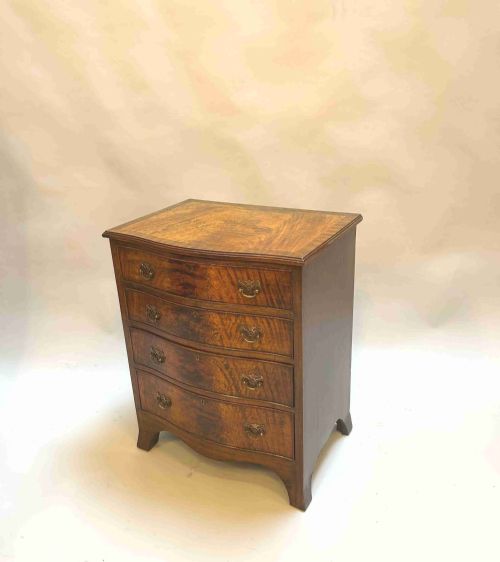
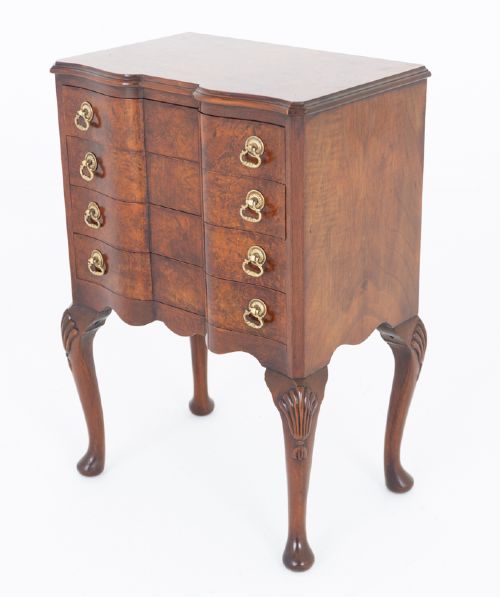
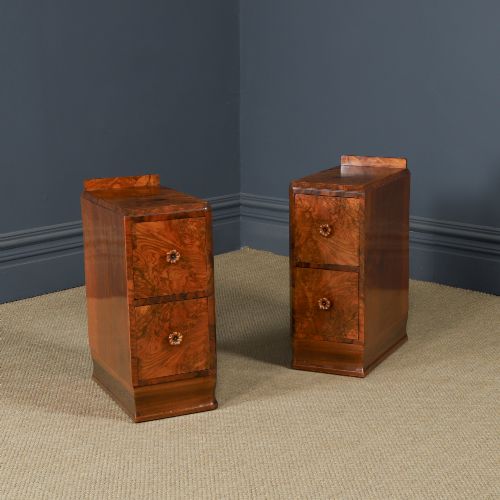
The most common form on this page is the small chest of drawers or bedside cabinet, typically fitted with two or three drawers. Victorian and Edwardian examples sit alongside later Art Deco designs, reflecting evolving bedroom storage needs across different decades.
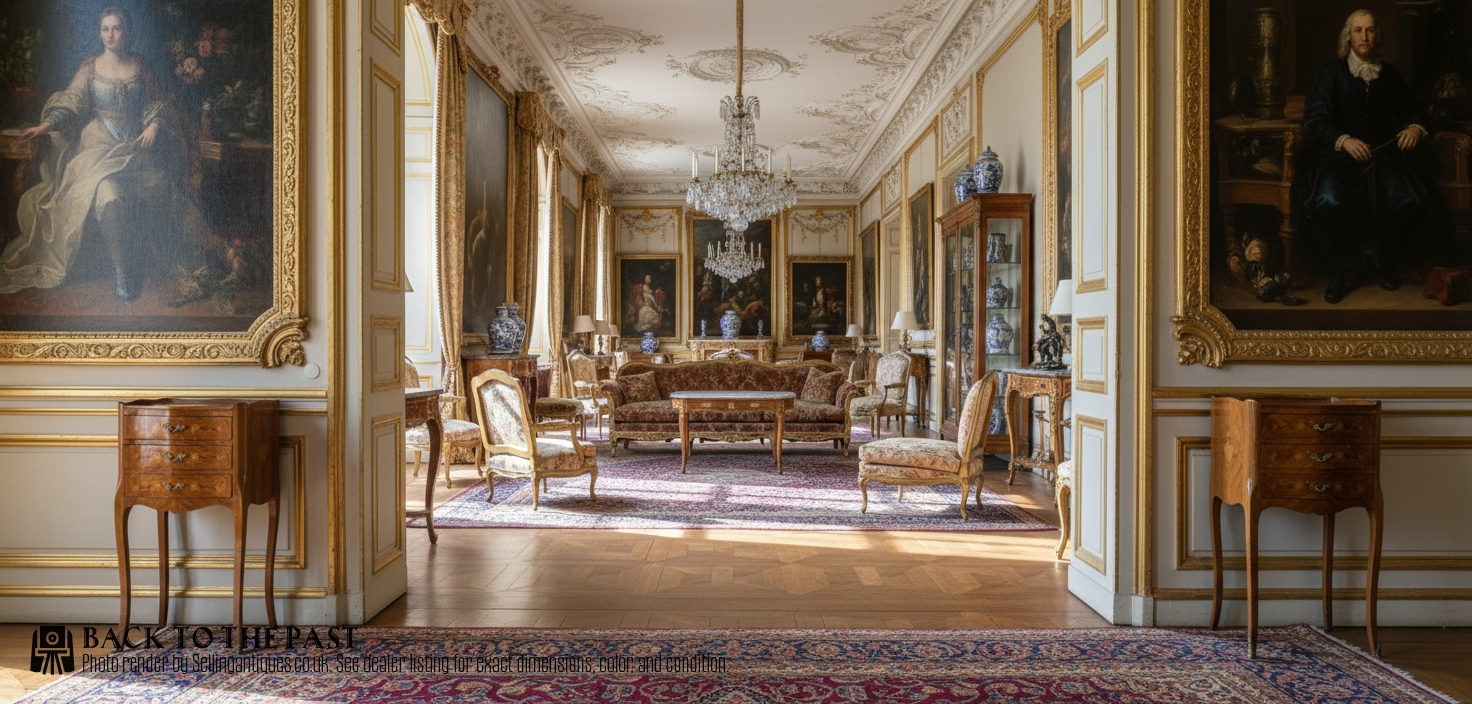
Materials and Technique
Cabinet makers utilised solid walnut and decorative veneers, frequently selecting burr walnut to create intricate grain patterns across drawer fronts and tops. French polishing brought out the warm tones of the wood, while specialised cutting techniques exposed the natural swirls and knots of the timber.
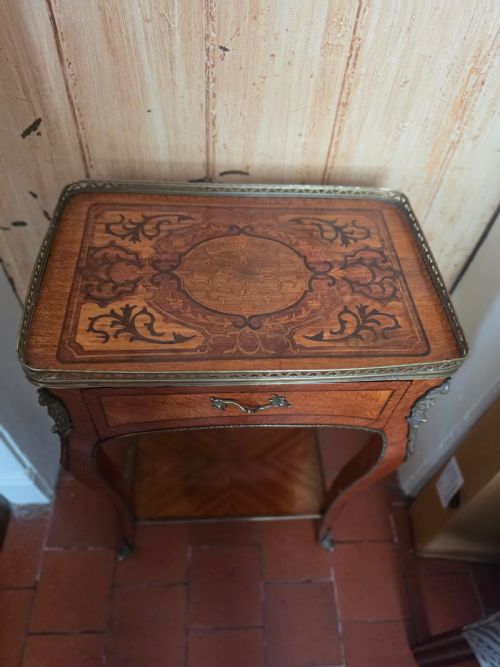
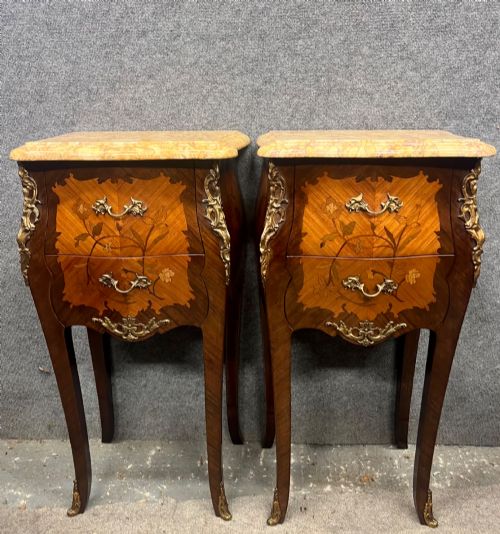
Structural integrity relied on traditional joinery, including dovetail joints for drawer construction. Continental pieces often incorporated marble tops, brass mounts, or delicate marquetry and parquetry inlay, combining utility with decorative surface work.
Some diminutive bedside cabinets hide secret sliding shelves originally designed to hold a morning cup of tea.
Evaluating Craftsmanship
Quality rests upon the selection of the veneer and the precision of the cabinet work. Superior examples display carefully matched burr walnut grains that flow evenly across the front of the piece, rather than mismatched timber sections.
Construction details distinguish standard production from finer workmanship. Smooth drawer action, tight joints, original brass hardware, and well-executed marquetry indicate higher workshop standards.
Gill & Reigate
The Walnut Bedside Drawers Glossary
- Burr walnut
- A prized veneer sliced from the growth warts of walnut trees, showing highly figured, swirling grain patterns. This material was frequently chosen for the primary display surfaces of high-end bedside furniture.
- Marquetry
- The art of applying small pieces of veneer to form decorative pictures or geometric patterns. Makers utilised different coloured woods to create intricate floral or architectural designs on cabinet doors and tops.
- Ormolu
- Gilded bronze mountings applied to furniture for decorative accent. These metal details appear often on continental pieces, framing drawers or corners.
- Serpentine
- A gently undulating curved front shape seen on drawers and cabinets. This contour requires skilled carpentry to shape the wood and matching veneers accurately.
- Parquetry
- A geometric mosaic of wood pieces used for surface decoration. It differs from marquetry by strictly following angular or repeating patterns rather than pictorial designs.
Walnut Bedside Drawers: Frequently Asked Questions
What is the standard height for these bedside chests?
Bedside chests generally align with the mattress height of traditional bed frames, sitting lower than standard chest of drawers. Most examples measure between fifty and seventy centimetres tall to allow easy reach from the mattress.
Proportions vary slightly depending on the decade, with Art Deco pieces sometimes offering lower, more streamlined profiles compared to taller Victorian cabinets.
How do I care for walnut veneer surfaces?
Walnut veneer requires protection from direct sunlight and excessive moisture to prevent fading and lifting of the wood. Regular dusting with a dry cloth keeps the polished surface clean without stripping the finish.
Applying a traditional beeswax occasionally helps nourish the timber and maintains the natural lustre of the grain. Avoid placing damp items directly onto the wood.
Were these cabinets originally made as pairs?
Many bedside pieces were constructed as matched pairs to flank a double bed, though single survivors also appear frequently. Finding an authentic pair involves checking for consistent timber grain, matching dimensions, and identical hardware.
Single cabinets often served as standalone lamp tables or small commodes rather than matched bedroom sets.
How can I tell a Victorian piece from an Art Deco one?
Victorian examples display heavier proportions, often featuring burr walnut veneers, moulded edges, and turned wooden handles or brass pulls. They frequently incorporate revival styles like Queen Anne or Louis XV influences.
Art Deco pieces present cleaner lines, geometric forms, and simpler silhouettes with minimal ornamentation, occasionally combining walnut with contrasting satinwood.