
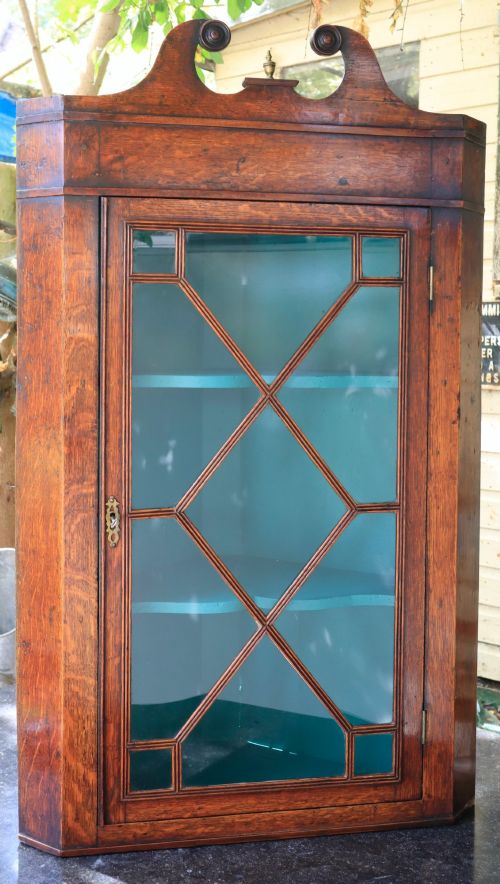
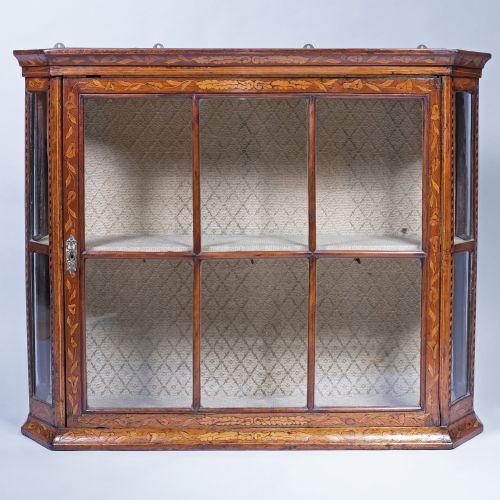


Wall Mounted Display Case
These wall mounted display cases are hanging timber cabinets designed to show and protect collections, bringing period craftsmanship directly to your living space.
Wall Mounted Display Case
A wall mounted display case encompasses hanging cabinets, wall cupboards, and corner units designed to exhibit small collections while saving floor space. When exploring this selection, buyers frequently encounter glazed corner cabinets, hanging wall cupboards, and specialised taxidermy enclosures from various centuries.
The objects span multiple eras, including Georgian, Victorian, and Edwardian periods, alongside specific decades such as the 1920s and 1940s. Forms range from simple wooden key cupboards and bookcases to intricate glazed display cases featuring internal shelving and locking mechanisms.
Materials and construction
Cabinet makers utilised dense hardwoods such as mahogany and oak for the primary structures, frequently incorporating glass panels in the doors to display the contents clearly. Marquetry inlay, ebonised wood, and carved and gilded surfaces provide decorative enrichment to the exterior frames.
Internal elements often include fabric linings, brass hardware such as locking mechanisms with keys, and fitted wooden shelves. Structural joining relies on traditional cabinet-making techniques suited to hanging weight securely against a wall.
The listings span the 18th, 19th, and 20th centuries, featuring materials such as mahogany, oak, glass, brass, and marquetry inlay across various wall-hanging formats.
Assessing quality in hanging cabinets
Quality rests upon the selection of timber and the precision of the joinery, distinguishing sturdy hardwood carcasses from simpler utility cupboards. The presence of fine details such as marquetry inlay, original brass hardware, and carefully fitted glazed doors elevates a piece.
The integrity of the original glass, the smooth operation of locking mechanisms with keys, and the condition of interior fabric linings or carved elements indicate the level of care and craftsmanship invested in the cabinet's creation.
J. Cooper & Sons·W.F. Homer London·Town and Emanuel
The Wall Mounted Display Case Glossary
- Corner cabinet
- A hanging or freestanding cabinet constructed with an angled back to fit neatly into the corner of a room, often featuring glazed doors for display.
- Glazed wall cabinet
- A hanging timber cupboard fitted with glass panels in the door or sides to allow visibility of the interior contents.
- Marquetry inlay
- Decorative patterns formed by fitting small pieces of contrasting veneer into the wooden surface of the cabinet.
- Ebonised wood
- Timber treated with a dark finish to imitate the appearance of ebony, commonly utilised for accent or frame details.
- Taxidermy case
- A specialised wall-mounted enclosure designed specifically to house and protect preserved specimens under glass.
Wall Mounted Display Case: Frequently Asked Questions
How do I hang a heavy wall cabinet safely?
These cabinets require secure fixing into solid masonry walls or directly into timber wall studs using appropriate brackets suited to the weight of the timber and glass.
Because many pieces date from the Georgian and Victorian eras, checking the structural integrity of the backboards and hanging points before installation is essential for safety.
What were hanging corner cupboards used for?
Historically, households utilised hanging corner cupboards to store and display prized ceramics, glassware, or small decorative items while maximising available room space.
In contemporary settings, they serve a similar purpose, turning unused room corners into attractive display areas for collections.
How do I tell a Georgian display case from a Victorian one?
Georgian cases, particularly those from the George III period, often display refined mahogany construction and classical proportions with understated elegance. Victorian examples frequently incorporate heavier timber framing, more pronounced carving, or elaborate revival styles.
Examining the internal construction methods, secondary woods, and hardware style helps clarify the period of manufacture.
Can I use a key cupboard as a display case?
Key cupboards and night porters' cabinets feature shallow wooden shelving and internal hooks originally intended for organising keys rather than showing large collections.
While they can display very small items, buyers seeking to exhibit larger objects should look toward dedicated glazed display cabinets or bookcases.