
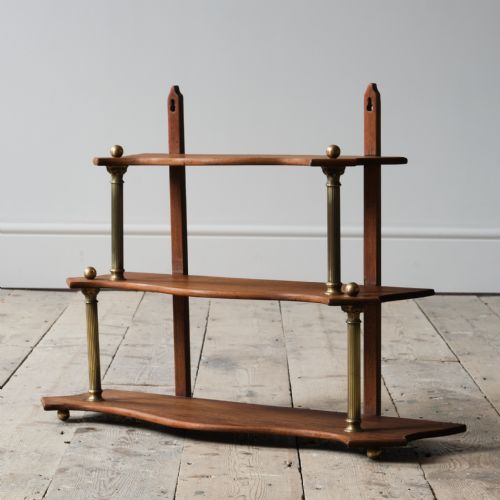
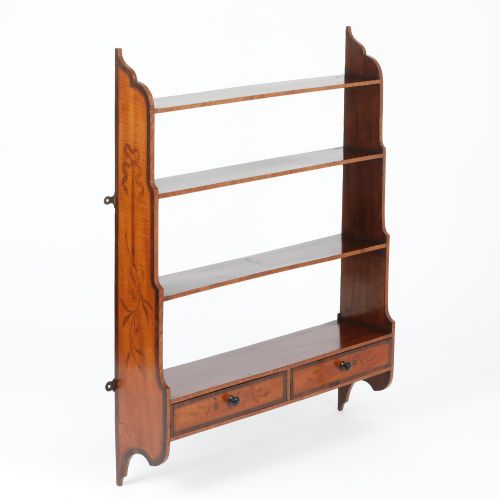


Small Wall Bookcase
A small wall bookcase holds a room's working volumes close to hand while using zero floor space, combining utility with compact Georgian and Victorian grace.
Small Wall Bookcase
A small wall bookcase groups together hanging shelves, wall cabinets, and miniature display units designed to mount directly onto domestic walls. These pieces emerge across the eighteenth, nineteenth, and early twentieth centuries in styles ranging from Georgian revival and Regency to Victorian and Edwardian.
The most common formats met here are mahogany or oak hanging shelves and glazed wall cupboards. Pieces span simple tiered shelving units to portable bookshelves and elaborate marquetry-inlaid cabinets.
Materials and construction
Cabinetmakers built these shelves primarily in solid timber and veneers, relying upon mahogany, oak, satinwood, and hardwood. Mahogany and satinwood frequently feature delicate marquetry inlay, while oak provides a sturdier, plainer domestic finish.
Joinery includes brass fittings for hanging and glass panes set into doors for glazed display cabinets. Carved hardwood details appear on Anglo-Indian pieces, while fabric and glaze line interior display spaces.
An archived piece squeezed the entire works of William Shakespeare into a tiny Art Nouveau wall hung bookcase.
Distinctions in quality
The distinction between standard utility shelving and superior examples rests in timber selection and decorative restraint. Pieces utilising finely figured mahogany, contrasting satinwood stringing, or precise marquetry inlay sit firmly at the upper end of the range.
Structural integrity and original brass hanging hardware dictate desirability. Cabinets boasting well-fitted glazed doors and crisp carved details outclass plain pine or later workshop adaptations.
The Small Wall Bookcase Glossary
- Waterfall bookshelves
- Graduated tiered shelves where each tier steps back from the one below, creating a cascading profile.
- Marquetry inlay
- Decorative patterns formed by fitting contrasting veneers into a prepared wooden surface.
- Glazed wall cupboard
- A hanging storage unit with glass-fronted doors designed to keep volumes visible yet protected.
- Portable bookshelves
- Compact freestanding or hanging bookcases intended to travel easily between rooms or residences.
Small Wall Bookcase: Frequently Asked Questions
How do I hang a heavy antique wall bookcase?
These pieces require secure fixing directly into wall studs or solid masonry using appropriate weight-rated screws and brackets. Historic hanging brasses need careful inspection to ensure they support the loaded weight of books.
Distributing heavier volumes on lower tiers prevents undue strain on the upper wall fixings and maintains the stability of the hanging frame.
What periods do these wall bookcases date from?
The selection spans from the eighteenth century through the Victorian and Edwardian eras up to the early twentieth century. Styles include Georgian, Regency, Victorian, and Arts and Crafts.
Matching timber patination and construction methods helps verify whether a piece belongs to the eighteenth century or later revival periods.
Are these bookcases suitable for heavy modern books?
Most antique small wall bookcases were built for lighter duodecimo and octavo volumes rather than massive modern art folios. Checking shelf depth and timber thickness ensures the boards will not bow under heavy loads.
Utilising the units for smaller paperbacks or select display volumes preserves the antique shelving timber over time.
How do I tell glazed cabinets from open shelves?
Glazed wall cupboards feature glass panes set into wooden doors to protect books from dust and atmospheric grime. Open hanging shelves leave volumes exposed for rapid daily selection.
Both forms utilise wall-mounting systems, but glazed variants offer secure display space for more delicate bindings.