
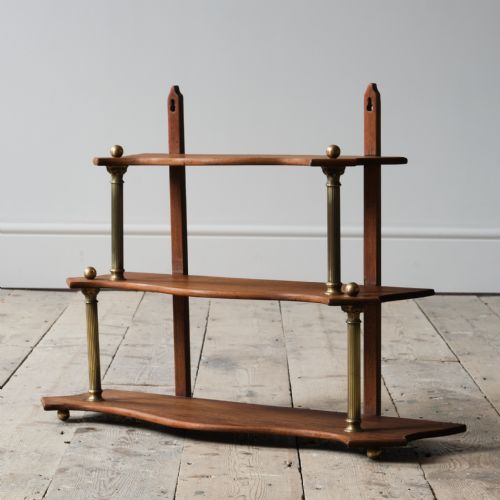


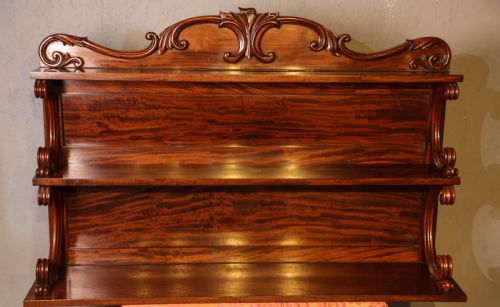


Three Tier Wall Shelves
These three tier wall shelves bring useful open storage and period character to compact rooms.
Three Tier Wall Shelves
Three tier wall shelves offer stepped levels of open display or storage, designed to be hung securely on a vertical surface rather than standing on the floor. Most examples encountered here date from the nineteenth century, spanning Victorian, Regency, William IV, and Edwardian periods, alongside Georgian pieces.
The primary forms include simple mahogany wall hanging shelves, portable bookshelves, and decorative units featuring fretwork, mirrored panels, or gilt gesso. Woods such as mahogany, oak, rosewood, satin birch, cherry wood, and beech dominate the selection, often complemented by brass fittings or painted finishes.
Buyers select these hanging units to organise books, display ceramics, or add architectural interest to hallways, studies, and drawing rooms. The format balances vertical wall space with accessible horizontal surfaces, making them practical additions to traditional and eclectic interiors alike.
Materials and construction
Cabinetmakers constructed these shelves using dense hardwoods like mahogany, oak, and rosewood, frequently employing flame mahogany veneer for figured grain patterns on backplates and shelves. Softer timbers such as satin birch and cherry wood appear alongside painted finishes and gilt gesso over carved wooden substrates.
Joinery techniques prioritised sturdy wall suspension, incorporating brass hangers, brackets, and supporting uprights to bear the weight of books and ornaments safely. Fretwork cutouts, turned spindle supports, and carved giltwood details demonstrate the decorative woodworking skills applied to nineteenth-century and earlier wall furniture.
Assessing quality and craftsmanship
Quality rests upon the selection of timber and the precision of the joinery, where finely figured flame mahogany or richly grained rosewood elevates a piece above standard utility items. The crispness of carved fretwork, the integrity of structural joints, and the retention of original brass fixtures distinguish superior examples.
Proportion and decorative ambition separate utilitarian shelves from grander pieces designed with mirrored backs, gilt gesso, or sophisticated Chippendale style fretwork. Pieces that retain their original surface patination and structural rigidity command greater appreciation among collectors.
The Three Tier Wall Shelves Glossary
- Fretwork
- Openwork ornamentation carved or pierced from a thin board in decorative patterns. This technique frequently defines the scrolling galleries of Chippendale style shelves.
- Flame mahogany veneer
- A thin slice of wood cut from the fork of a mahogany tree to display a distinctive flickering flame pattern. It provides decorative impact on backboards and shelf edges.
- Gilt gesso
- A plaster-like material applied to carved wooden surfaces and then gilded with metal leaf. It creates the reflective, ornate finish seen on decorative Victorian mirrored shelves.
- Satin birch
- A pale, lustrous timber with a fine grain often utilised for nineteenth-century cabinetwork. Its blonde tone offers a contrasting aesthetic to darker woods like mahogany.
Three Tier Wall Shelves: Frequently Asked Questions
How do I hang antique wall shelves safely?
Antique wall shelves require secure fixings into solid masonry or wall studs using appropriate screws and brackets that match the weight of the timber.
Because many older hanging units rely on original brass loops or slots, professional installation ensures the piece supports books and objects without straining historical joints.
Were these shelves always used for books?
While many portable bookshelves and wall units held volumes in studies and bedrooms, domestic inventories show they served equally for displaying ceramics, tea wares, and decorative ornaments.
The tiered format made them versatile furniture for various reception rooms where floor space was limited.
How do I identify a Regency period shelf?
Regency pieces often display classical restraint, linear forms, and dark tropical hardwoods like mahogany or rosewood with minimal but refined brass detailing.
They reflect the early nineteenth-century taste for archaeological symmetry and architectural simplicity.
What maintenance do polished wood shelves need?
Keeping these shelves away from direct sunlight and dramatic humidity changes protects the timber and veneer from splitting or fading.
Regular dusting with a dry, soft cloth preserves the historic wax or polish patination without damaging the surface.