






Antique Wood Etagere
An antique wood etagere is a tiered shelving unit designed for display, bringing architectural height and practical surface area to a room.
Antique Wood Etagere
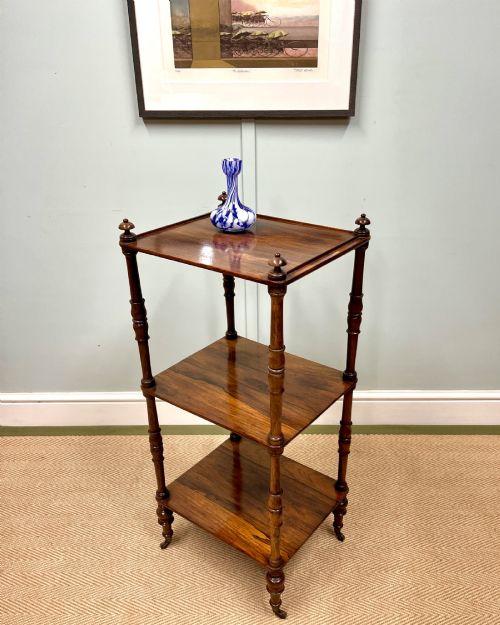
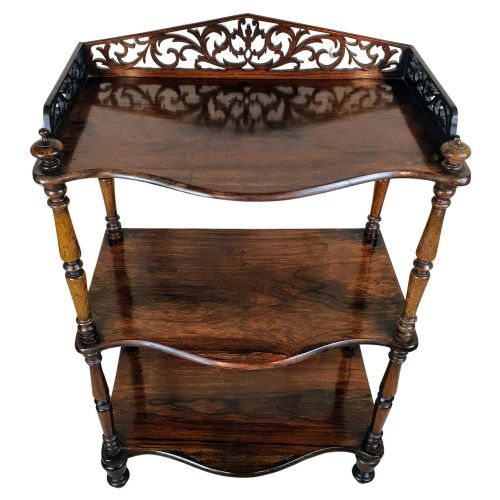
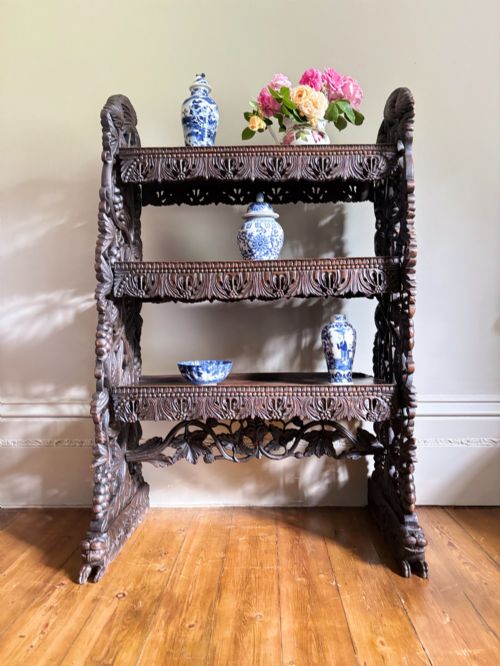
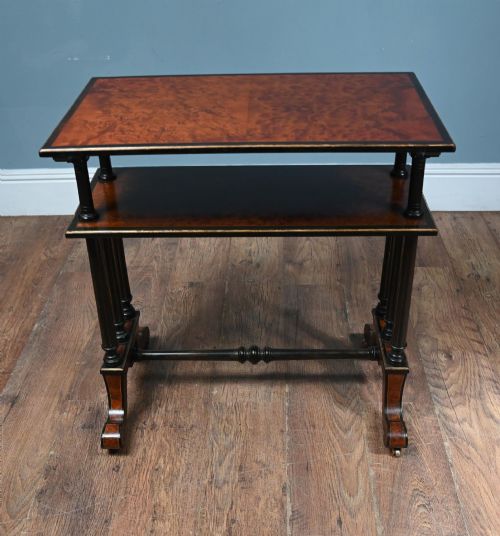
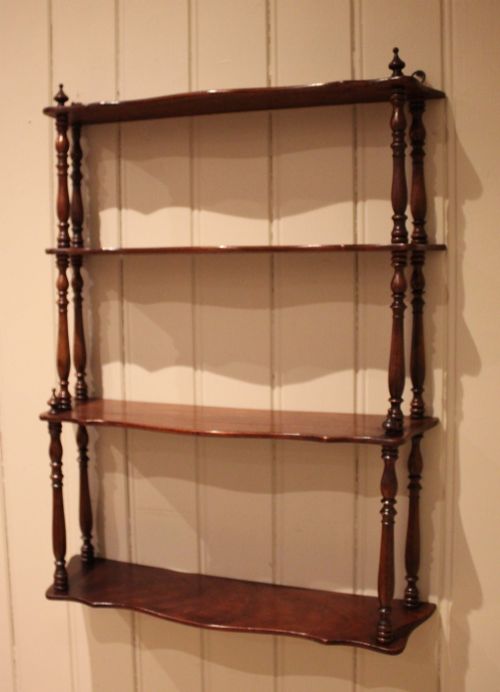
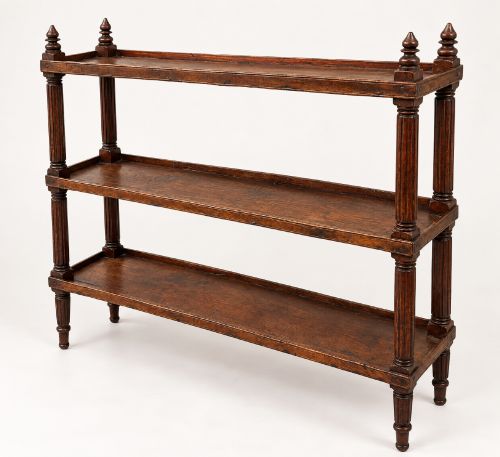
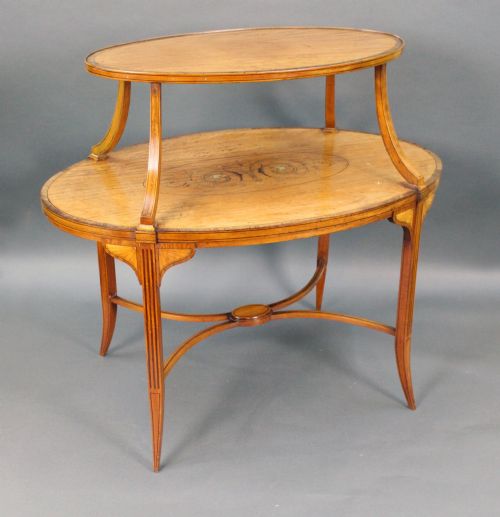
An antique wood etagere is a tiered open shelving piece or whatnot designed for displaying decorative objects, books, and small collections in reception spaces. These items appear across the nineteenth century, including Victorian, Regency, and Edwardian periods, taking forms such as corner shelves, wall-hanging units, multi-tiered side tables, and freestanding bookcases.
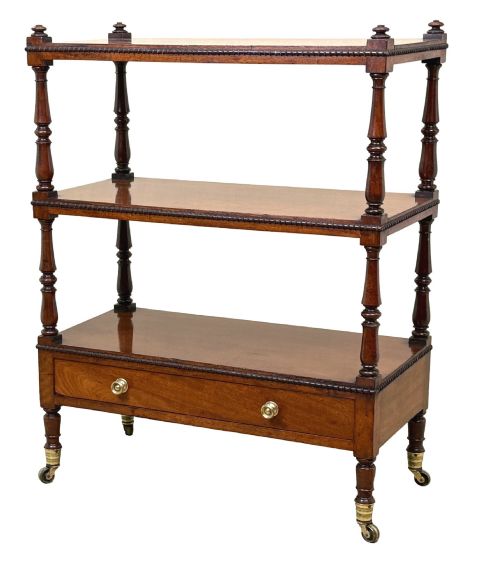
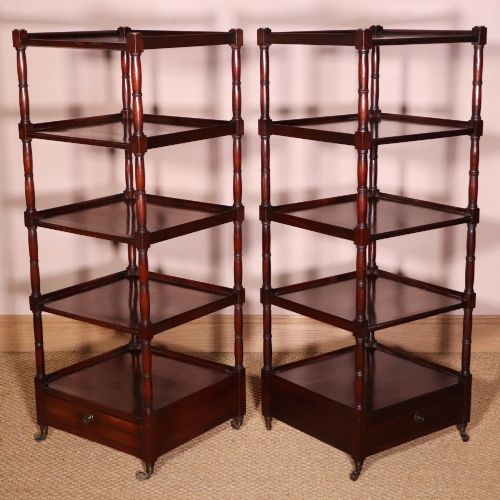
The version most commonly met on this page is the multi-tiered mahogany or rosewood whatnot, featuring turned uprights and several graduated shelves. Buyers frequently encounter walnut, satinwood, and ebonised variations alongside specific regional styles like French and Anglo-Indian designs.
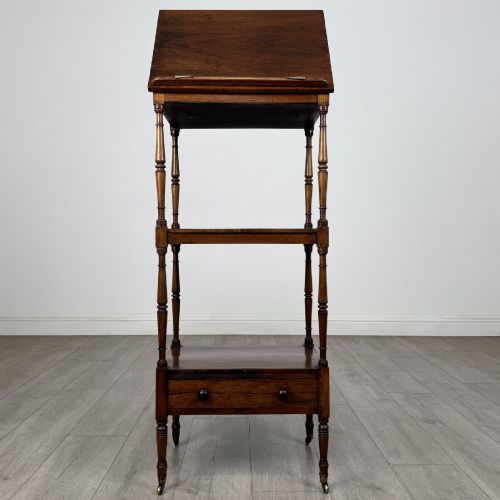
These tiered stands serve practical roles as display cabinets, music stands, dumb waiters, and tray tables. Their open construction allows light to pass through while offering multiple horizontal surfaces for arrangement.
How They Were Made
Cabinet makers utilised dense hardwoods including mahogany, walnut, rosewood, and satinwood, often selecting figured timbers like burr walnut and plum pudding mahogany for prominent surfaces. These woods were turned, carved, or ebonised to achieve the desired finish.
Construction techniques involve delicate joinery for upright supports and tiered shelves, frequently reinforced with brass galleries, casters, or ormolu mounts. Marquetry inlay, boxwood stringing, and parcel gilding appear across various pieces to ornament the timber surfaces.
Antique Wood Etagere Retail Price Guide 2026
Typical asking prices for wood etagere among the pieces listed under this phrase on Sellingantiques today, from the lower quarter to the upper quarter. They describe what is for sale here now, not the wider market.
Mahogany and walnut dominate the listed nineteenth-century etageres and whatnots.
What Varies in Quality
Quality rests on the selection of timber grain, the precision of turnery on upright supports, and the crispness of inlaid details like marquetry and boxwood stringing. Superior examples display thoughtful proportions where shelf depths graduate harmoniously from top to bottom.
The integration of secondary materials such as brass mountings, galleries, and bronze elements distinguishes finer workshops from standard production pieces. Structural integrity in the joints of multi-tiered uprights dictates how well a piece holds its vertical weight over time.
Gabriel Viardot·Edwards & Roberts·Gabriel-Frederic Viardot·Druce and Co
The Antique Wood Etagere Glossary
- Etagere
- A piece of furniture consisting of a set of open shelves for displaying small objects. The form originated in France during the eighteenth century.
- Whatnot
- A British term for an open tiered shelving unit used for ornaments and books. It gained widespread popularity throughout the nineteenth century.
- Marquetry
- Decorative veneer work forming geometric or pictorial patterns using various woods. Craftsmen applied these patterns to top tiers and tabletops.
- Ormolu
- Gilded bronze mounts applied to furniture decoration. This technique frequently appears on French-influenced nineteenth-century pieces.
- Dumb waiter
- A tiered stand or small shelving unit placed beside a dining table to hold dishes. Several examples feature multiple rotating or fixed wooden trays.
Antique Wood Etagere: Frequently Asked Questions
What is an etagere used for?
An etagere functions primarily as an open shelving unit for displaying porcelain, silver, books, and decorative objects without enclosing them behind glass doors.
Its multiple tiers allow objects to be arranged by height and visual weight across different levels in a room.
How do I tell a whatnot from an etagere?
A whatnot is a traditional British term for open shelving units with three or more tiers, common in nineteenth-century homes. An etagere often implies a French influence, frequently incorporating tray tops, marquetry, or side table functions.
In practice, makers and dealers used both terms interchangeably for tiered display furniture.
Where should I place an etagere?
Freestanding etageres suit corners, empty wall spaces, or central placement as a sofa table, depending on their footprint and backing finish. Corner etageres fit neatly into awkward wall angles to maximise display space.
Wall-hanging versions require secure fixing to support timber weight and displayed objects safely.
What woods were used for etageres?
Mahogany, rosewood, and walnut form the core of nineteenth-century tiered shelving construction. Finer examples utilise satinwood, padauk, and ebonised wood.
Inlays of boxwood and decorative veneers frequently accent these primary timbers.