


Wall Mounted Bookshelf
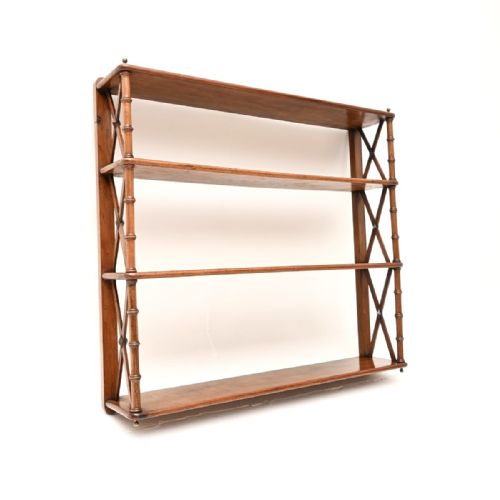
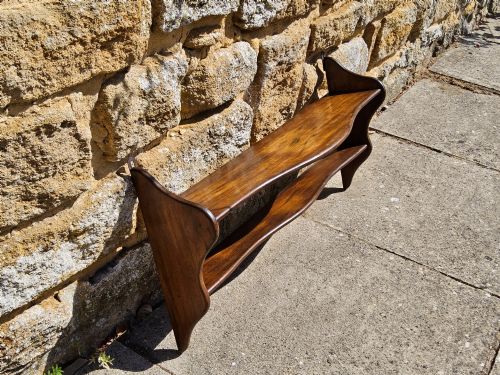
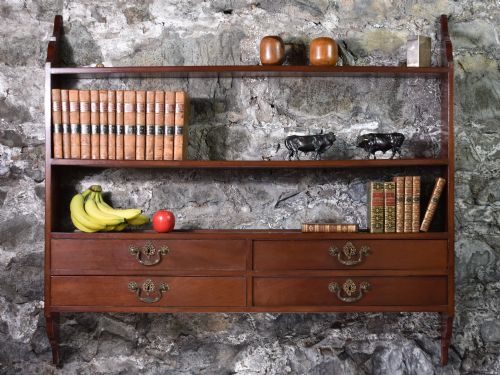
These wall mounted bookshelf options are timber wall shelves and hanging bookcases designed to hold volumes while saving floor space.
Wall Mounted Bookshelf
A wall mounted bookshelf brings vertical storage into a room through hanging shelves, wall bookcases, and display units. Buyers searching this phrase meet pieces originating from the eighteenth century, the nineteenth century, and the Edwardian period.
The dominant forms on this page include Georgian mahogany hanging shelves, Victorian walnut wall bookcases, and Edwardian hanging book shelves. Pieces span specific stylistic revivals such as Gothic Revival as well as practical domestic forms like plate racks and whatnot shelves.
Materials and construction
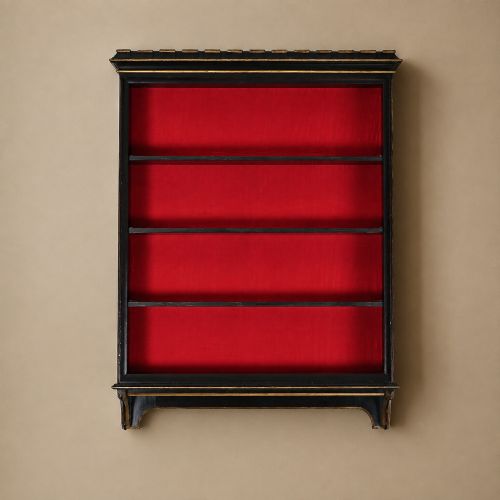
Cabinet makers constructed these wall mounted bookshelf pieces primarily in timbers like mahogany, walnut, and oak, alongside satin birch and cherry wood. Ebonised timber and brass elements appear across nineteenth-century examples to add decorative contrast.
Makers utilised traditional joinery to build hanging shelves and wall bookcases capable of supporting heavy rows of books. Surfaces reflect the natural grain of the hardwood, often finished with polished surfaces suited to domestic interiors.
The listings on this page span the eighteenth, nineteenth, and early twentieth centuries, featuring walnut, mahogany, oak, and satin birch.
Distinguishing quality
Quality in a wall mounted bookshelf rests on the selection of timber, such as figured mahogany or rich walnut, and the crispness of any applied mouldings or Gothic revival details. Finer pieces display careful attention to structural joints where the shelves meet the vertical uprights.
George Edmund Street
The Wall Mounted Bookshelf Glossary
- Hanging shelves
- Open wooden shelving units designed to be secured directly to a wall rather than resting on the floor. They typically feature two or more tiers supported by vertical sides.
- Whatnot
- A multi-tiered piece of freestanding or wall-mounted furniture used for displaying ornaments, books, or small collectibles. The form became particularly popular during the Victorian period.
- George III
- The stylistic period spanning the reign of George III from seventeen sixty to eighteen twenty, known for refined mahogany proportions and classical restraint. Pieces from this era demonstrate exceptional cabinet-making standards.
- Gothic Revival
- An architectural and decorative style drawing inspiration from medieval forms, prominent in nineteenth-century pieces. It incorporates pointed arches, tracery, and heavy ebonised timber.
Wall Mounted Bookshelf: Frequently Asked Questions
How do I hang a heavy antique bookshelf?
Antique wall mounted bookshelf pieces require secure fixings into structural wall studs or solid masonry using appropriate brackets. Because older timbers add considerable weight, proper load-bearing support protects both the wall and the vintage woodwork.
Consult a professional installer if the mounting points on the back of the antique do not align with standard wall spacing. Distributing the weight evenly across multiple fixing points ensures the piece remains stable.
What woods were used for these shelves?
Cabinet makers built these wall shelves using hardwoods such as mahogany, walnut, oak, satin birch, and cherry wood. Ebonised timber also appears on specific revival pieces to mimic more costly exotic materials.
Each timber dictates the natural tone and grain pattern of the finished bookcase. Regular polishing with appropriate wax preserves the surface colour without building up heavy residues.
How do I date a Victorian hanging shelf?
Dating a nineteenth-century wall mounted bookshelf involves examining the construction methods, screw types, and timber preparation alongside stylistic clues. Victorian pieces frequently incorporate darker finishes or Gothic revival decorative motifs.
Comparing the secondary woods and backboards helps distinguish mid-nineteenth-century examples from later Edwardian productions. Archival records and historical design books provide further context for specific workshop practices.
Can these shelves support heavy modern books?
While these hanging bookshelves were originally built for period volumes, modern hardbacks can exceed traditional weight limits if stacked densely. Assessing the depth of the shelves and the strength of the side supports helps determine safe capacity.
Spreading heavier volumes across lower tiers or combining books with lighter decorative objects prevents undue strain on historical joinery. Careful loading preserves the structural integrity of antique wall furniture.