


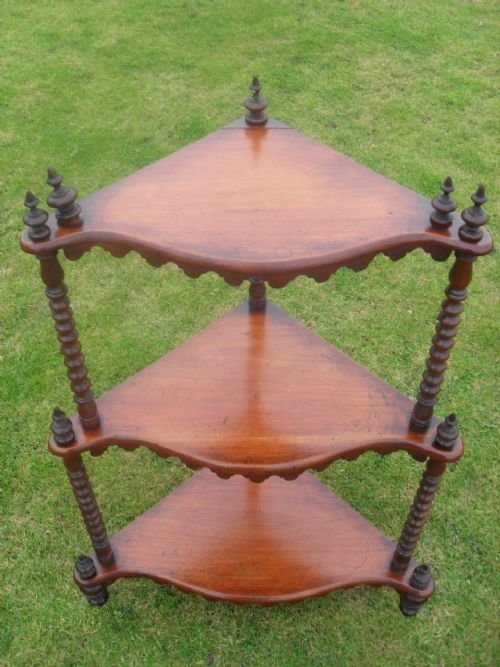
Turned Spindle Shelving
Turned spindle shelving brings warmth and tiered display space to a room, offering practical storage through elegant wooden supports.
Turned Spindle Shelving
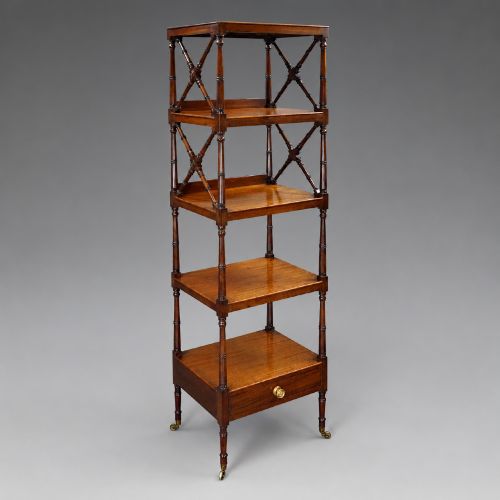
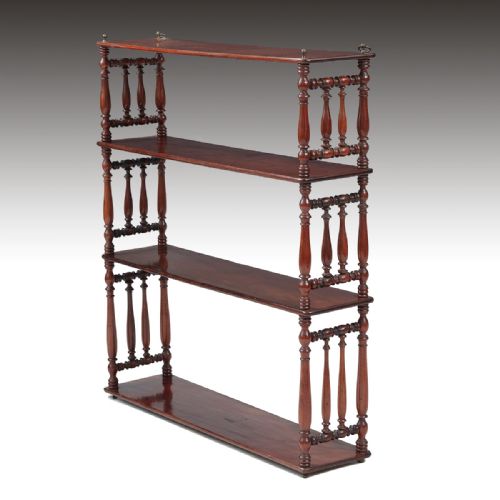
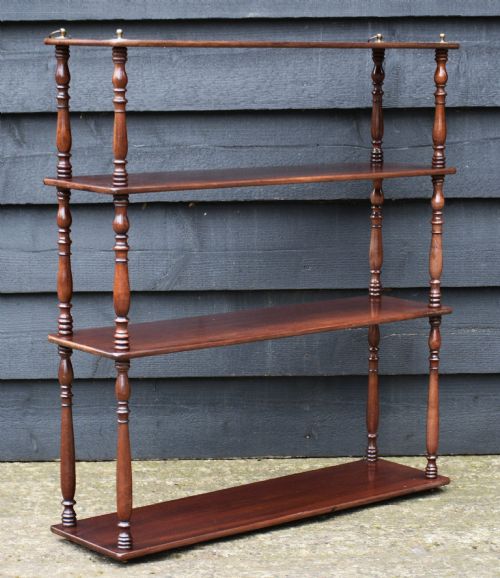
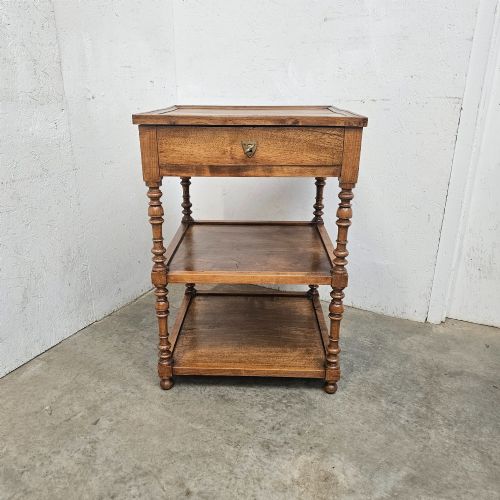
When you search for turned spindle shelving, you are looking at tiered storage units and wall hanging shelves defined by upright turned wooden supports. These pieces bridge the gap between open display and structured storage, functioning as bookcases, etageres, and whatnots across multiple periods.
The versions you are most likely to meet on this page span from the Georgian and Regency eras through the Victorian period, frequently constructed from rich timbers like mahogany and walnut. They appear as both floor-standing multi-tier units and wall-mounted shelves designed to hold books and decorative objects.
Construction and materials
Cabinetmakers utilised solid timbers including mahogany, walnut, cherry wood, satin birch, and rosewood to build these shelves, often turning the vertical supports on a lathe to create distinctive spindle profiles. Ebonised wood and brass elements also appear, providing structural contrast and decorative detail.
Construction methods relied on traditional joinery to secure the horizontal shelves firmly to the turned uprights, ensuring stability whether the piece stands on the floor or hangs upon a wall.
Object forms on this page include wall shelves, whatnots, etageres, bookcases, and multi-tier shelving units.
Quality and proportion
The distinction between standard examples and finer pieces lies in the selection of timber grain and the precision of the turning on the upright spindles. Richer figuring in woods like mahogany or satin birch elevates the visual weight of a piece.
Proportion and the handling of edge details, such as serpentine fronts or careful tier spacing, separate straightforward functional shelving from more considered cabinetmaking.
The Turned Spindle Shelving Glossary
- Etagere
- A piece of furniture consisting of a set of open shelves for displaying ornaments. Originating in France, it serves a similar display function to the whatnot.
- Serpentine front
- A furniture front curving outward in the centre and inward at the sides. This contour adds subtle movement to the leading edge of a shelf.
- Ebonised wood
- Timber treated to resemble ebony, usually through staining and polishing. It provides a dense, dark finish seen on various 19th-century pieces.
Turned Spindle Shelving: Frequently Asked Questions
What is turned spindle shelving used for?
These units provide open storage and display space for books, ceramics, and decorative objects in living areas or studies. Their tiered design allows items to be arranged vertically without crowding the room.
Floor-standing versions function as compact bookcases or whatnots, while hanging variants attach directly to walls to utilise vertical space efficiently.
How do I date a piece of spindle shelving?
Dating relies on identifying the timber species, overall style, and construction characteristics associated with periods like the Georgian, Regency, or Victorian eras. For instance, satin birch and rosewood point towards specific 19th-century aesthetic preferences.
Cabinetmaking methods and hardware clues further narrow down the decade of manufacture, distinguishing earlier George III designs from later Victorian productions.
Are these shelves sturdy enough for heavy books?
While sturdy when well-maintained, these pieces are generally designed for display and moderate weight rather than heavy library collections. The slender turned spindles provide elegant vertical support rather than industrial load-bearing capacity.
Wall-hanging versions require secure fixing to wall studs to ensure they safely hold the weight of placed objects.
What is the difference between a whatnot and an etagere?
Both terms describe multi-tiered open shelving units, though 'etagere' often carries French stylistic associations. In practice, makers and dealers historically used both names interchangeably for tiered display furniture.
On this page, both forms share the characteristic vertical supports and open shelving configuration.