
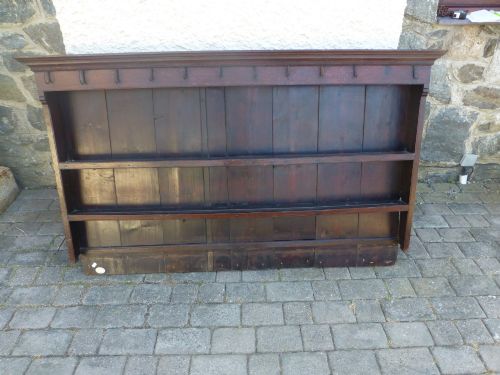
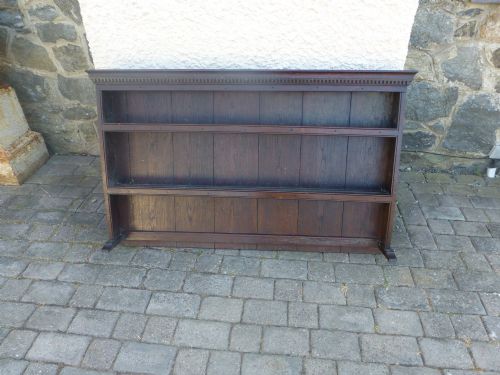
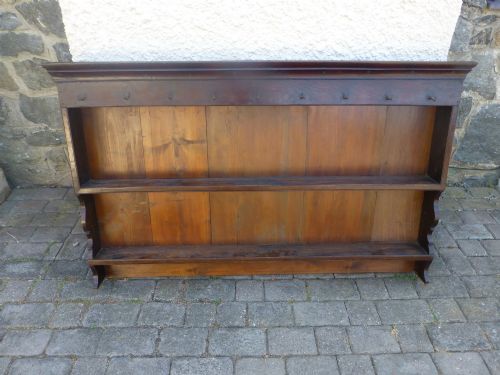
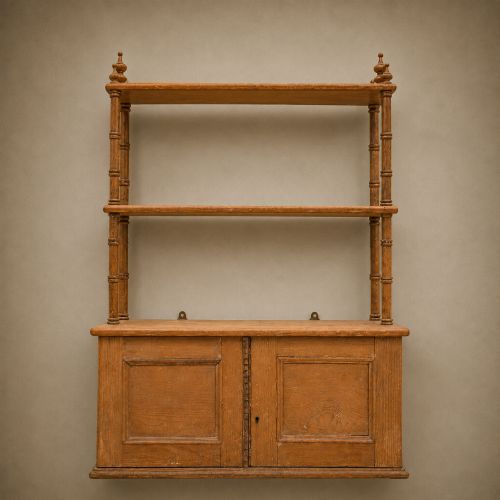



Wall Hanging Plate Rack
These wall hanging plate rack pieces organise domestic crockery with timber craftsmanship, offering both sturdy storage and period charm.
Wall Hanging Plate Rack
A wall hanging plate rack provides open display and storage for plates, platters and bowls directly upon a kitchen or dining wall. These functional furnishings keep daily ceramics accessible while using vertical space efficiently in traditional interiors.
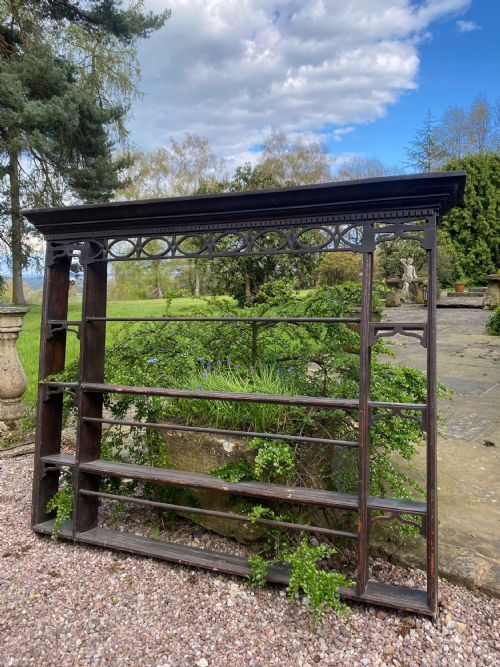
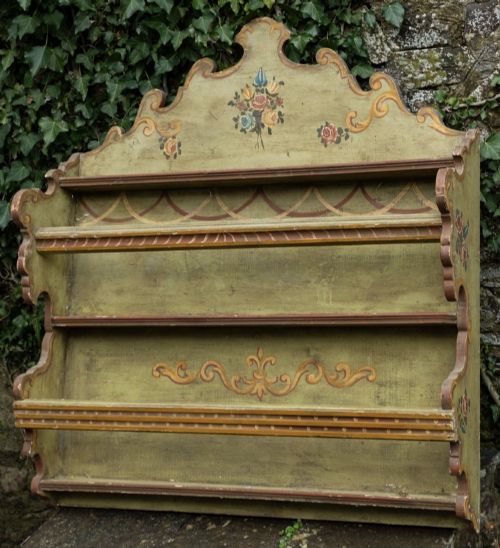
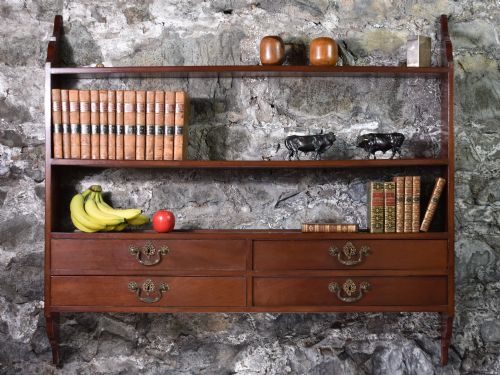
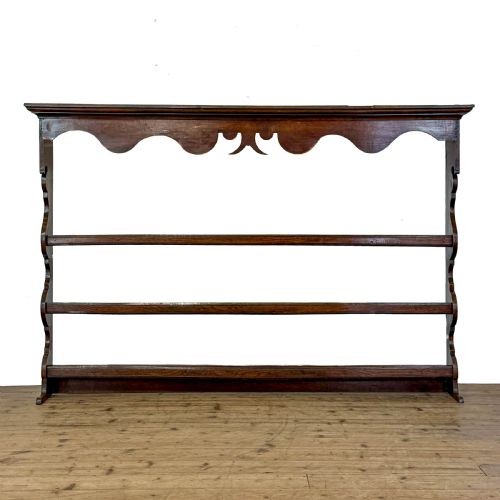
The selections span centuries of woodworking, with oak, mahogany and pine forming the primary structures. Examples range from rustic country pine versions to formal Georgian mahogany hanging shelves and detailed 18th century delft racks.
Buyers encounter sturdy oak and pine iterations alongside painted wood finishes and occasional brass or iron details. These wall-mounted pieces deliver practical utility coupled with enduring decorative presence.
Materials and construction methods
Cabinetmakers and country joiners utilised solid timber boards of oak, mahogany and pine to build these plate racks. Selected pieces incorporate fretwork detailing, marquetry, or iron cup hooks to secure household items.
Surfaces exhibit natural timber grains, stained oak treatments, or historic painted finishes such as Little Greene shades. Joinery techniques reflect the period, securing shelves and plate rails for daily domestic service.
A few antique racks still retain their original iron hooks, ready to dangle morning mugs just below the plates.
Assessing quality and execution
The calibre of a wall hanging plate rack rests upon the selection of timber and the proportion of its shelving. Superior examples demonstrate thoughtful detailing, such as attractive fretwork, original iron hardware, and balanced joinery.
Simpler country items rely on sturdy pine construction and straightforward utility, whereas refined Georgian or George III mahogany pieces display finer mouldings and cabinetwork appropriate for polite rooms.
The Wall Hanging Plate Rack Glossary
- Delft rack
- A wall-mounted shelving unit specifically designed with narrow grooves or retaining rails to display tin-glazed earthenware plates upright. These practical fittings protect ceramics from sliding while keeping them in view.
- Fretwork
- Openwork ornamentation cut into thin timber boards using a scroll saw or piercing tools. This decorative technique appears on the crests or aprons of better regional racks.
- Marquetry
- The art of applying small pieces of veneered wood to a structure to form decorative patterns or pictures. It adds a sophisticated layer of surface design to select display pieces.
- Hanging shelves
- Wall-fixed units comprising horizontal boards supported by vertical sides or brackets. They serve to store books, plates, or decorative objects off the floor.
Wall Hanging Plate Rack: Frequently Asked Questions
How do I hang a heavy plate rack securely?
These timber units require sturdy fixings screwed directly into wall studs or masonry anchors to bear the weight of heavy ceramics.
Professional installation ensures the piece remains stable and safe under the daily load of plates and bowls.
Can these racks support heavy stoneware plates?
Solid oak and mahogany versions easily accommodate dense earthenware and stoneware crockery without strain.
Pine and lighter country models suit standard dinner services, provided the plate rails and wall fixings remain secure.
How do I clean an antique wooden plate rack?
Dust the timber gently with a dry, soft cloth to prevent grime accumulation on the surfaces and mouldings.
Avoid harsh chemical cleaners that strip historic wax or painted finishes, opting instead for specialist beeswax when nourishment is required.
What is the difference between an 18th century and Victorian rack?
Eighteenth-century examples typically feature heavy oak construction, distinct peg joinery, and simpler country utility or formal mahogany styling.
Victorian variations frequently utilise softer pine timbers, taller multi-tier shelving, and occasionally applied decorative mouldings or painted surfaces.