
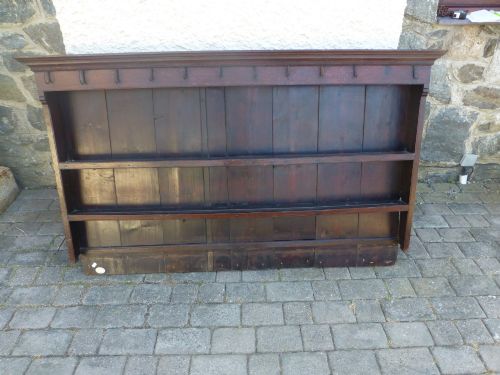
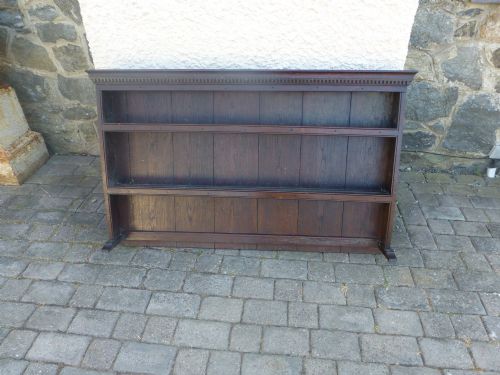
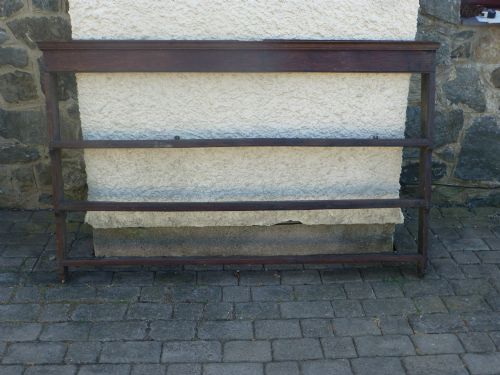
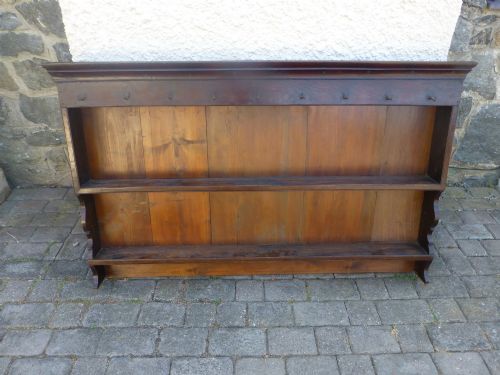


Country Oak Delft Rack
A country oak delft rack organises plates and platters against a wall with utilitarian simplicity, bringing honest historic character to any kitchen.
Country Oak Delft Rack
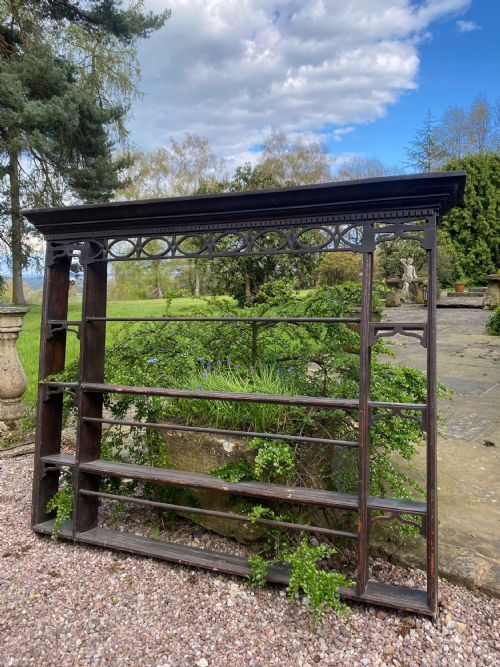
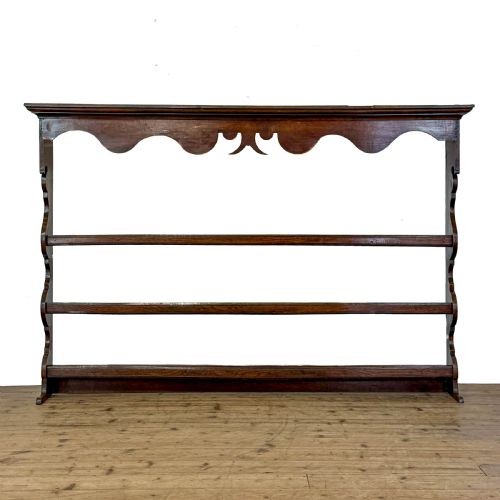
A country oak delft rack is a wall-mounted shelving unit designed to display plates, platters, and kitchen ceramics upright. The pieces seen here span the seventeenth, eighteenth, and early twentieth centuries, capturing authentic domestic storage from earlier eras.
Most examples take the form of plate racks, wall shelves, and dresser racks created for everyday use in provincial homes. Buyers encounter Georgian pieces alongside English country variations built primarily for functional display.
Makers shaped these utilitarian fixtures to hold ceramics securely on wooden slats while integrating cleanly into traditional kitchen walls. The surviving items range from simple hanging racks to architectural forms complete with classical columns.
How they were made
Makers constructed these racks using solid oak, frequently pairing the primary timber with pine for secondary elements like backing boards. Iron and brass hardware occasionally provides structural support or hanging fixtures.
Carpenters utilised traditional jointing methods to build durable frames capable of bearing the heavy weight of earthenware ceramics. Stained oak finishes appear alongside untreated wood surfaces that display the natural grain over centuries of use.
The listings show oak as the dominant primary material, occasionally supplemented by pine, iron, and brass.
What varies in quality
Quality separates through the integrity of the timber selection and the sophistication of the joinery rather than mere age alone. Superior examples display thoughtful proportions and harmonious integration of architectural details such as carved elements.
The degree of surface preservation and the depth of natural patination on the oak determine the visual strength of the piece. Simpler provincial items rely on unpretentious utility, whereas finer Georgian variations exhibit deliberate decorative restraint.
The Country Oak Delft Rack Glossary
- Delft rack
- A wall-mounted or dresser-top shelf specifically slotted to display ceramic plates upright. These fixtures kept tableware accessible and dry in historic kitchens.
- Dresser rack
- The upper shelving component of a kitchen dresser, often separated and hung directly on a wall. It provides multiple tiers for stacking plates and displaying platters.
- Georgian
- A design period spanning the eighteenth century characterised by classical proportions and regional British craftsmanship. Pieces from this era balance utility with restrained classical details.
- Corinthian columns
- Classical architectural supports featuring ornate, acanthus-leaf capitals occasionally found flanking provincial furniture. Their inclusion elevates simple country racks into more formal decorative statements.
- Patina
- The surface sheen and colour developed by timber over decades of handling, cleaning, and exposure to light. It serves as a visual record of age and continuous use.
Country Oak Delft Rack: Frequently Asked Questions
What is a country oak delft rack used for?
These racks were originally built to hold and display tin-glazed earthenware and other ceramic plates upright in domestic kitchens. They kept everyday tableware within reach while allowing wet plates to drain after washing.
Today, homeowners use them in kitchens and dining rooms to display collections of ceramics safely against the wall. They offer practical storage that keeps floor space open while adding historic texture to the room.
How do I tell an 18th-century rack from a later one?
Eighteenth-century examples show hand-cut joinery, pegged joints, and timber surfaces that exhibit genuine wear and oxidation over centuries. The grain texture and tool marks reflect historical hand-tool manufacturing techniques.
Later reproductions or twentieth-century interpretations often feature machine-cut elements, uniform surfaces, and modern fixings. Examining the backboards and secondary woods like pine helps confirm the period of construction.
How should I clean and maintain antique oak?
Antique oak requires minimal intervention and should only be dusted gently with a dry, soft cloth. Avoid using modern silicone polishes, wet sponges, or harsh chemical cleaners that can damage the historic surface finish.
A light application of traditional beeswax once or twice a year helps nourish dry timber and maintain the natural lustre of the wood. Keeping the rack away from direct heat sources and extreme humidity prevents the oak from splitting.