



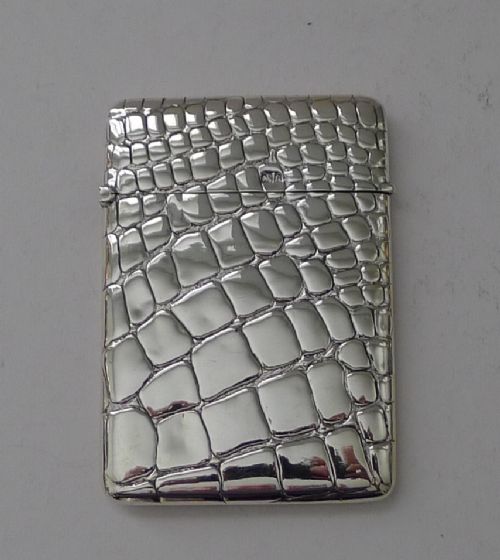


Visiting Card Case
When you handle a visiting card case, you hold a tangible piece of social history designed to protect delicate paper calling cards.
Visiting Card Case
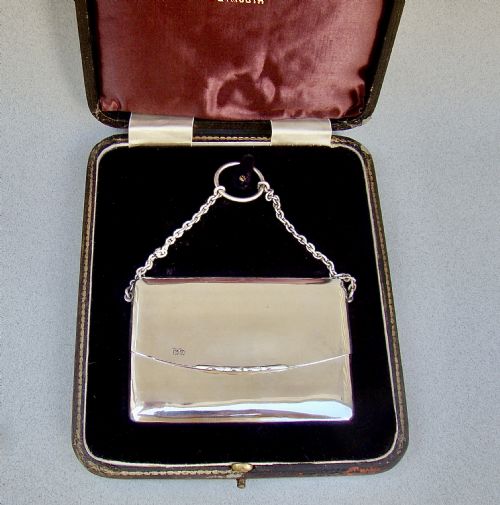
A visiting card case is a small, portable container created to hold the calling cards exchanged during formal social visits in the nineteenth and early twentieth centuries. These pocket-sized accessories reflect the rigid etiquette of the Victorian and Edwardian periods, where leaving a card was a mandatory social ritual.
How they were made
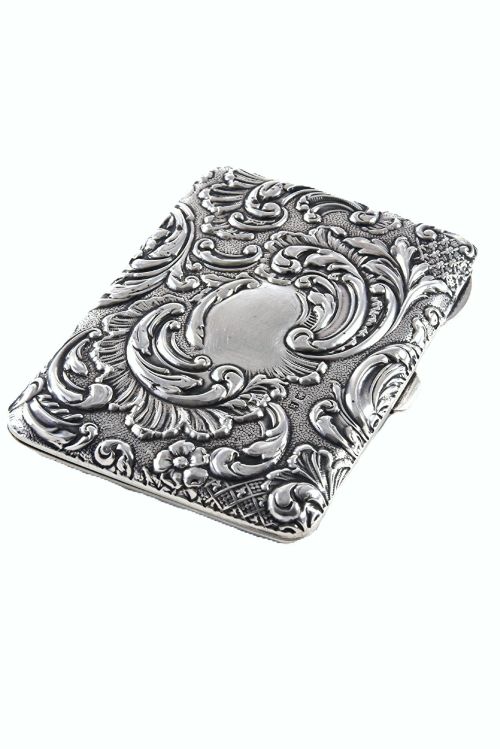
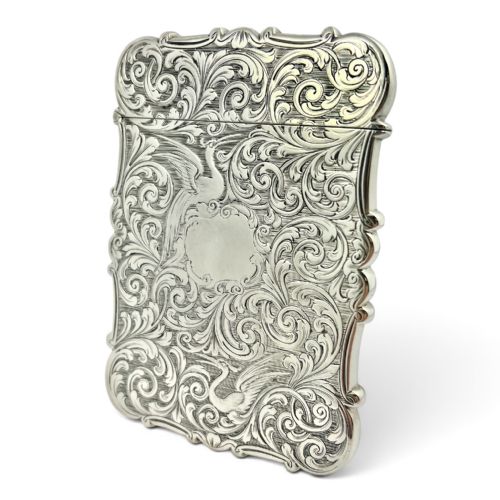
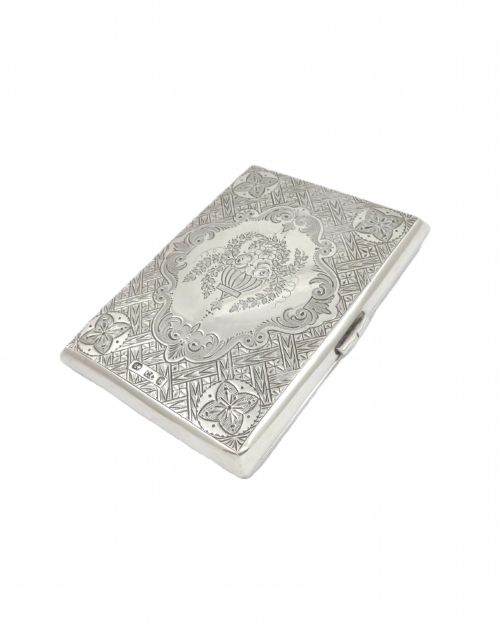
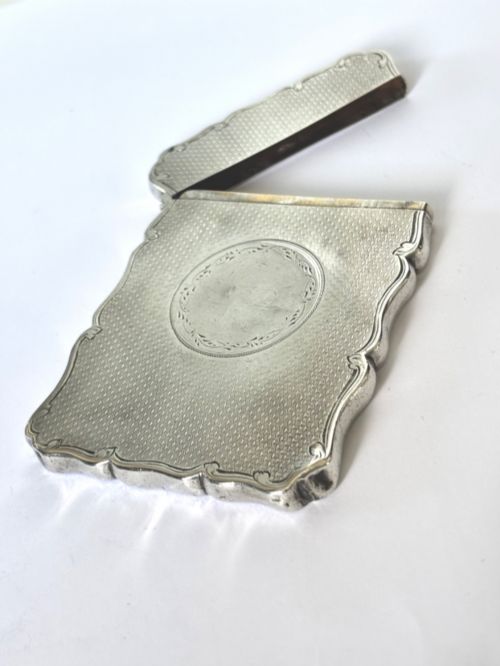
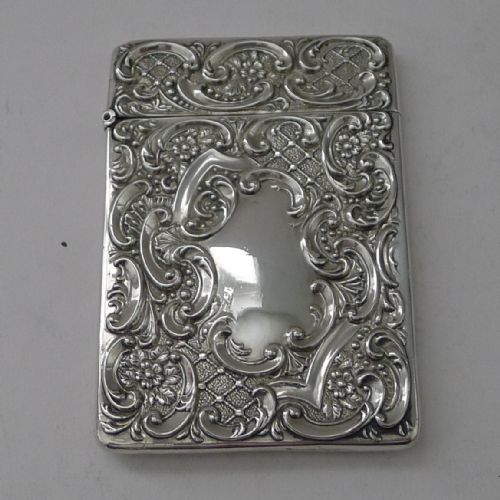
Silversmiths utilised techniques such as repoussé, stamping and deep hand-engraving to decorate sterling silver surfaces with floral motifs, animals and landmarks. Metal boxes frequently incorporate interior gold wash linings and spring-loaded hinges designed to keep the contents secure.
Organic items rely on meticulous carpentry and inlay work, joining thin sheets of mother of pearl, abalone and tortoiseshell to rigid foundations, or carving dense materials like sandalwood and ivory into intricate figures and garden landscapes.
Several cases are shaped like tiny books, letting you carry your social introductions disguised as a miniature library.
What varies in quality
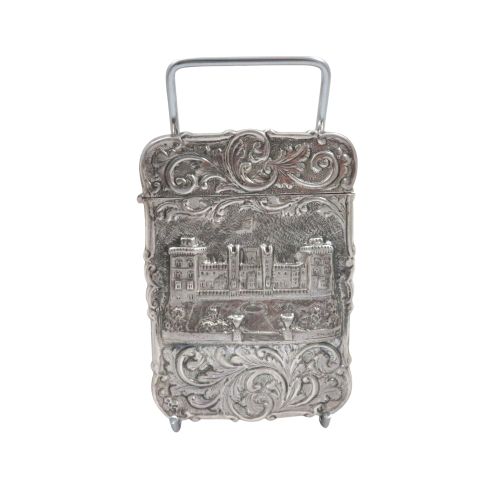
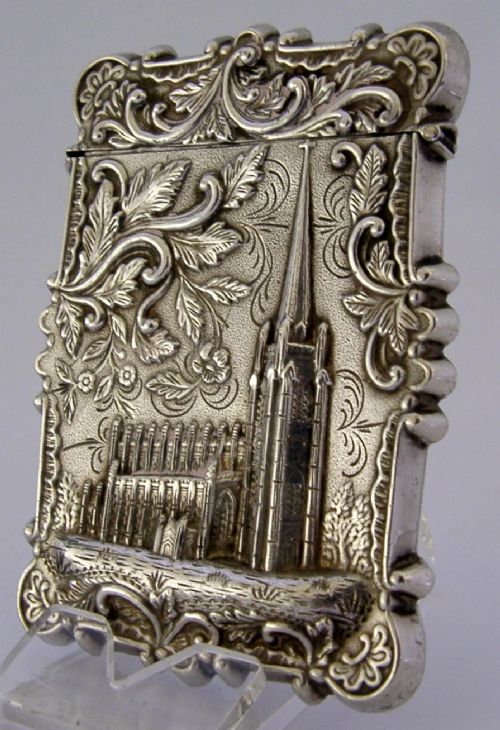
Quality in a visiting card case rests on the depth and crispness of the decoration, whether it is hand-chased repoussé work on silver or the precision of geometric mosaic patterns in Anglo-Indian sandalwood. Finer pieces display sharp relief without softening, even across heavily worked architectural scenes or densely populated figural carvings.
Material selection and structural integrity also distinguish standard production from exceptional examples, seen in the matching of iridescent shell panels, the snug alignment of spring-loaded lids, and the presence of clear hallmarks identifying prominent silversmiths.
Willian Aitken·Nathaniel Mills·George Unite·Foxall & Co·Deakin & Nephew
The Visiting Card Case Glossary
- Castle top
- A silver visiting card case featuring a high-relief engraving or stamping of a famous British or international landmark on the lid. Examples frequently depict buildings such as Windsor Castle, St Paul’s Cathedral or Trinity Church.
- Aide memoire
- A small notebook or memorandum tablet often combined with a card case to record social engagements and visits. These objects frequently include a small pencil and internal leaf compartments.
- Repoussé
- A metalworking technique where the smith hammers the design from the reverse side to form raised relief on the front. This method creates tactile, three-dimensional scenes of gods, foliage and animals.
- Canton export
- Decorative items manufactured in China specifically for Western markets during the nineteenth century. These pieces are typically characterised by deeply carved sandalwood, ivory or lacquered surfaces depicting figures in gardens.
Visiting Card Case: Frequently Asked Questions
What is a visiting card case?
A visiting card case is a small, rigid container used in the nineteenth and early twentieth centuries to store and protect paper calling cards. These items were carried during social calls to leave at houses when hosts were absent.
They are pocket-sized and constructed from materials like sterling silver, mother of pearl and carved wood, reflecting the status and taste of the owner.
How were calling cards used?
Calling cards served as formal notifications of a visit, dropped off at a residence to signal that an acquaintance had called. The physical card acted as a social proxy when an in-person meeting was not possible.
Etiquette dictated specific rules for bending corners or leaving multiple cards depending on the exact nature of the visit.
What materials are most common?
Sterling silver is the most frequently encountered material, often decorated with floral engraving or architectural castle top designs. Other common materials include mother of pearl, tortoiseshell and carved sandalwood.
Makers also combined media, pairing silver frames with abalone shell panels or integrating internal gold wash linings.
How do I date a silver case?
Silver visiting card cases can be dated using the hallmarks stamped into the metal, which record the assay office, standard mark and a specific date letter. British pieces carry town marks like Birmingham or London alongside maker initials.
Stylistic shifts, such as the transition from Victorian scrollwork to Edwardian motifs or Art Deco geometry, provide additional dating clues.