



Art Deco Card Case
These art deco card case examples bring the geometric discipline of the interwar period straight to your pocket.
Identifying an art deco card case
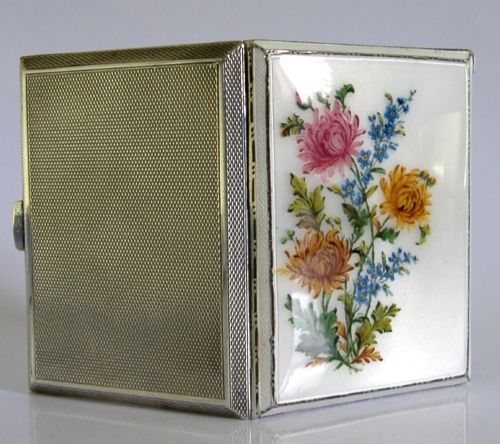
An art deco card case represents a compact personal accessory designed to hold calling cards, business cards or cigarettes within structured metal or mixed media shells. The pieces found here span the early twentieth century, drawing heavily upon the definitive aesthetic of nineteen thirty alongside earlier transitional items.
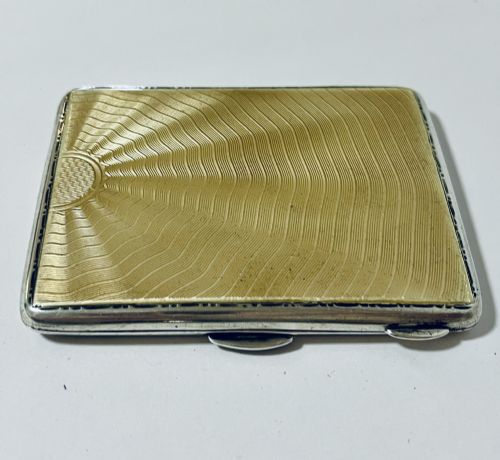
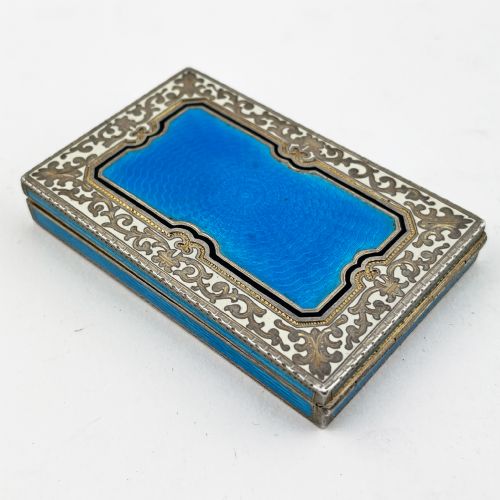
Most examples take the form of slim folding wallets, spring clip carriers or rigid hinged boxes tailored for a pocket or handbag. Materials range from solid silver and sterling silver to tactile combinations involving tortoiseshell, silk, leather and vibrant enamel panels.
Origins stretch across English, French and American workshops, yielding both minimalist geometric designs and novelty formats such as sprung envelope styles. Every item preserves a tangible link to formal etiquette and social networking from a bygone era.
Distinguishing quality
Quality reveals itself through the crispness of mechanical actions, such as the precise tension in a spring clip or the flush closure of a hinged lid. Superior specimens maintain intact interior silk, unblemished enamel and sharp hallmarks without softening from excessive wear.
The sophistication of the surface decoration determines the tier of the piece, moving from plain polished silver to complex inlaid metalwork, multi-coloured enamel panels or scarce novelty mechanisms.
Listings feature items from the nineteen hundreds through the nineteen thirties, executed in solid silver, sterling silver, tortoiseshell, silk, leather and enamel.
William Base & Sons·Watrous Manufacturing Co
The Art Deco Card Case Glossary
- Sterling silver
- A standard alloy consisting of ninety-two point five percent silver by mass, widely utilised for durable pocket accessories. It provides the structural backbone for the majority of these metal cases.
- Hallmark
- An official stamp or series of marks applied to precious metals indicating standard of purity, place of assay and year of manufacture. These stamps allow collectors to date pieces accurately.
- Tortoiseshell
- A bony material derived from the shell of large sea turtles, prized for its mottled amber and brown patterns. It adds warmth and texture when paired with silver frames.
- Engine-turned
- A mechanical engraving technique that produces intricate, geometric patterns of finely etched lines across a metal surface. This process was a hallmark of period luxury items.
- Spring clip
- An internal metal tension arm designed to secure cards or paper currency firmly in place inside the case. Its resilience is a key indicator of mechanical integrity.
Frequently Asked Questions
What fits inside an art deco card case?
These compact holders were originally sized for traditional calling cards, visiting cards or slim cigarettes. Modern owners frequently repurpose them to carry business cards, credit cards or folded banknotes.
The internal depth and spring mechanisms dictate capacity, with slim folding wallets offering different interior clearances compared to rigid box frames.
How do I care for silver and enamel?
Silver components benefit from gentle cleaning with a soft microfibre cloth to maintain polish without wearing down engraved details. Enamel requires particular care to avoid harsh chemical exposure and impact against hard surfaces.
Storing cases in dry environments prevents tarnishing and protects delicate interior fabrics like silk and leather from moisture damage.
Were these cases used by men or women?
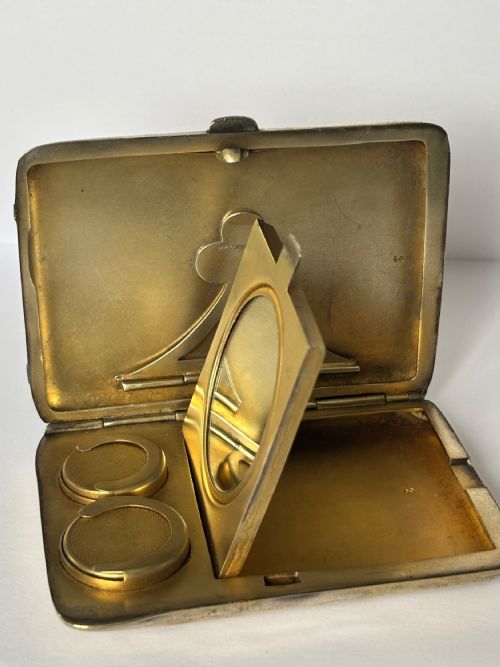
Both genders utilised card cases as essential tools of social and professional etiquette during the early twentieth century. Ladies' versions often featured integrated coin purses, mirrors or delicate decorative engravings.
Men typically carried flatter, pocket-sized cigarette and card combinations designed for easy retrieval from a tailored jacket.
How can I date an unmarked piece?
Dating relies heavily on stylistic markers typical of the era, such as geometric motifs, streamlined curves and specific material combinations like tortoiseshell and silver. Items bearing silver hallmarks offer precise chronological data through assay office letters.
Comparing construction techniques and interior mechanisms against documented pieces from the same period helps narrow down the decade of production.