


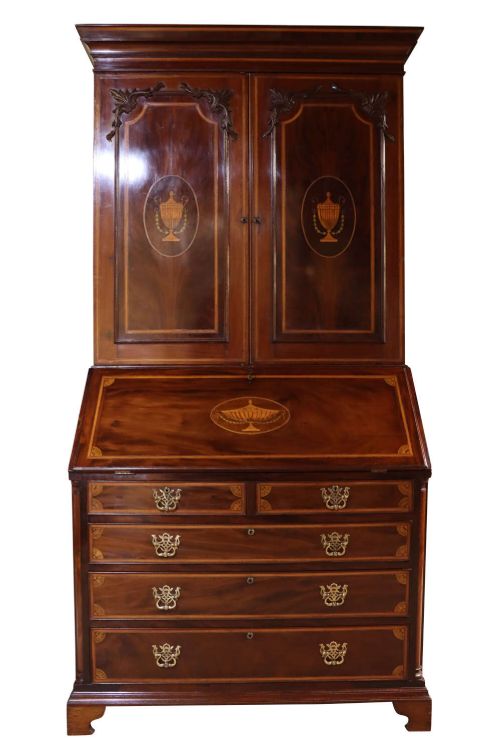
Vintage Writing Slant Desk
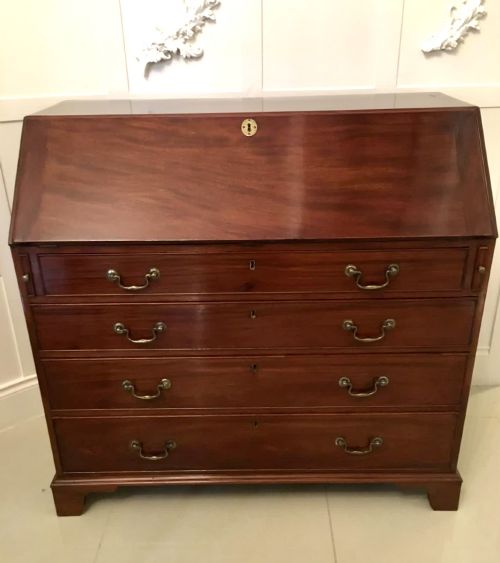
A vintage writing slant desk offers a sloping fall front that opens to reveal fitted pigeonholes and compartments for correspondence.
Vintage Writing Slant Desk
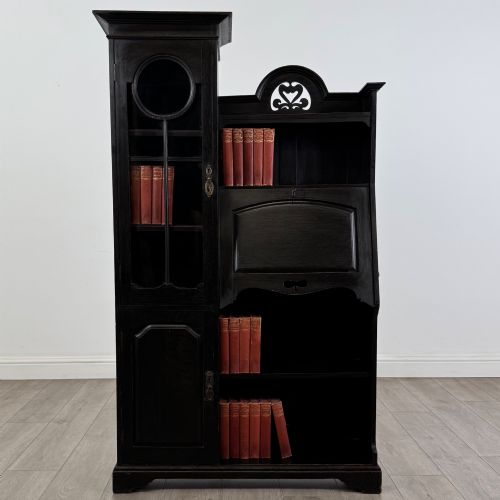
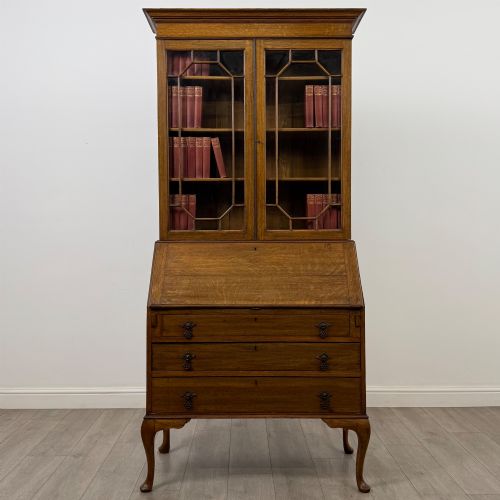
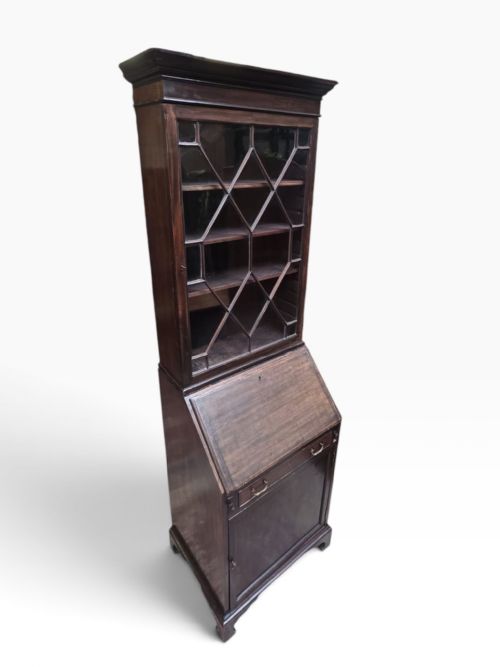
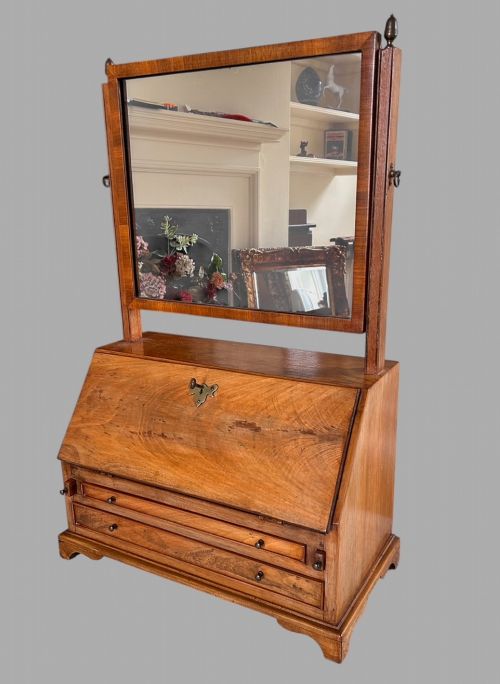
A vintage writing slant desk combines a portable writing box mechanism with a secure cabinet or table stand, functioning primarily as a compact writing station. Buyers searching for a vintage writing slant desk will encounter various formats including bureau bookcases, table-top versions, and freestanding desks with hinged writing flaps.
How they were made
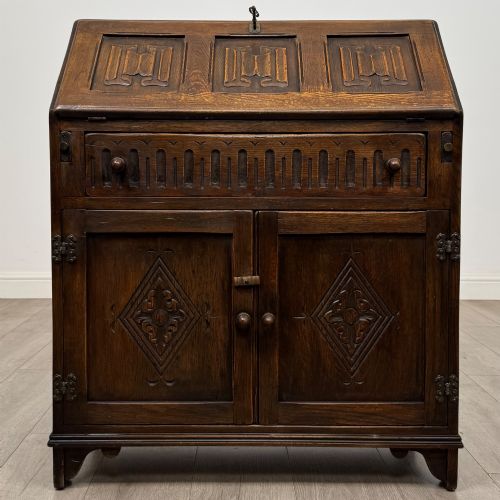
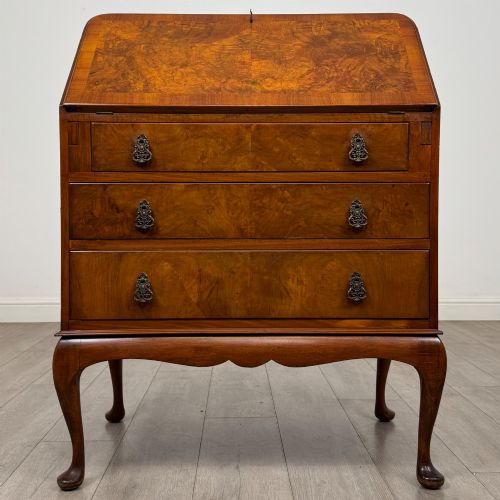
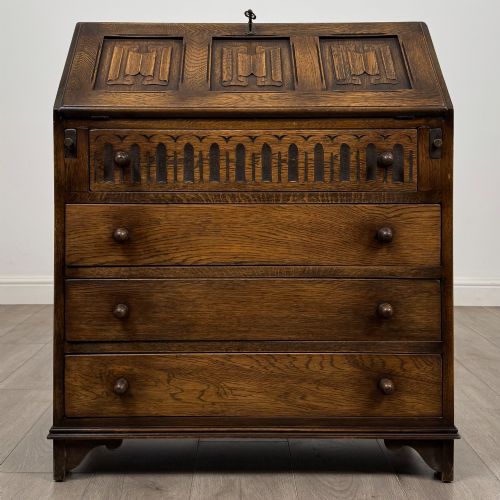
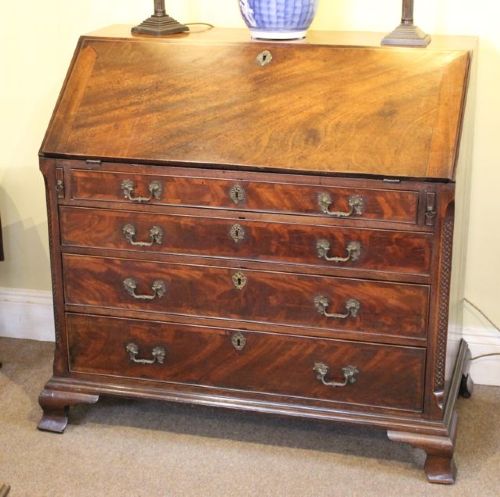
Cabinetmakers utilised solid timbers and selected veneers such as oak, mahogany, burr walnut, and yew wood over supportive secondary woods. Surfaces often display linenfold carving, figural grain patterns, and contrasting inlay work.
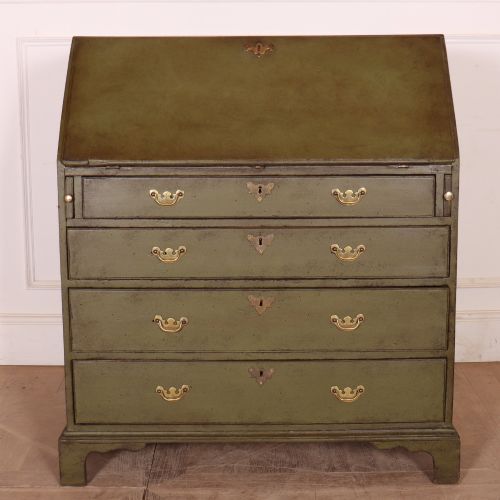
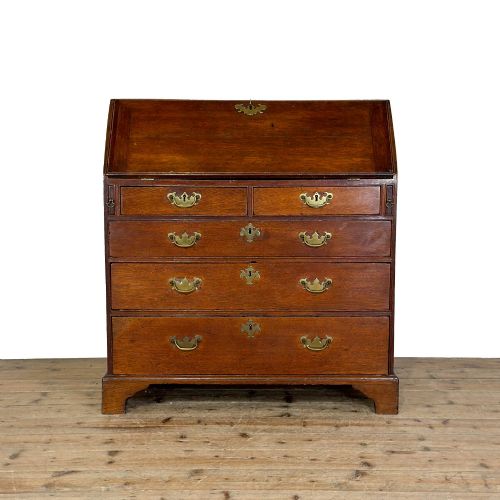
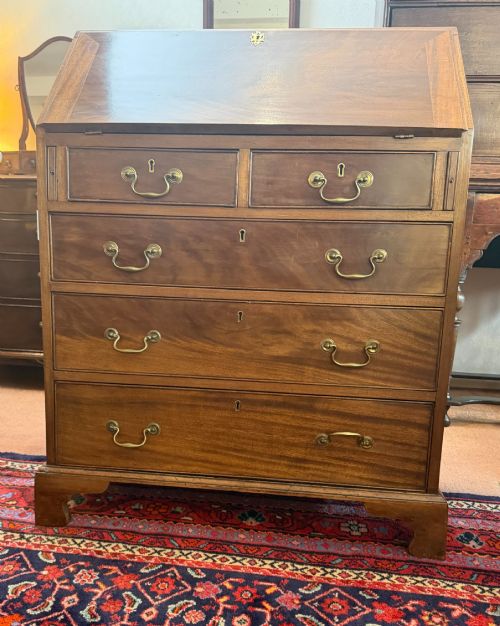
Brass hardware secures the fall fronts, pigeonhole interiors, and drawer banks, while glass panels appear on upper bookcase sections. Joinery relies on traditional dovetailing for drawer construction and pegged joints for structural stability.
Listings span from the seventeenth century through the 1930s, incorporating oak, mahogany, walnut, and yew wood.
What varies in quality
The distinction between tiers rests upon the choice of timber veneer, the intricacy of internal pigeonhole configuration, and the crispness of applied carving. Superior examples exhibit continuous grain matching across the fall front and drawer fronts.
Makers of high-grade pieces incorporated secondary woods of equal pedigree and executed joinery with minimal visible filler. The integration of glazed upper bookcase doors and original brass handles further separates workshop standards.
Heals of London·Arthur Basil Reynolds
The Vintage Writing Slant Desk Glossary
- Bureau
- A desk featuring a sloping hinged lid or fall front that opens to form a writing surface. This term frequently describes pieces that house internal compartments for paper and ink.
- Fall front
- The hinged panel on a slant desk that drops forward to create the writing surface. It often rests upon integrated wooden pull-out supports.
- Pigeonhole
- A small, open compartment situated inside the desk interior for sorting letters and documents. These compartments often surround a central lockable cupboard.
- Bureau bookcase
- A tall furniture form combining a writing slant desk base with an upper shelving or glazed cabinet section. These dual-purpose pieces maximise storage in domestic settings.
- Linenfold
- A style of wood carving that mimics folded fabric, commonly seen on Edwardian and revival oak panels. This decorative technique adds texture to the exterior fall front.
Vintage Writing Slant Desk: Frequently Asked Questions
How do I use a vintage writing slant desk?
Lower the hinged fall front so it rests horizontally on its pull-out supports to create a stable writing surface. Store stationery, envelopes, and pens within the internal pigeonholes and small drawers.
Close and lock the fall front when not in use to conceal writing materials and protect documents from dust and light exposure.
Where should I place a slant desk at home?
Position the desk against a sturdy interior wall where natural light falls across the writing surface from the side. Avoid placing the piece in direct sunlight or directly beside heating vents to protect the timber and veneer.
Pair the desk with an appropriately scaled chair that allows comfortable posture while the fall front is open.
How do I identify the period of a bureau?
Examine the construction methods, timber choices, and decorative motifs present on the carcass and interior fittings. Eighteenth-century examples often feature solid oak or mahogany with hand-cut dovetails, while Edwardian pieces frequently showcase machine-prepared veneers and revival styles.
Look for maker stamps, labels, or hardware styles that provide additional chronological clues regarding production dates.
What is the difference between a bureau and a desk?
A bureau specifically incorporates a sloping fall-front lid that conceals a fitted interior of small drawers and pigeonholes. Standard desks typically provide a flat writing surface with drawers situated beneath the top or within flanking pedestals.
Slant desks offer the unique advantage of concealing ongoing correspondence simply by closing and locking the front flap.