

Edwardian Satinwood Bureau Desk
These pieces, known as an edwardian satinwood bureau desk, combine light timber and fitted compartments to organise correspondence.
Edwardian Satinwood Bureau Desk
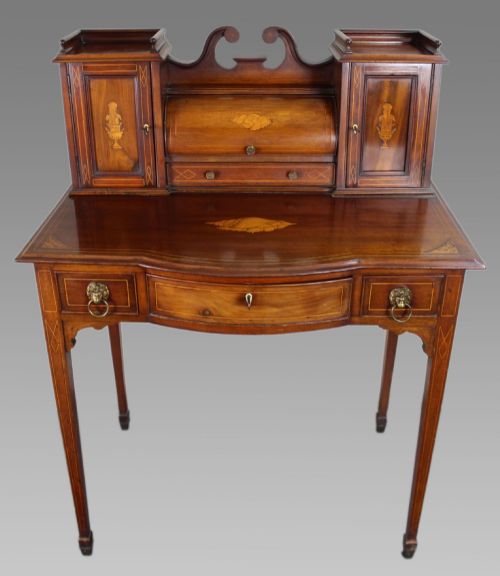
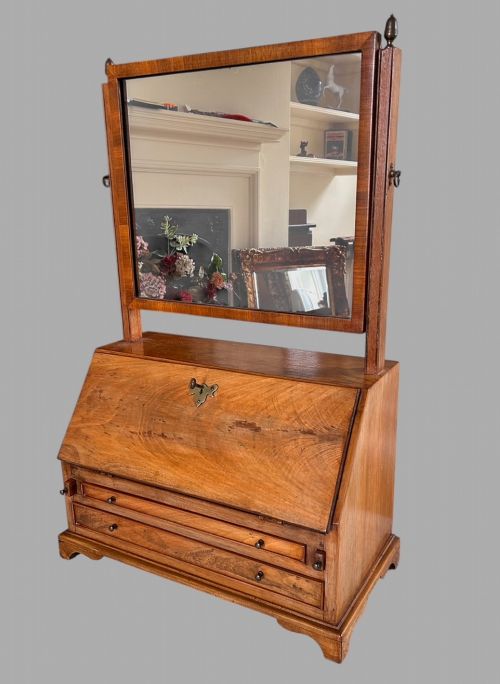
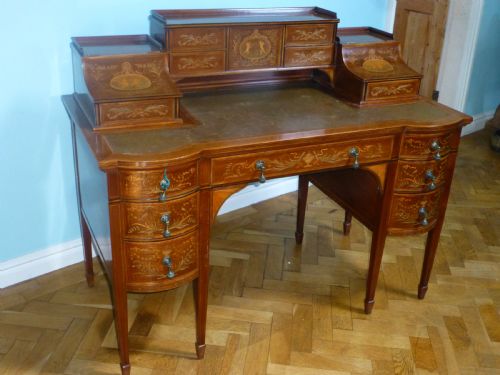
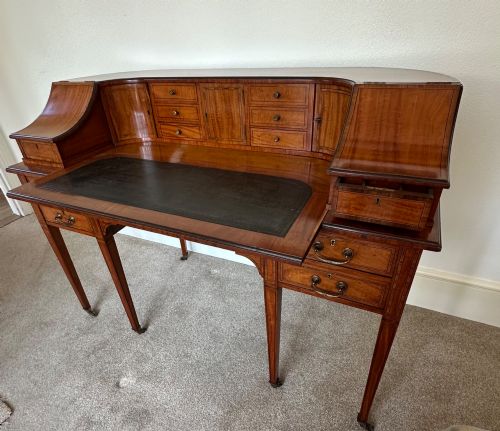
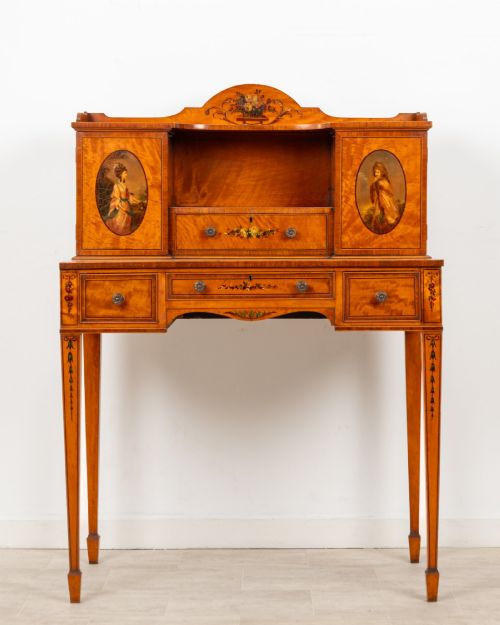
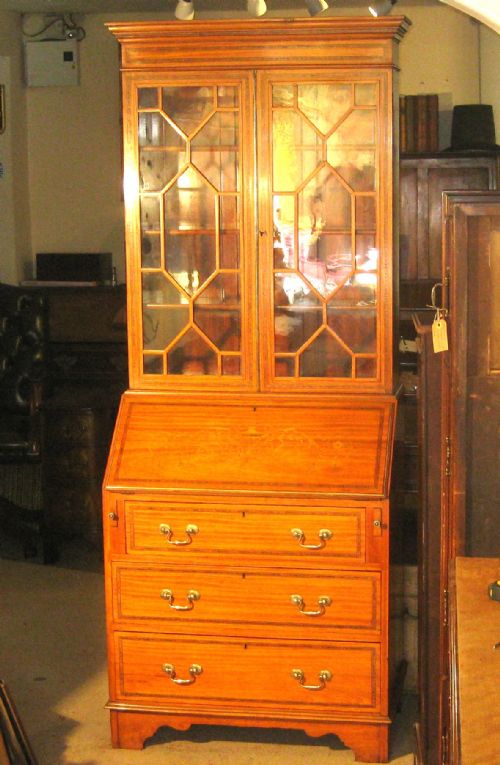
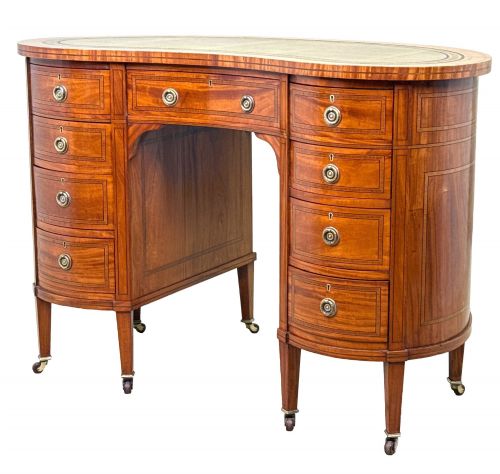
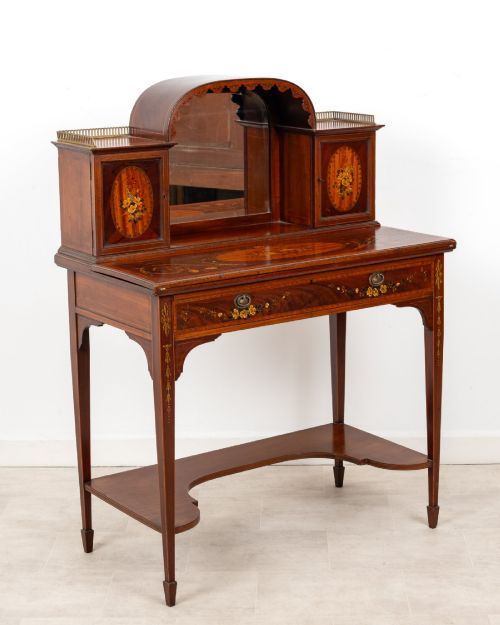
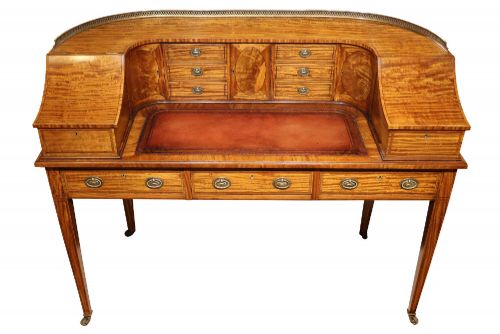
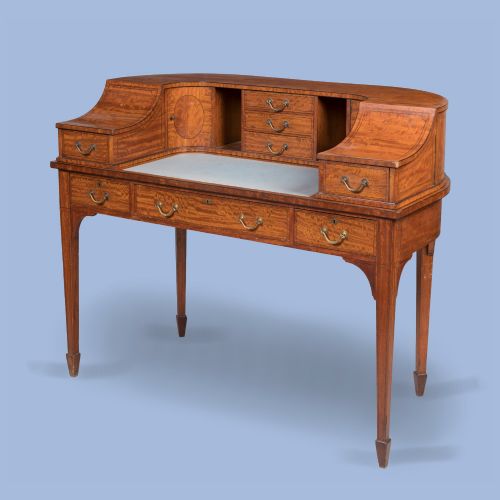
When searching for an edwardian satinwood bureau desk, buyers encounter elegant writing furniture originating primarily from the Edwardian era, alongside examples from the Victorian and late nineteenth century. The selection ranges from compact ladies writing tables and bonheur du jour desks to larger Carlton House desks and bureau bookcases.
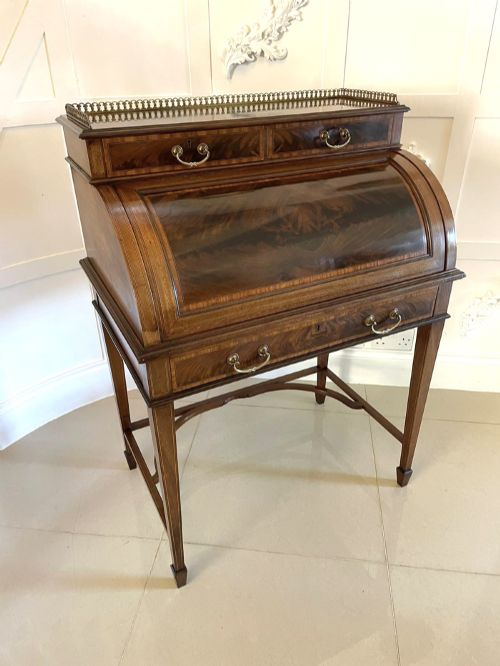
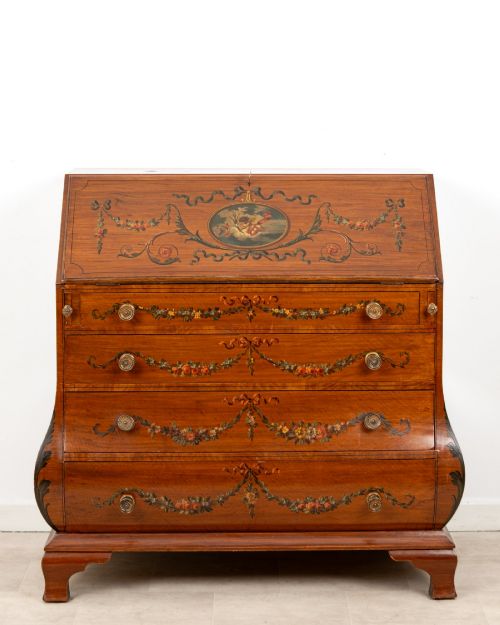
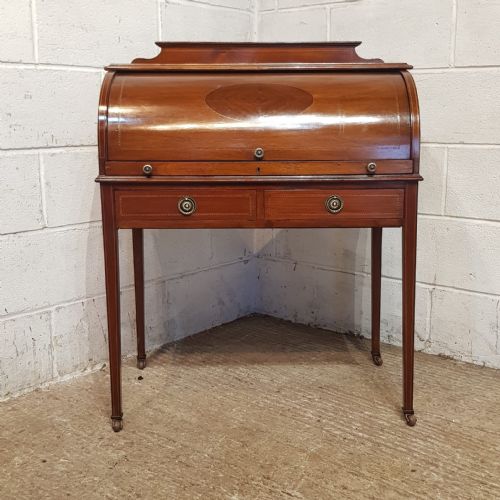
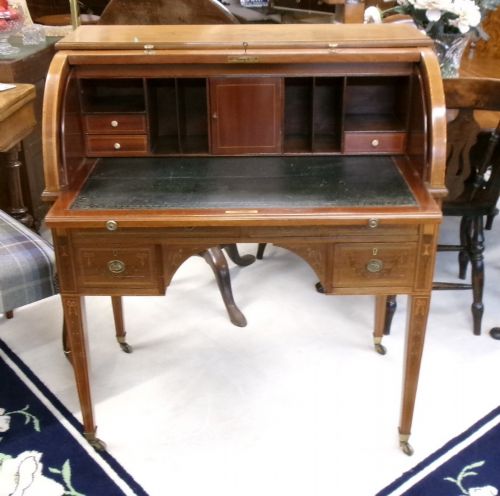
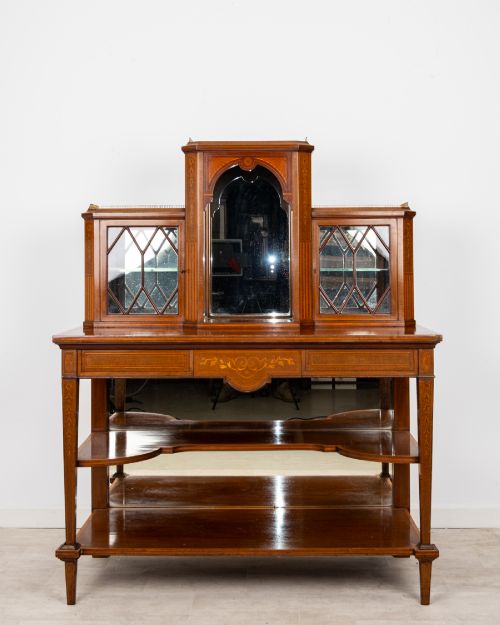
Most pieces date around nineteen hundred, reflecting the revival of Sheraton styles that favoured polished light woods and refined proportions. Forms include cylinder desks, barrel-fronted writing chests, and tables equipped with mirrored superstructures or internal pigeonholes.
Many items integrate mahogany and other contrasting timbers alongside primary satinwood surfaces, often featuring intricate marquetry or painted decoration. These desks served domestic correspondence and administrative duties in private drawing rooms and boudoirs.
How They Were Made
Cabinet makers constructed these pieces using solid timbers and carefully selected veneers, applying satinwood and mahogany over robust secondary woods like oak for drawer linings. Surfaces frequently display contrasting crossbanding in kingwood or rosewood, paired with delicate satinwood inlay and hand-painted motifs.
Listings feature Edwardian and Victorian periods alongside eighteenth-century examples, utilising satinwood, mahogany, brass, and leather.
What Varies in Quality
The degree of hand-painted artistry and the precision of marquetry inlay separate standard workshop production from exhibition-grade pieces. Finer examples display meticulous botanical or classical motifs executed directly onto the wood, alongside intricate stringing.
Internal construction and timber selection dictate overall longevity, visible in the choice of secondary woods for drawer interiors and the smoothness of sliding cylinder tops. Original brass hardware and well-figured grain patterns further elevate a piece above simpler domestic furniture.
Maple & Co London·Edwards and Roberts·James Shoolbred of London
The Edwardian Satinwood Bureau Desk Glossary
- Satinwood
- A durable hardwood with a natural golden sheen and smooth grain, highly prized for eighteenth and nineteenth century cabinetmaking. It forms the primary visual surface on many revival writing desks.
- Carlton House desk
- A form of writing table featuring a curved superstructure of small drawers and compartments enclosing the rear and sides of the desk top. This design originated in the late eighteenth century and saw frequent revival during the Edwardian period.
- Marquetry
- Decorative patterns formed by fitting together contrasting veneer pieces onto a solid ground. Makers used this technique to create floral or geometric designs on desk lid surfaces.
- Bonheur du jour
- A small, light ladies writing desk usually fitted with a cabinet or shelves above the writing surface. These pieces gained popularity during the nineteenth century for use in private sitting rooms.
- Crossbanding
- A narrow strip of veneer applied to the border of a furniture panel with the grain running at right angles to the centre. This frames the primary timber and adds visual definition to drawer fronts.
Edwardian Satinwood Bureau Desk: Frequently Asked Questions
What is a bureau desk?
A bureau desk is a form of writing furniture featuring an angled fall-front flap that opens to reveal a fitted interior of small drawers and pigeonholes.
These compartments were designed to store writing paper, ledgers, and correspondence neatly out of sight when not in use.
How do I care for satinwood?
Satinwood furniture requires protection from direct sunlight and excessive changes in room temperature to prevent the timber and veneers from drying out.
Regular dusting with a soft, dry cloth maintains the finish without the need for heavy modern polishes.
What is a cylinder desk?
A cylinder desk encloses its writing surface behind a rolling curved wooden shutter that retracts into the body of the desk when opened.
This mechanism conceals the interior drawers and pull-out writing slide simultaneously.
How to date these desks?
Dating relies on examining construction methods, secondary woods like oak drawer linings, and stylistic markers such as Sheraton Revival proportions.
Makers' stamps and brass hardware styles also provide reliable indicators of the period.