



Painted Satinwood Bureau
A painted satinwood bureau combines golden timber with delicate brushwork, offering a refined writing surface designed for light correspondence.
Painted Satinwood Bureau
When buyers search for a painted satinwood bureau, they are looking at sophisticated writing furniture that pairs a pale, lustrous timber with applied artistic decoration. These pieces predominantly date from the Edwardian era and the late nineteenth century, often reflecting earlier Sheraton or neoclassical tastes.
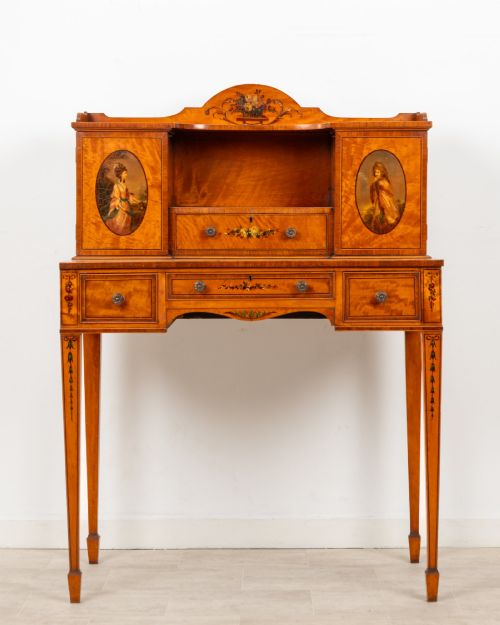
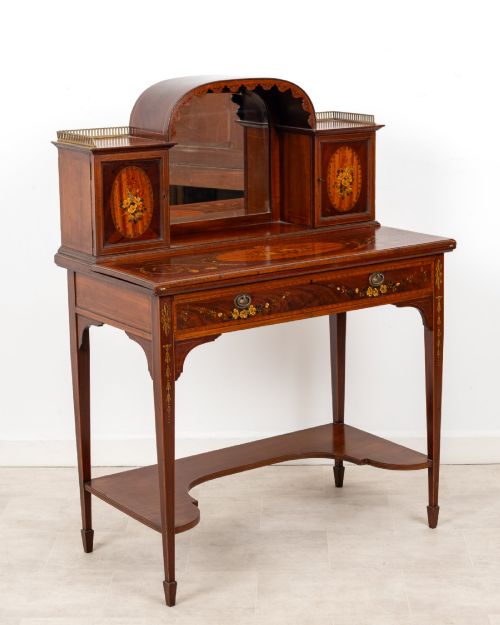
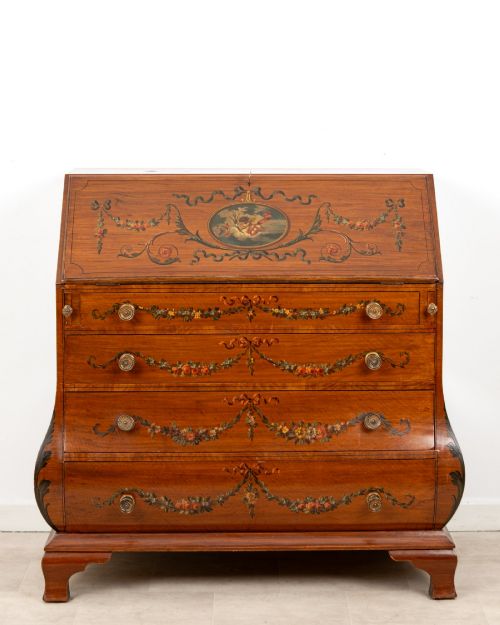
The primary forms on this page include drop-front writing bureaux, compact bureau bookcases, and ladies writing desks fitted with decorative superstructure elements. Many examples showcase hand-painted floral motifs, ribbon swags, and classical ornamentation directly upon the timber surface.
Originating largely from British workshops of the nineteenth and twentieth centuries, these items served as elegant apartment or drawing-room furniture. They range from simple fall-front writing boxes on stands to elaborate freestanding desks designed for prominent placement in a room.
How they were made
Cabinetmakers utilised satinwood as a primary veneer or solid timber, valued for its natural chatoyancy and pale lemon hue. This wood was frequently contrasted with darker inlay bands of mahogany or birch to delineate panels and drawers.
Artisans applied hand-painted details directly to the prepared wood surface, often sealing the artwork beneath a clear polish to protect the pigments. Brass hardware, including drop handles and keyhole escutcheons, complemented the painted decorative scheme.
Structural carcasses incorporated secondary timbers like mahogany and pine, ensuring stability for the folding desk flaps and internal pigeonhole compartments. Writing surfaces were frequently lined with panels of tooled leather to provide a durable writing plane.
Painted Satinwood Bureau Retail Price Guide 2026
Typical asking prices for painted satinwood bureau among the pieces listed under this phrase on Sellingantiques today, from the lower quarter to the upper quarter. They describe what is for sale here now, not the wider market.
Several ladies desks retain tiny interior secret compartments originally designed for hiding love letters from prying eyes.
What varies in quality
The refinement of the hand-painted decoration determines much of the visual success, separating brisk commercial output from meticulous artistic execution. Finer pieces display subtle shading, precise botanical detail, and harmonious composition across the curved surfaces.
The choice of cabinet woods and veneer matching dictates structural integrity and visual depth. Superior examples employ carefully selected satinwood with an active grain pattern, complemented by neat stringing and well-fitted internal drawers rather than plain secondary timbers.
The Painted Satinwood Bureau Glossary
- Satinwood
- A dense, yellowish timber with a lustrous, reflective grain that takes a high polish. It forms the primary visual base for these decorative desks.
- Bureau
- A desk featuring a sloping hinged flap that opens to reveal a fitted interior of small drawers and pigeonholes. It often sits upon a chest of drawers or a kneehole frame.
- Sheraton Revival
- A late nineteenth and early twentieth century design movement that reinterpreted the lighter, neoclassical furniture forms of the eighteenth century. It heavily influenced the creation of painted satinwood desks.
- Bonheur du Jour
- A light lady's writing desk featuring a small tiered superstructure with shelves or miniature drawers above the main work surface. This French form became popular in English neoclassical design.
- Superstructure
- The set of small drawers, compartments, or mirrors built upon the rear upper surface of a desk. It adds vertical interest and specialised storage.
Painted Satinwood Bureau: Frequently Asked Questions
What is a painted satinwood bureau?
A painted satinwood bureau is a compact writing desk featuring a hinged fall-front writing flap and decorative painted artwork on its timber surfaces.
Most surviving examples date from the Edwardian period or the late nineteenth century, reflecting classic eighteenth-century revival styles.
How do I care for satinwood furniture?
Satinwood requires protection from direct sunlight and excessive moisture to prevent the timber from fading and the painted details from lifting.
Regular dusting with a dry, soft cloth and occasional gentle waxing will maintain the polish without harming the delicate surface art.
Were these desks used for daily writing?
These pieces were primarily intended for light social correspondence, keeping personal letters, and organising small documents in a drawing room or boudoir.
The fitted interior compartments held stationery and ink, while the drop-front provided a convenient surface for writing notes.
How can I tell Edwardian from Victorian pieces?
Edwardian pieces often feature lighter frames, brighter satinwood veneers, and softer neoclassical or floral painted motifs associated with the Sheraton Revival.
Late Victorian examples tend to utilise heavier structural proportions and occasionally incorporate darker contrasting woods alongside the painted decoration.