

Vintage Wooden Wall Art
Vintage wooden wall art brings warmth and texture to an interior through carved panels, framed mirrors, and clocks.
Vintage Wooden Wall Art
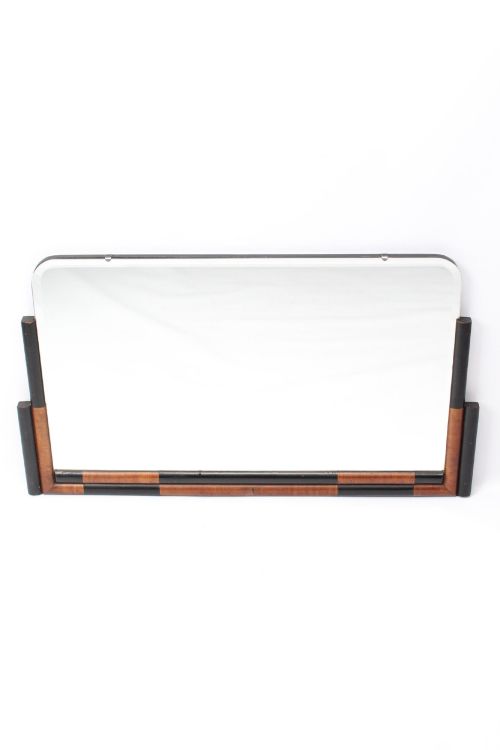
Vintage wooden wall art encompasses carved panels, mirrors, clocks, and paintings set into timber frames originating across the eighteenth, nineteenth, and twentieth centuries. These pieces reflect diverse aesthetics ranging from Victorian craftsmanship to Art Deco geometry and Edwardian utility.
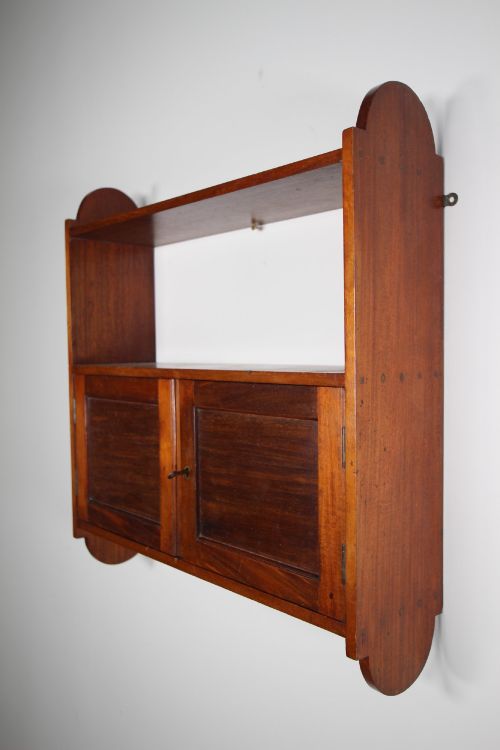
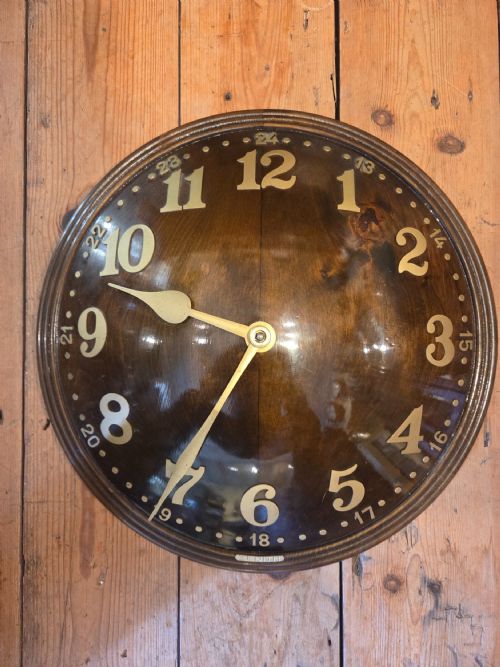
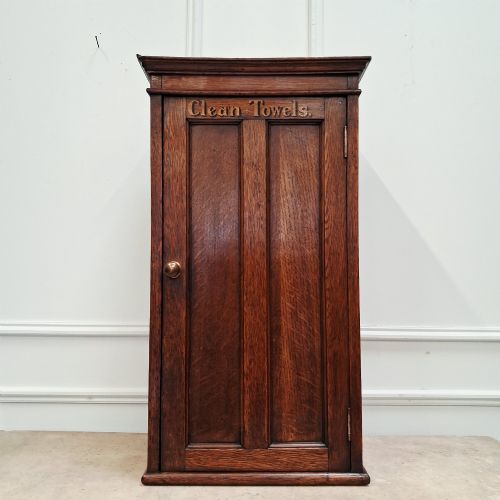
The selections available include carved wooden panels, overdoor reliefs, and functional wall pieces such as barometers and clocks. Walnut and oak dominate the forms, frequently paired with glass, brass, and painted surfaces.
Pieces span international origins, incorporating Burmese panels, Afghani bone-inlaid wall pieces, and European mirrors. Buyers encounter both vernacular items and formal decorative objects designed to hang directly upon interior surfaces.
Materials and construction methods
Construction relies upon traditional timber selection, primarily utilising oak, walnut, and pine for structural frames and carved reliefs. Carpenters and carvers shaped these woods using hand chisels and joinery techniques appropriate to periods from the eighteenth century onward.
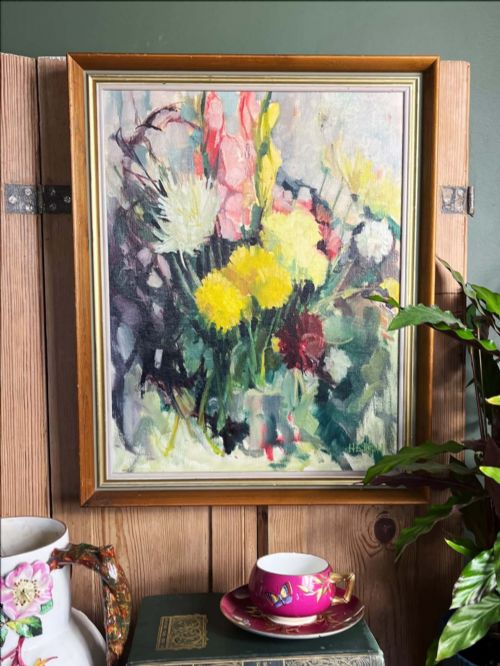
Surface treatments combine bare or polished grain with painted highlights, ebonised details, and gilt wood finishes. Certain items integrate mixed media, attaching brass hardware, canvas paintings, or glass mirrors directly into the wooden framework.
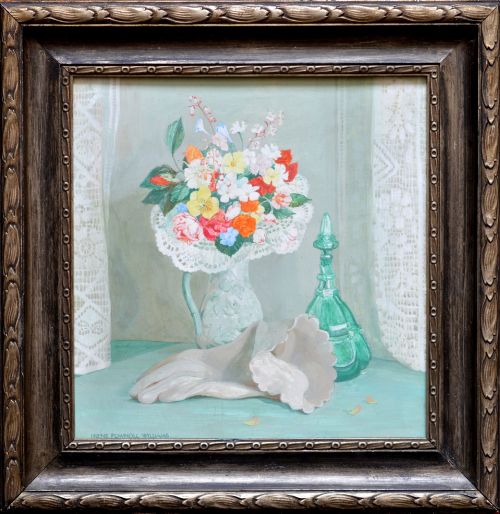
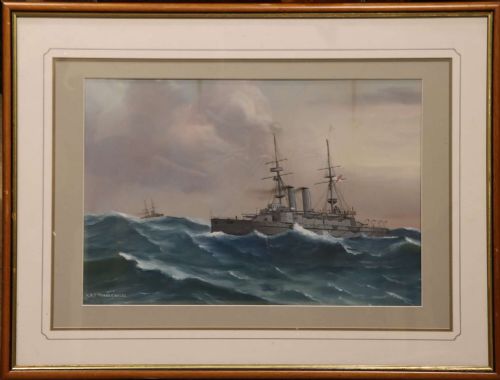
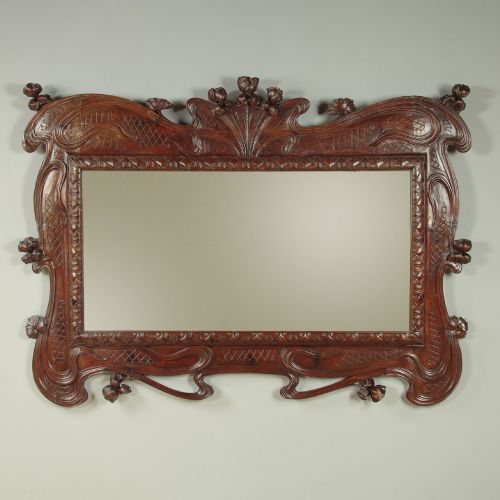
Object forms span wall mirrors, clocks, barometers, oil paintings, and carved wooden panels.
Distinctions in quality
Quality rests upon the depth and precision of hand carving, where crisp relief work distinguishes skilled artisan production from simpler output. The integrity of the timber joints and the retention of original surface finishes further divide standard items from superior examples.
Provenance and materials also dictate distinction, with select items utilising dense hardwoods like walnut or incorporating specialised inlays and gilt applications. The harmony between the original frame and its inset mirror, panel, or canvas preserves the historical coherence of the piece.
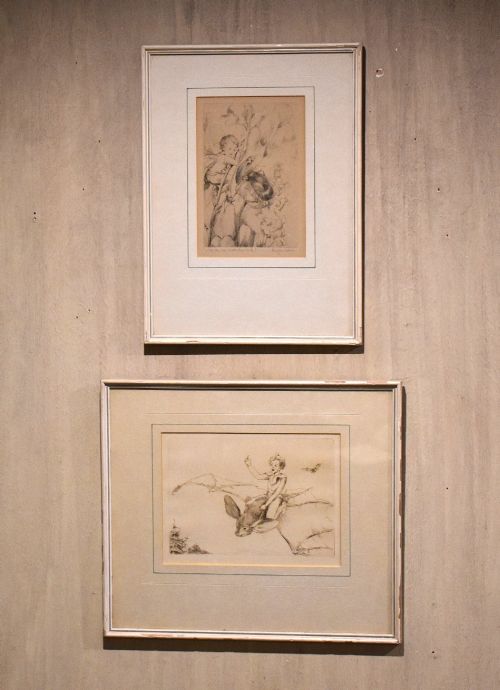
John Hassall·Clive Browne·Sir Peter Markham Scott·Herbert Gustave Schmaltz·Horatio Henry Couldrey
The Vintage Wooden Wall Art Glossary
- Carved panel
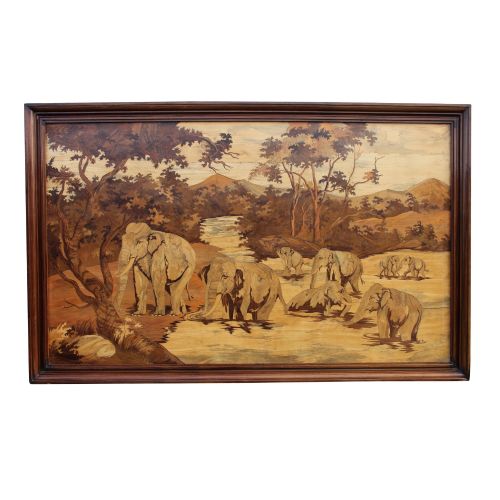
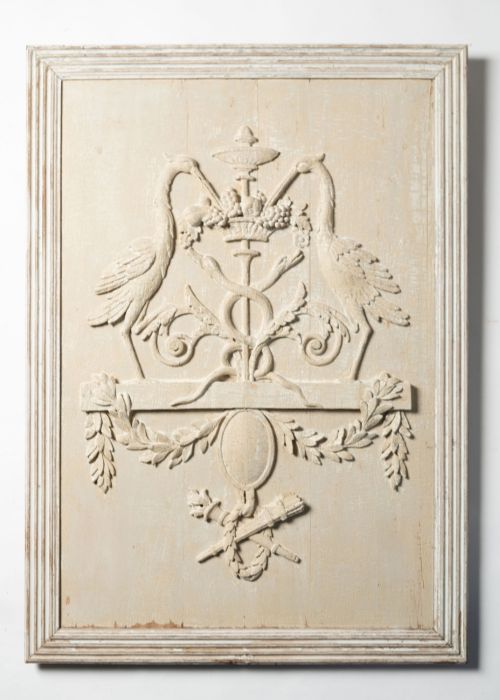
- A flat section of wood sculpted in relief with decorative motifs or figural scenes. These elements were frequently incorporated into architectural schemes or displayed independently as focal points.
- Ebonised
- Wood treated with a dark stain or finish to simulate the appearance of ebony. This technique gained popularity during the nineteenth and early twentieth centuries to create strong visual contrasts.
- Gilt wood
- Timber coated with a thin layer of gold leaf or metallic paint. This treatment enhanced decorative mirrors and panels by catching and reflecting ambient light.
- Barometer
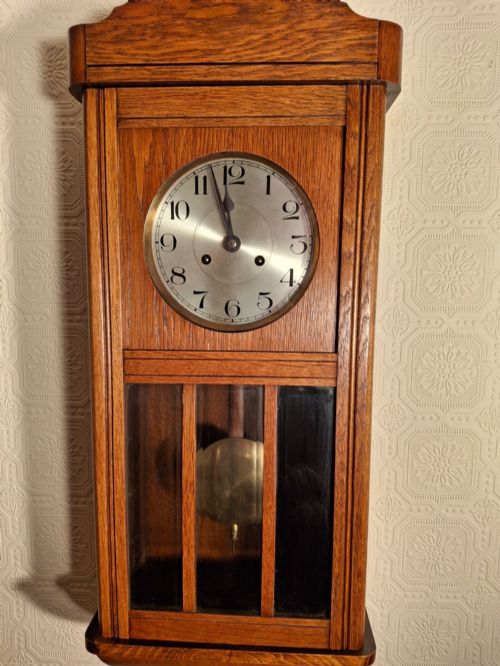
- A scientific instrument housed within a decorative wooden case used for measuring atmospheric pressure. Many surviving examples integrate aneroid dials within carved oak or walnut surrounds.
- Diorama
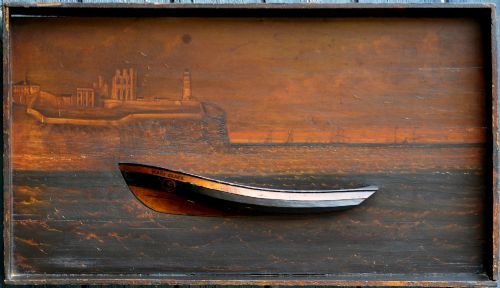
- A three-dimensional scene enclosed within a shallow box or frame, often depicting maritime vessels or historical subjects. These miniature displays utilise painted backdrops alongside handmade models.
Vintage Wooden Wall Art: Frequently Asked Questions
How do I hang heavy wooden wall art safely?
Heavy pieces require robust fixings suited to the specific wall type, whether lath, plaster, or masonry. Secure screws directly into wall studs or utilise appropriate cavity anchors to support the weight of dense timbers.
Verify that the hanging wire or integrated brackets on the reverse are structurally sound before mounting. Distribute the load evenly across two points for wider mirrors and panels to prevent tilting.
What periods do these wooden wall pieces represent?
The selection spans from the eighteenth century through the Victorian and Edwardian eras into the twentieth century. Earlier items often feature hand-carved panels, while later twentieth-century examples embrace Art Deco and Mid-Century Modern styles.
Each era utilises distinct decorative motifs and joinery methods characteristic of its time of production. Materials such as oak and walnut appear consistently across multiple centuries.
How should I clean antique wooden frames?
Dust surfaces gently with a soft, dry cloth to remove particulate matter without disturbing the grain or finish. Avoid using chemical sprays or excess water, which can damage aged timber and gilt treatments.
Preserve the patina by applying specialist wax sparingly if the wood appears dry. Test any maintenance product on a small, hidden area before treating the entire piece.
Can I mix different wood tones on one wall?
Combining various timber tones creates depth and prevents a uniform, sterile appearance within an interior space. Oak, walnut, and painted pine can complement one another when balanced correctly across a room.
Anchor disparate pieces by maintaining consistent hanging heights or framing styles. The shared organic nature of wood helps bridge differences between distinct historical periods.