


Distressed Wood Floral Carving
Distressed wood floral carving brings authentic texture and history into a room through weathered painted finishes and detailed botanical ornament.
Distressed Wood Floral Carving
Distressed wood floral carving encompasses wall mirrors, console tables, armchairs, and decorative reliefs shaped from timber and finished with aged paint or gesso. You will most frequently encounter 19th-century French and Italian pieces alongside Scandinavian folk art forms that feature botanical motifs.
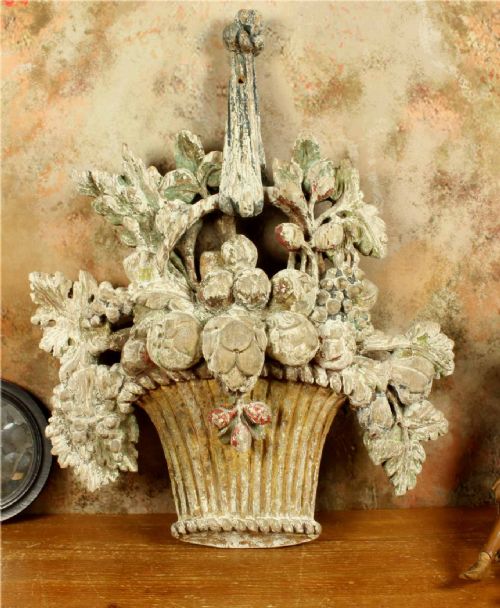
The objects range from large overmantle mirrors and baroque console tables to smaller wall reliefs, bird boxes, and needlework stools. Each piece shows the characteristic wear of age on carved wood, often enhanced by polychrome paint, gilding, or fabric upholstery.
Origins span the 18th century through to the early 20th century, with styles drawing on Italian Rococo, French chateau aesthetics, and neoclassical design. The common thread is the combination of hand-carved floral detail and a distressed painted surface developed over decades of use.
Materials and construction methods
Craftsmen carved these pieces from solid timbers like pine and general hardwoods, applying layers of gesso and paint to build up decorative surfaces. The underlying wood provides the structure for intricate botanical reliefs, panels, and frames.
Finishes relied heavily on hand-applied paint and polychrome pigments, sometimes over a base of gesso that accepted delicate detailing and subsequent distressing. Needlework and fabric elements appear alongside the carved woodwork on seating and footstools.
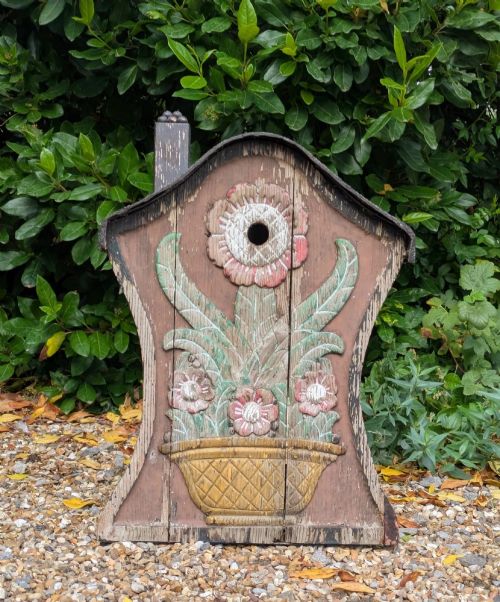
One charming Swedish bird box from 1910 brings unexpected folk art whimsy to the collection of carved wood.
Judging quality in carved and painted pieces
Depth and crispness of the hand carving distinguish finer examples from simpler provincial work, particularly in the rendering of flower baskets, foliage, and scrollwork. The confidence of the artisan's chiselwork dictates how well the botanical details retain their definition beneath layers of historic paint.
The integrity of the aged surface and the harmony of the proportions separate superior items from standard decorative pieces. Original paint layers that show natural weathering carry more artistic weight than later, heavy-handed repainting.
The Distressed Wood Floral Carving Glossary
- Gesso
- A plaster-like mixture applied to wood to create a smooth surface for painting or gilding. It allows for crisp relief details on mirror frames and decorative panels.
- Polychrome paint
- Multi-coloured painting technique applied to wood or gesso surfaces. It adds vibrant floral hues to antique panels and carvings.
- Overmantle mirror
- A large mirror designed to hang directly above a fireplace mantel. These pieces often feature elaborate carved wood frames and distressed painted finishes.
- Faux bois
- Imitation of wood grain painted onto a surface. It appears on 19th-century seating to mimic natural timber patterns.
- Console table
- A table designed to be fixed against a wall, frequently supported by ornate carved legs. Baroque and neoclassical examples often feature painted wooden construction.
Distressed Wood Floral Carving: Frequently Asked Questions
How do I clean a distressed painted wood carving?
Dust the surface gently with a soft, dry microfibre cloth to remove loose particles without disturbing delicate paint flakes. Avoid liquid cleaners, chemical sprays, or abrasive materials that could strip away the historic finish.
For stubborn grime, consult a professional conservator rather than attempting wet cleaning. Preserving the original aged patina is essential for maintaining the character of the piece.
Are these carved wood mirrors suitable for bathrooms?
High humidity and fluctuating temperatures in bathrooms can damage historic gesso, painted finishes, and unsealed carved wood. Moisture causes wood to expand and contract, leading to cracking and flaking of the antique surface layers.
Display these mirrors in dry living areas, hallways, or bedrooms where the environment remains stable. This protects both the structural timber and the delicate floral reliefs.
How can I tell an 18th-century piece from a 19th-century revival?
Eighteenth-century items typically exhibit hand-tool marks, older timber shrinkage patterns, and genuine wear consistent with centuries of domestic use. Revival pieces from the 19th century often employ slightly different construction techniques and uniform distressing styles.
Examine the backboards, fixings, and the composition of the gesso layers for clues to the period of manufacture. Comparing the style of the floral carving to known historical examples also clarifies the date.
What is the difference between gesso and plain wood carving?
Plain wood carving exposes the natural grain and texture of the timber directly to the surface. Gesso acts as an intermediary plaster layer that holds finer, sharper details and provides a smooth ground for paint.
Many decorative mirrors and panels combine both techniques, using carved wooden foundations coated in gesso to achieve intricate relief work.