

Vintage Wooden Trunk Box
A vintage wooden trunk box offers sturdy storage and centuries of travel history, bringing tactile grain and honest joinery into any modern interior.
Vintage Wooden Trunk Box
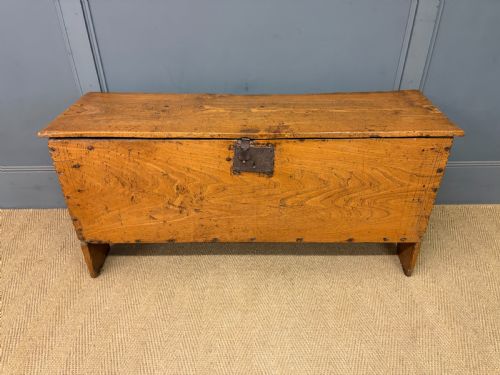
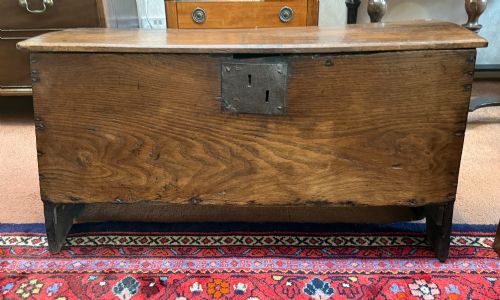
A vintage wooden trunk box spans heavy blanket chests, travel containers, and storage coffers originating from the seventeenth century through to the early twentieth century. Buyers seeking these pieces encounter robust utilitarian containers designed for domestic storage or arduous travel.
Pine and oak form the backbone of the domestic English entries, while exotic timbers such as camphor wood and padouk appear frequently in travel and campaign contexts. These heavy receptacles served as travelling wardrobes or stationary linen chests before finding new life in contemporary homes.
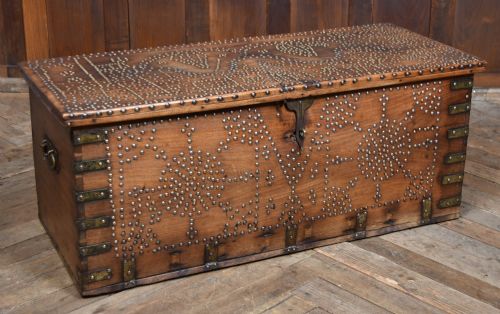
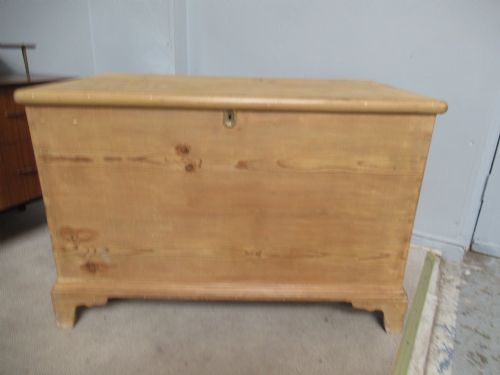
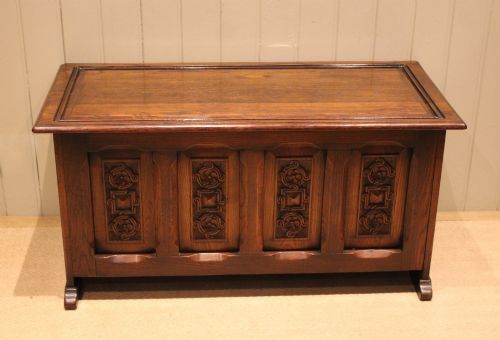
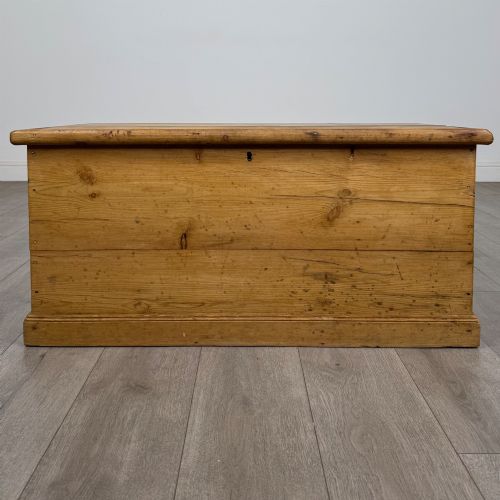
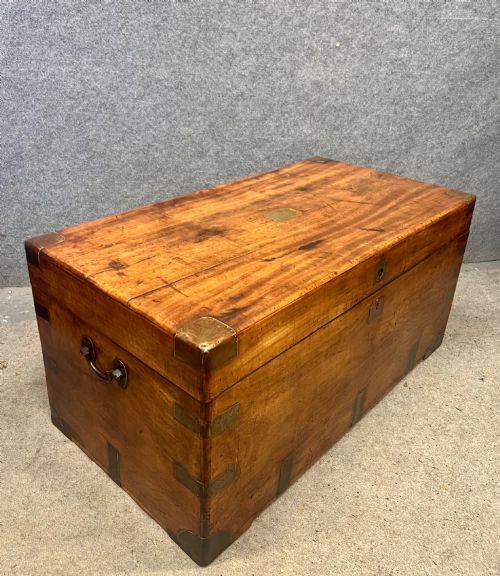
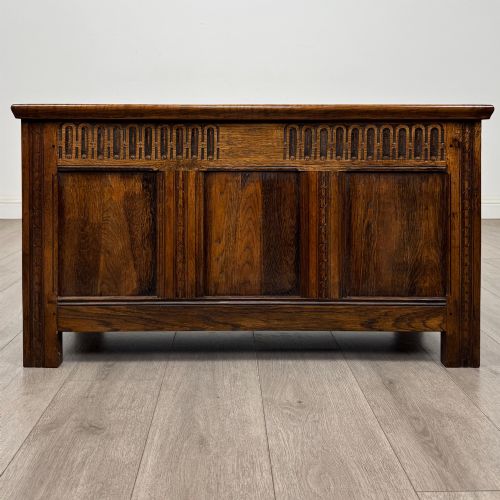
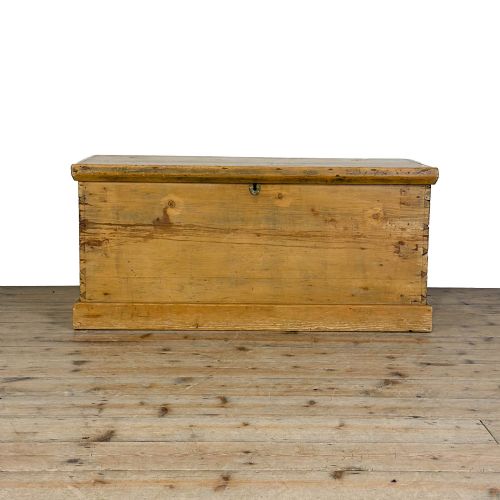
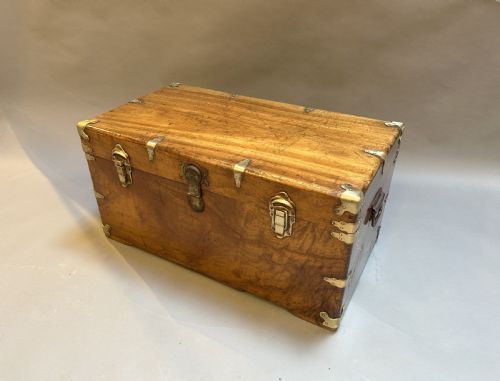
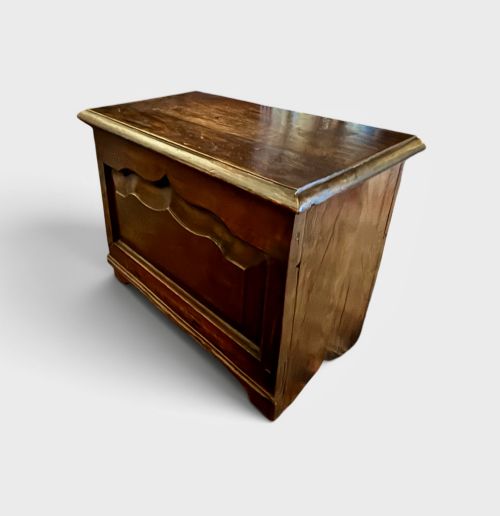
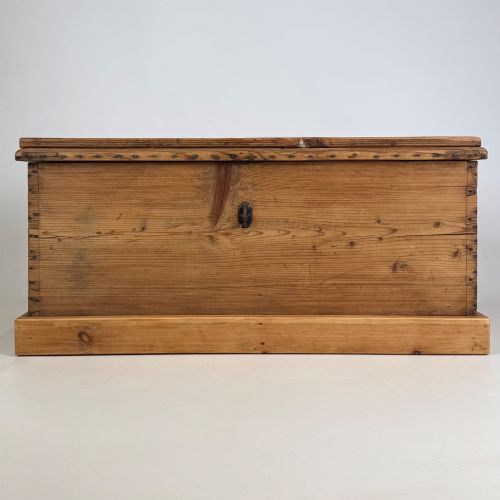
The selection ranges from stripped pine tool chests to brass-bound camphor trunks and carved oak coffers from the Jacobean revival and Arts and Crafts periods. Each format retains the physical scars of movement and utility, showing authentic patination across lid surfaces and corner brackets.
Materials and construction methods
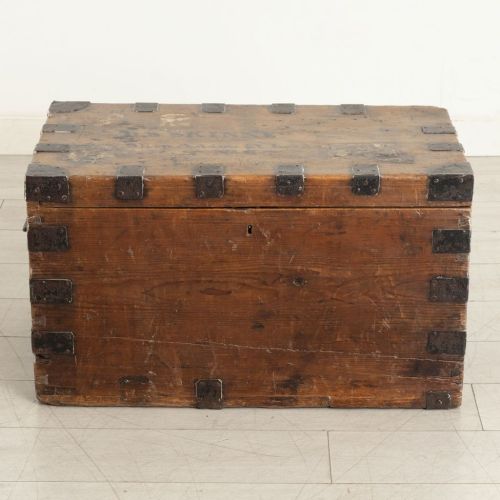
Carpenters constructed these boxes using solid native timbers like elm, oak, and pine alongside resilient imported woods such as teak and camphor, joining planks with dovetails or pegged mortise and tenon joints. Heavy iron strapwork, hand-forged corner braces, and brass binding reinforced the structural integrity of pieces destined for long voyages.
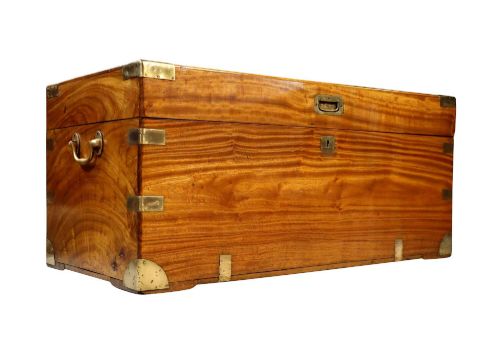
Makers integrated structural hardware directly into the timber frame, securing corners with flush brass straps and mounting drop handles on the sides for heavy lifting. Internal fittings often included lidded till boxes, removable trays, and secondary drawers tailored to hold personal valuables or documents.
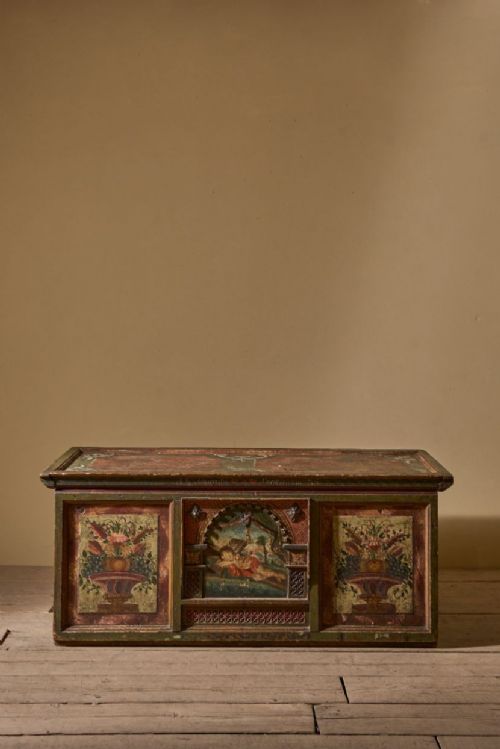
The listings show regional variety spanning English pine, Scandinavian folk art pieces, and Middle Eastern inlaid hardwood trunks.
Distinguishing quality factors
Quality rests upon the integrity of the original timber and the survival of substantive iron or brass mountings rather than applied decorative flourishes. Pieces retaining their original strapwork, working locks with keys, and uncompromised internal compartments command greater appreciation.
The distinction between a humble domestic pine box and a fine campaign chest lies in the precision of the joinery and the selection of materials, such as fragrant camphor wood paired with substantial brass binding. Heavy timber thickness and crisp hand-carved panels elevate vernacular oak coffers into enduring works of functional art.
The Vintage Wooden Trunk Box Glossary
- Cofer
- A large wooden chest used traditionally for storing valuables, linen, or dry goods. These sturdy domestic repositories often feature heavy plank construction and carved front panels.
- Campaign trunk
- A portable storage box designed for military officers or travellers on long journeys. They typically incorporate brass binding, recessed handles, and robust corner brackets to withstand rough transit.
- Camphor wood
- An aromatic timber utilised extensively for travel chests due to its natural insect-repelling properties. The wood releases a distinctive scent that protects stored textiles from moths.
- Strapwork
- Flat bands of metal, usually iron or brass, fastened across the exterior of a trunk to reinforce the wooden structure. This technique added essential strength to travel containers.
- Till box
- A small internal compartment built into the upper interior corner of a chest. It provided secure storage for small personal items separate from the main cavity.
Vintage Wooden Trunk Box: Frequently Asked Questions
How were campaign trunks used?
Military officers and colonial administrators utilised campaign trunks to transport uniforms, documents, and personal equipment across rough terrain and long sea voyages.
Their robust construction, featuring recessed brass handles and protective corner brackets, allowed them to endure repeated handling by transport crews.
What is camphor wood used for?
Camphor wood served primarily in the manufacture of maritime and campaign chests because its natural aromatic oils repel insects and preserve stored textiles.
This protective quality made the timber an ideal choice for safeguarding woollens and linens during tropical shipping routes.
How do I date an old wooden trunk?
Dating relies upon examining the construction techniques, such as the hand-cut dovetails, the style of the iron strapwork, and the type of wood utilised in the carcass.
Earlier examples from the seventeenth and eighteenth centuries display pegged oak frames, while nineteenth-century pieces often introduce pine framing and machine-rolled brass fittings.
Where should I place a trunk at home?
These versatile boxes function effectively as coffee tables in living areas or as blanket storage at the foot of a bed.
Their flat lids and robust tops provide a practical surface for display while concealing generous interior storage space.