

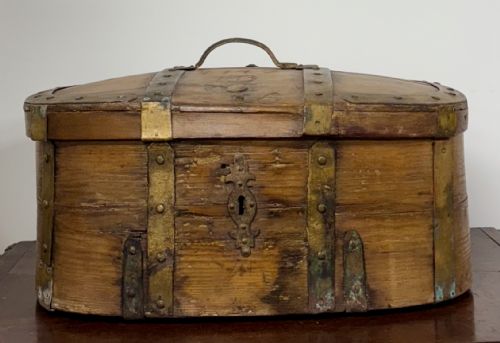


Folk Art Bentwood Box
These folk art bentwood boxes are rustic storage pieces defined by traditional craftsmanship and painted surfaces, offering authentic Scandinavian charm.
Folk Art Bentwood Box
A folk art bentwood box brings tangible Scandinavian history into a room, serving as both a functional container and a piece of regional heritage. When searching for this phrase, a buyer encounters a range of forms including oval shapes, traditional tine food boxes, marriage boxes, and strong boxes.
Most examples appearing here stem from the eighteenth and nineteenth centuries, alongside pieces from the nineteen-twenties. These range from dome top trunks and apothecary storage vessels to circular boxes bearing hand painted decoration.
Originating predominantly from Sweden and Norway, these items showcase the utilitarian artistry of Scandinavian country life. They provide characterful storage while displaying the distinct folk aesthetic of their respective periods.
How They Were Made
Maker construction relied heavily on natural materials, with pine, birch root, and bentwood forming the primary structural elements. Artisans soaked and bent wood to create seamless curved bodies, securing the overlapping seams with stitching or wooden pins.
Surface decoration frequently involved hand painting directly onto the wood, sometimes accompanied by pokerwork detailing. Metal components such as iron, wrought iron, and brass provided structural reinforcement through hinges, straps, and corner bindings.
Folk Art Bentwood Box Retail Price Guide 2026
Typical asking prices for folk art bentwood box among the pieces listed under this phrase on Sellingantiques today, from the lower quarter to the upper quarter. They describe what is for sale here now, not the wider market.
Recorded periods span from the eighteenth century through the nineteenth century and into nineteen twenty.
What Varies in Quality
The distinction between ordinary and exceptional pieces rests primarily on the survival of original surface decoration and patination. Strong painted motifs executed with deliberate skill elevate an object far beyond a plain pine container.
Structural integrity also separates examples, particularly how well the bentwood body and its lashings have endured. Pieces retaining their early metalwork and untouched wooden surfaces command greater interest from collectors.
The Folk Art Bentwood Box Glossary
- Bentwood
- Wood that has been shaped by being soaked or heated until pliable. This technique allows makers to create seamless curved box walls.
- Tine
- A traditional Scandinavian wooden container featuring a bentwood body and finger joint overlaps secured with roots or twigs. These were historically utilised for food storage.
- Pokerwork
- The art of decorating wood by burning designs onto the surface with heated metal implements. This technique adds dark, linear detail to folk art pieces.
- Patinated
- The surface alteration acquired by wood and paint over long periods of use and exposure. It indicates age and honest wear.
- Strong box
- A heavy storage chest designed for securing valuables, frequently reinforced with metal bands or iron mounts. These items combined robust utility with decorative presence.
Folk Art Bentwood Box: Frequently Asked Questions
What is a folk art bentwood box?
These pieces are traditional wooden storage containers shaped by bending strips of timber and securing the ends. They often feature painted surfaces or metal bindings reflecting Scandinavian country traditions.
Makers constructed them for various household uses, ranging from food storage to keeping valuable documents and domestic items secure.
How were tine boxes used?
Tine boxes served as traditional Scandinavian food containers designed for daily domestic utility and storage. Their tight fitting lids and curved bentwood construction kept contents protected.
Families often passed these decorated food boxes down through generations, utilising them within rural Scandinavian households.
How do I date an eighteenth century box?
Dating relies on examining the construction methods, the type of hinges, and the style of hand painted decoration. Eighteenth century examples often exhibit specific regional Swedish or Norwegian motifs and heavier pine construction.
Material wear and the character of the painted surface also provide strong indications of age and historical origin.
How do I care for antique painted wood?
Keep painted wooden boxes away from direct sunlight and fluctuating heat sources to protect the fragile pigments. Gentle dusting with a dry cloth is sufficient for maintenance.
Avoid using modern polishes or chemical cleaners that might damage the original nineteenth century or eighteenth century paint layer.