





Domed Wooden Box
A domed wooden box offers curved storage ranging from small tea caddies to large painted trunks.
Domed Wooden Box
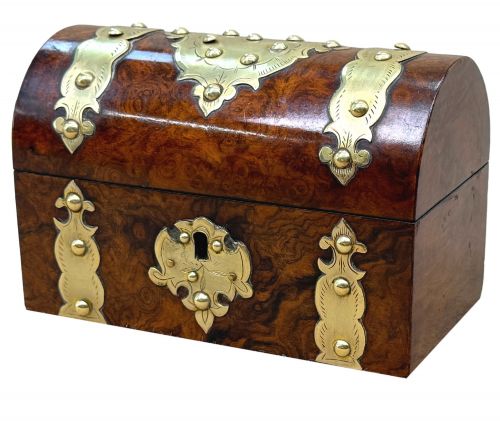
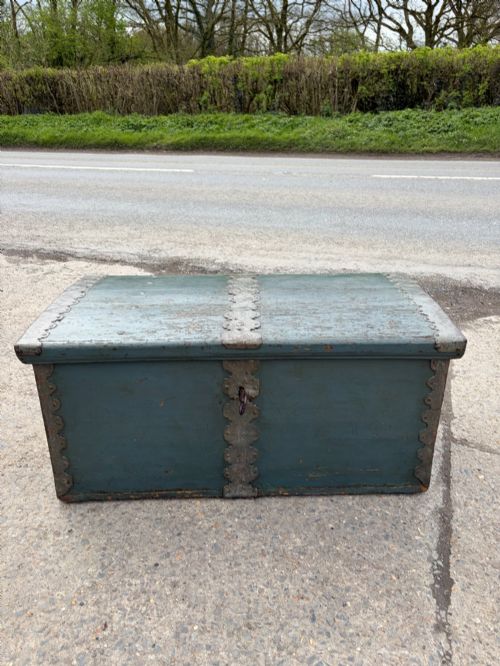
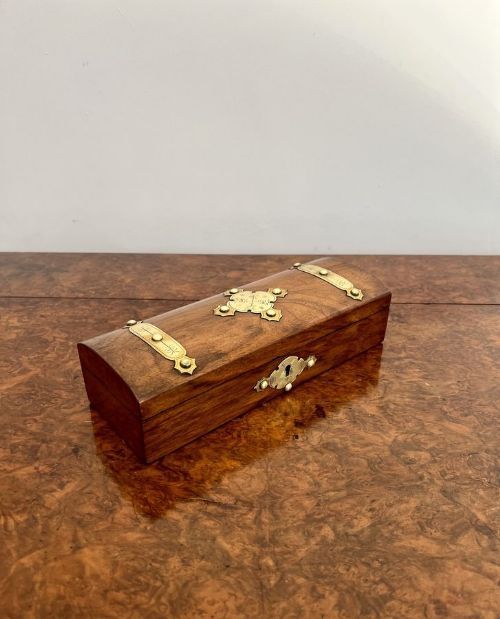
A domed wooden box is a container built with a rounded lid, serving purposes from desktop organisation to travel storage. When browsing a selection of a domed wooden box, buyers encounter smaller tabletop containers such as tea caddies, stationery boxes, and glove boxes alongside larger floor-standing trunks and coffers.
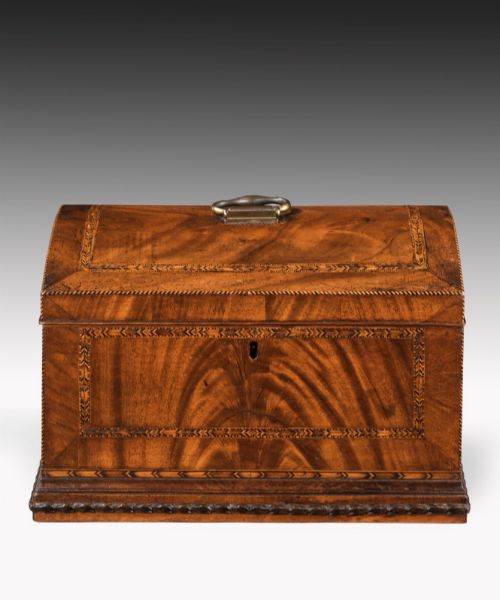
The pieces span several centuries, appearing in Georgian mahogany and walnut, through Victorian burr walnut and coromandel, to pine and oak. Scandinavian country pieces bring painted surfaces and folk art characteristics to the selection, while Chinese export examples introduce lacquer work.
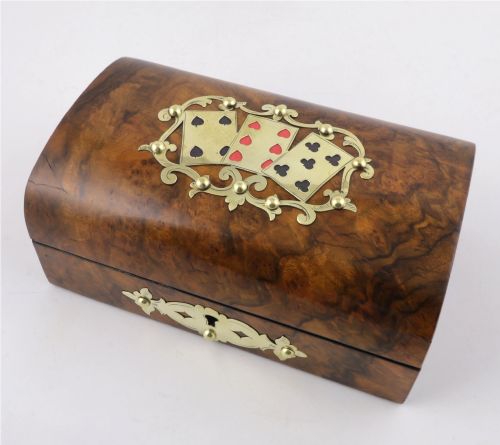
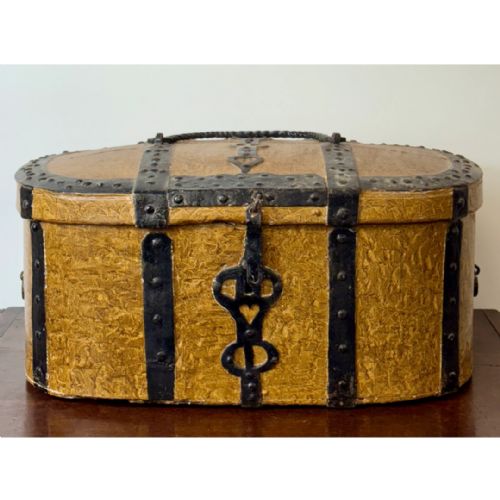
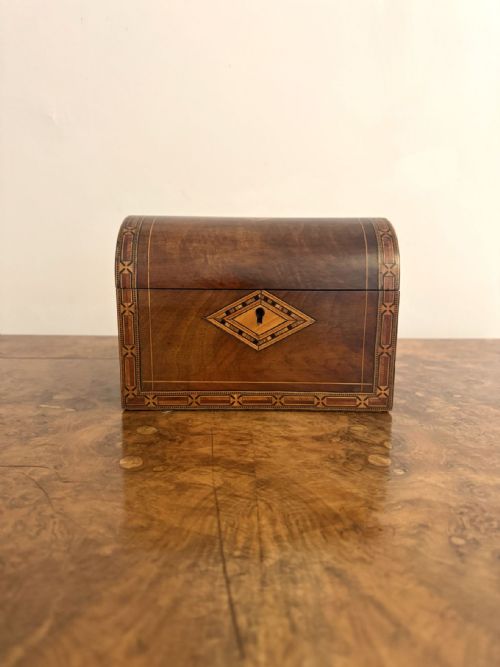
Smaller tabletop formats often feature brass mounts, marquetry, or Tunbridge inlay, designed for keeping cards, writing equipment, or tea. Larger examples in pine, oak, or original paint function as strong boxes, marriage chests, and travel trunks with curved lids designed to shed water.
How they were made
Makers constructed these containers using timbers such as mahogany, walnut, pine, and oak, often applying decorative veneers like burr walnut, amboyna, or coromandel to visible surfaces. Artisans incorporated brass for hinges, locks, escutcheons, and structural binding.
Surface treatments varied widely by region and function, including hand-painted finishes on Scandinavian pine chests, black lacquer on export pieces, and polished grain finishes on Victorian desktop boxes. Joinery methods combined dovetailing for box construction with curved internal supports to shape the characteristic domed lid.
Several boxes were built specifically to house poker dice and card games, ensuring evening entertainment stayed neatly collated.
What varies in quality
Quality in a domed wooden box reveals itself in the selection of timber figures, such as dense burr walnut or figured mahogany, and the precision of decorative elements like marquetry, brass banding, and Tunbridge inlay. Superior examples retain original fitted interiors, working locks with keys, and undisturbed surface finishes.
Construction integrity distinguishes finer pieces, showing in tight corner joints, flush-fitting lids, and substantial hardware. Painted folk art chests depend on the preservation and clarity of their original pigment layers, where crisp motifs separate skilled regional work from simpler utility items.
The Domed Wooden Box Glossary
- Tea caddy
- A container built to store loose tea leaves, often featuring internal lidded compartments and sometimes housing glass mixing bowls.
- Stationery box
- A desktop container designed for holding writing paper, envelopes, and correspondence, frequently featuring tiered interior partitions.
- Escutcheon
- A protective brass plate surrounding a keyhole, which guards the surrounding wood from wear caused by the key.
- Marquetry
- The art of applying pieces of veneer to a structure to form decorative patterns and pictorial designs.
- Cofer
- A large heavy chest, typically domed, used historically for storing valuables and travel goods.
Domed Wooden Box: Frequently Asked Questions
What were domed wooden boxes used for?
These containers served varied domestic and travel functions depending on their scale. Smaller desktop versions held tea, writing materials, gloves, or playing cards, keeping daily accessories organised in polite rooms.
Larger variations functioned as strong boxes, marriage chests, or cabin trunks. Their curved lids helped shed water during transit and provided extra vertical clearance for bulky contents.
How do I date a wooden box?
Dating relies on combining timber choices, hardware styles, and construction techniques. Georgian pieces frequently utilise solid mahogany or unadorned walnut, whereas Victorian examples often showcase burr walnut veneers, brass banding, and elaborate Tunbridge inlay.
Secondary woods visible inside the box, alongside the style of locks and hinge mechanisms, provide further chronological indicators that align with documented period manufacturing.
Are painted Scandinavian chests original?
Many Scandinavian country chests retain their original paint surfaces, which served both a decorative and protective function on native pine. Folk art motifs and floral patterns were applied by regional painters for domestic celebrations such as weddings.
Examining the paint under magnification helps determine whether pigment layers are period or later restorations. Genuine historic surfaces show natural wear and stable crazing consistent with age.
How do I care for antique wood?
Maintenance requires keeping wooden containers away from direct sunlight and fluctuating heat sources, which can cause timber to split and veneers to lift. Regular dusting with a soft, dry cloth preserves the polished finish.
Applying microcrystalline wax occasionally helps nourish dry wood and protects historic surfaces without sealing moisture into the grain.