


Vintage Wooden Swivel Seat
These vintage wooden swivel seat options combine practical movement with period character, offering sturdy workspace seating built to last.
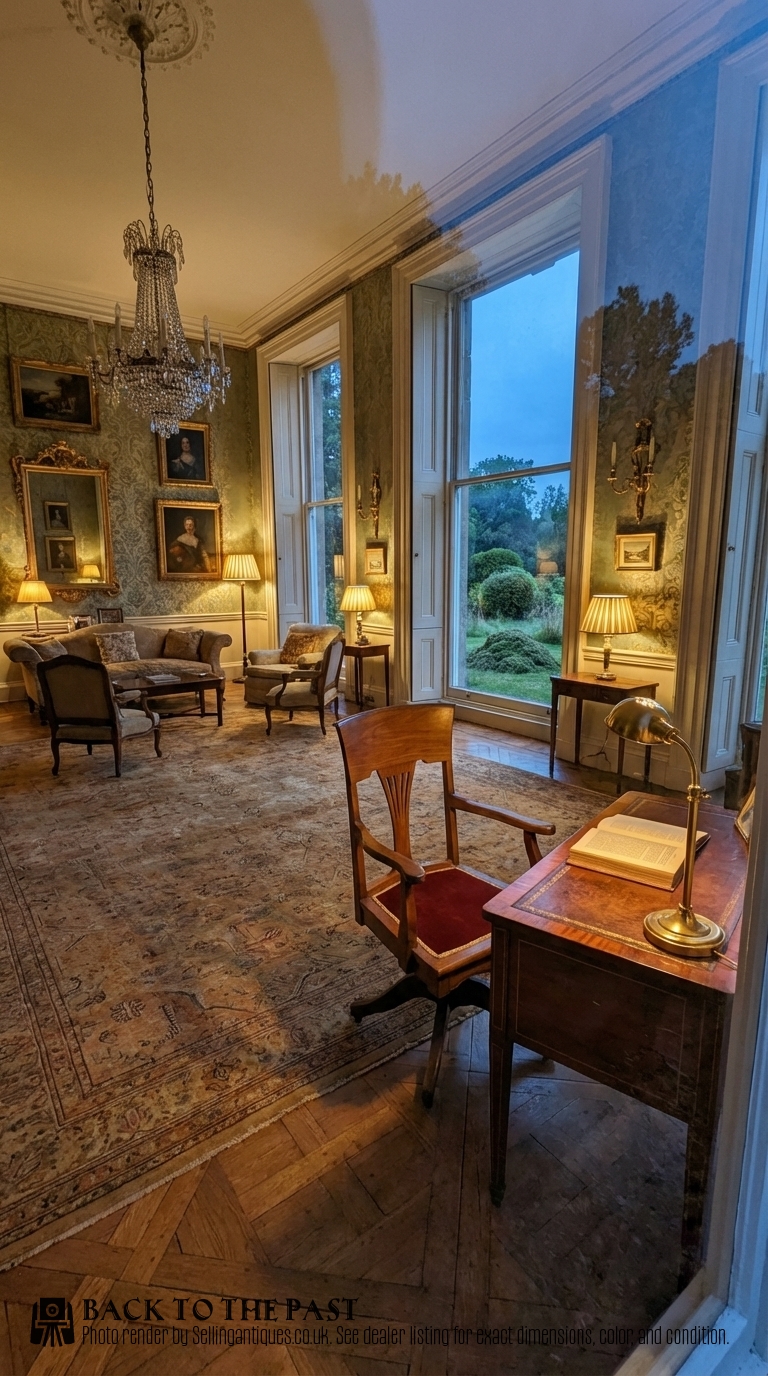
Vintage Wooden Swivel Seat
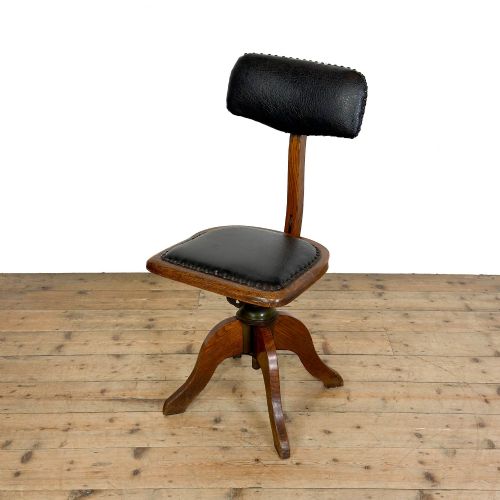
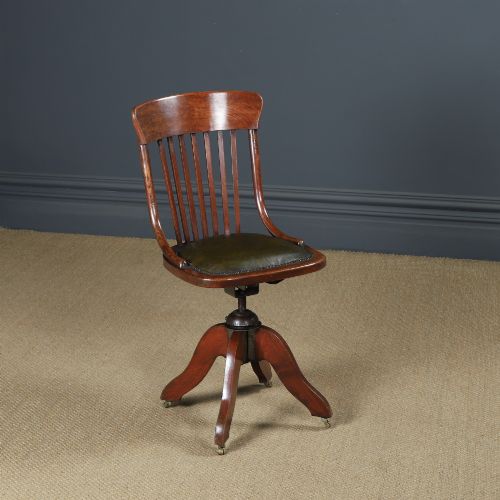
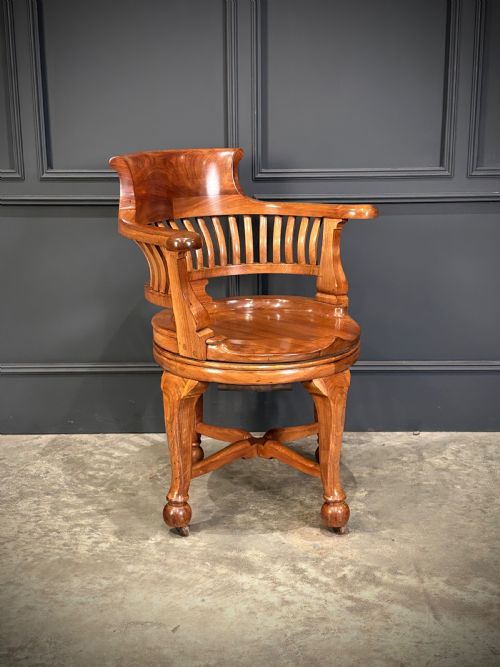
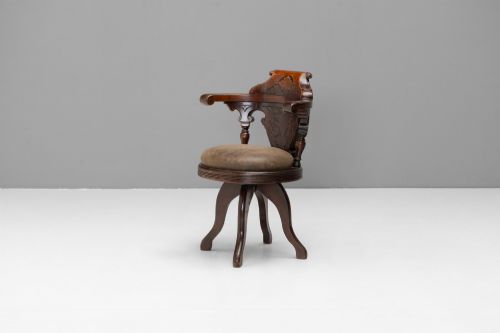
A vintage wooden swivel seat serves as a functional office or desk chair, often featuring a revolving mechanism paired with timber construction. These pieces range from simple office desks to piano stools and industrial workshop seating.
The selection includes specific forms such as ships chairs, revolving armless office chairs, and bar stools. Most items originate from the late nineteenth century through to the early decades of the twentieth century.
Materials and construction methods
Construction relies heavily on hardwoods like oak, mahogany, beech, and walnut, often paired with metal or cast iron swivel mechanisms. Leather and hide seats frequently appear alongside solid wooden platforms.
Joinery methods reflect the demands of a revolving seat, utilising robust frames to support movement and tilt functions. Carved details and turned wooden supports are common across Victorian and Edwardian examples.
Oak and walnut dominate the listed selection, frequently paired with leather seats and cast iron mechanisms.
Assessing quality and craftsmanship
Quality reveals itself in the smoothness of the swivel and tilt action, alongside the solidity of the timber frame. Superior pieces retain well-engineered iron or metal mechanisms that operate without excessive play.
Finer examples display careful carving, choice wood grain, and original leather upholstery rather than later replacements. The balance between sturdy construction and refined proportion dictates the standing of each piece.
Gillows·Evertaut
The Vintage Wooden Swivel Seat Glossary
- Swivel mechanism
- The internal pivot assembly allowing the seat to rotate. This hardware dictates how freely the chair turns.
- Rise and fall
- An adjustable height mechanism operated by a threaded spindle or screw action. It allows the seat level to be raised or lowered.
- Bergere
- A type of chair featuring woven cane panels. This method provides a lighter panel construction within a wooden frame.
- Hide
- A heavy leather upholstery material used on desk chair seats. It offers a durable and traditional surface finish.
- Revolving
- A descriptive term for a seat that turns through a full circle. It is commonly found on office and desk chairs.
Vintage Wooden Swivel Seat: Frequently Asked Questions
How do I adjust the height?
Many vintage swivel seats utilise a threaded central spindle mechanism operated by turning the seat itself.
This raises or lowers the wooden platform relative to the base.
Are these chairs suitable for daily desk use?
Most of these pieces were originally built for offices, studies, or workshops, making them well-suited for modern desk work.
Their robust timber frames and swiveling bases provide practical daily functionality.
What is the difference between a desk chair and a piano stool?
Desk chairs typically include backrests and arm supports designed for seated task work over longer periods.
Piano stools often feature simpler padded or wooden revolving tops without backs, intended for short-duration seating at a keyboard.
How do I care for the leather and wood?
Wood surfaces benefit from occasional polishing with traditional wax to maintain the finish and nourish the grain.
Leather seats require gentle cleaning and conditioning to prevent drying out over time.