


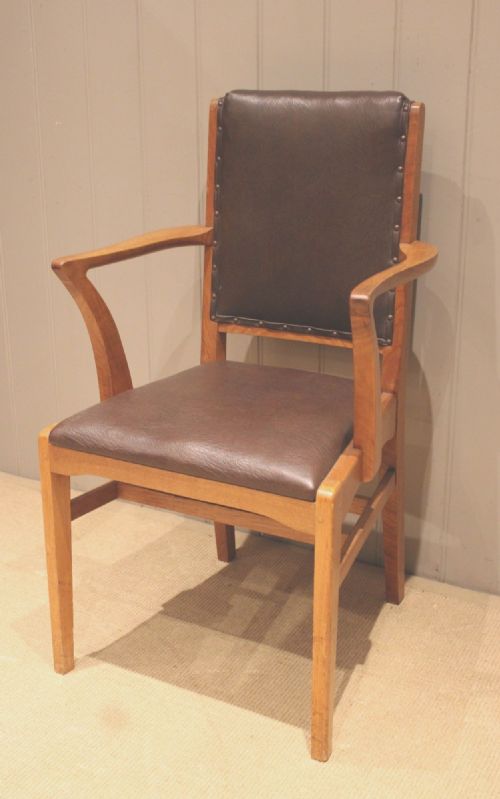
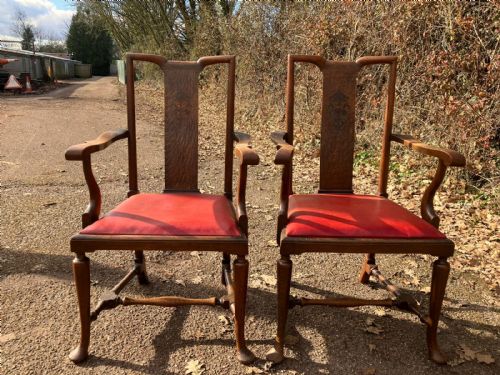

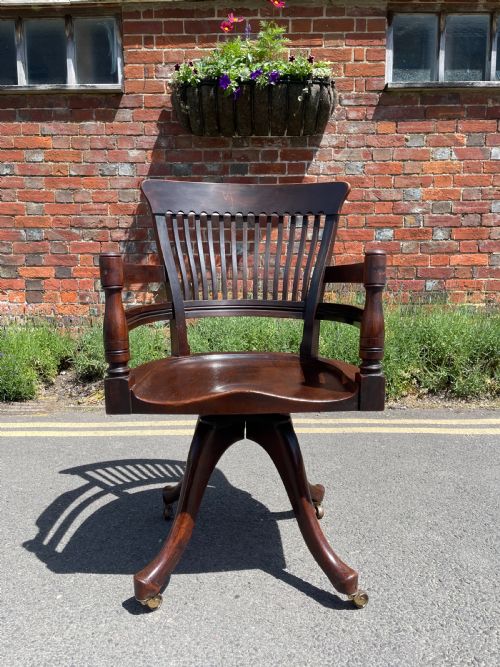

Arts and Crafts Office Chair
An arts and crafts office chair brings solid timber construction and honest joinery straight to the desk.
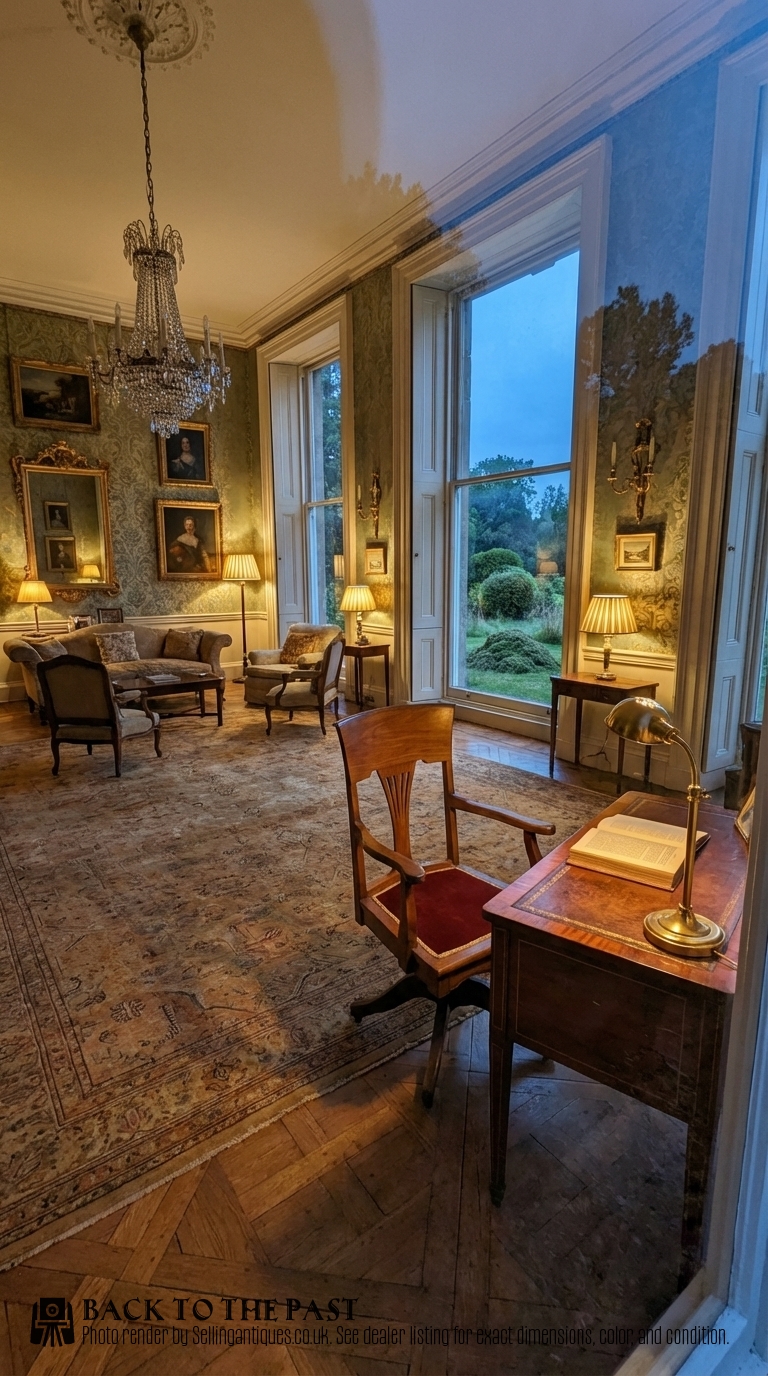
Arts and Crafts Office Chair
When you search for an arts and crafts office chair, you encounter sturdy desk chairs and armchairs shaped by the principles of the movement. These seating pieces appear frequently in oak, walnut, and mahogany, reflecting the styles of the Victorian, Edwardian, and early twentieth-century periods.
The versions most commonly met on this page are sturdy armchairs, elbow chairs, and revolving desk chairs designed for daily use. Makers utilised robust timbers and exposed construction details to create functional seating for studies and offices.
How they were made
Makers constructed these chairs primarily from solid oak, walnut, and mahogany, often pairing the timber frames with leather or velvet upholstery. Metal components such as brass, iron, and copper appeared on swivel mechanisms, castors, and structural brackets.
Joinery methods emphasised visible construction and durability rather than hidden fasteners. Carved details and turned supports appeared alongside simpler geometric lines depending on whether the piece leaned towards Gothic Revival or Aesthetic Movement influences.
The documented periods span from the Victorian era and the Aesthetic Movement through the Edwardian years up to nineteen twenty.
What varies in quality
The standard of a chair rests in the selection of the timber and the integrity of the joinery. Pieces featuring dense oak or figured walnut with precise carving and robust swivel actions stand apart from simpler utility seating.
Attribution to known makers or firms elevates a piece, as does the preservation of original leather upholstery and brass hardware. The overall weight and balance of the frame indicate the care taken during construction.
Gillows·Bruce James Talbert·Kendrick and Jefferson·Shoolbred·E W Godwin
The Arts and Crafts Office Chair Glossary
- Desk Chair
- A seating piece designed specifically for use at a writing table or desk. These often incorporate swivel mechanisms or supportive armrests.
- Elbow Chair
- An armchair with shorter arms designed to fit comfortably beneath the edge of a desk or table. This form appears frequently in Edwardian oak furniture.
- Gothic Revival
- A design style drawing inspiration from medieval architecture and forms. In these chairs, it manifests through pointed arches, heavy timbers, and structural tracery.
- Aesthetic Movement
- A late nineteenth-century design current focusing on visual beauty and artistic expression. Pieces from this movement display refined proportions and lighter structural elements.
- Swivel
- A revolving mechanism placed beneath the seat to allow rotation. This feature appears on several office and desk chairs from the Edwardian period onwards.
Arts and Crafts Office Chair: Frequently Asked Questions
Are these chairs comfortable for daily desk work?
Most examples provide solid back support and generous seating proportions suited for extended sitting. Their wooden frames offer a firm posture.
Revolving versions and models with upholstered pads give added mobility and comfort during workspace use.
How do I identify an Edwardian desk chair?
Edwardian pieces often utilise golden oak or walnut with cleaner lines than their Victorian predecessors. They frequently date around nineteen ten.
Turned spindle backs and lighter framing help distinguish these later examples from heavier Gothic designs.
Did these chairs originally have leather seats?
Many examples were manufactured with fitted leather pads or full leather upholstery to provide a durable writing surface. Velvet also appears on specific models.
Replacements often occur over time, so checking the attachment style helps determine originality.
How do I care for the oak frame?
Regular dusting with a dry cloth keeps the timber surface clean and prevents dust buildup in carved recesses. Applying occasional wax preserves the finish.
Keep the chair away from direct heat sources to prevent the solid wood and leather from drying out.