

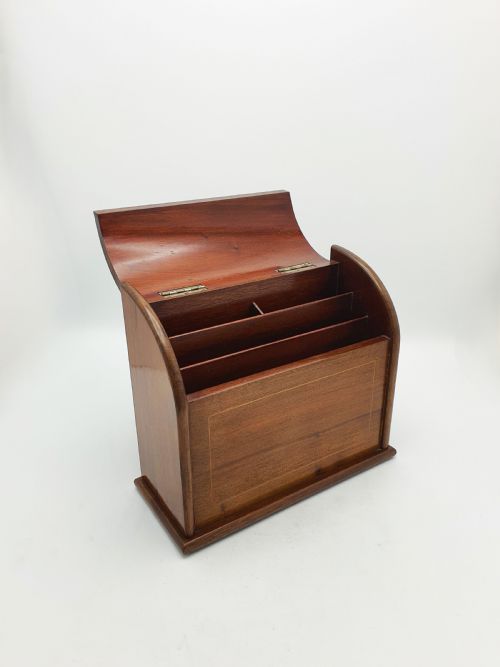

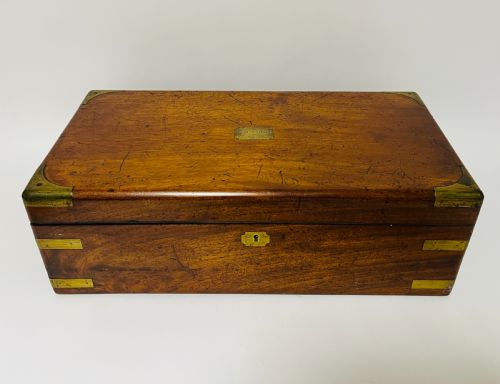
Vintage Wooden Stationery Box
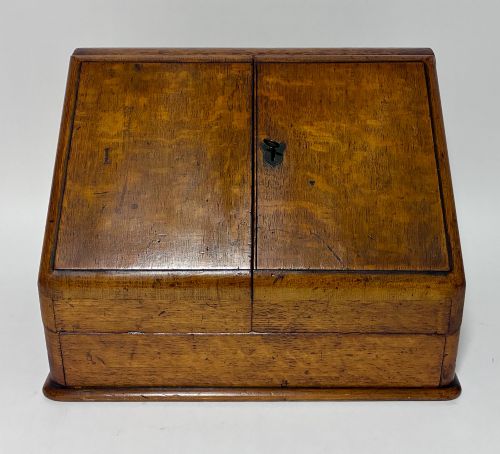
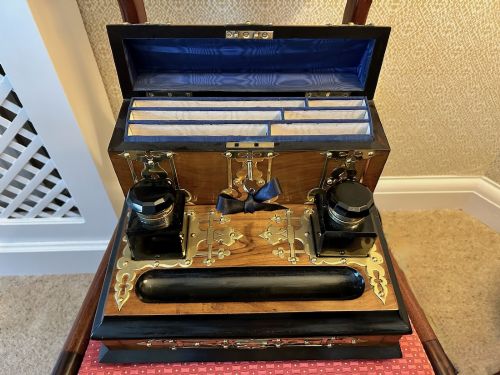
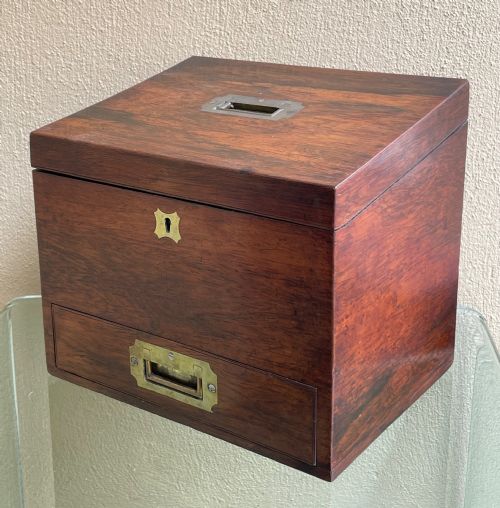
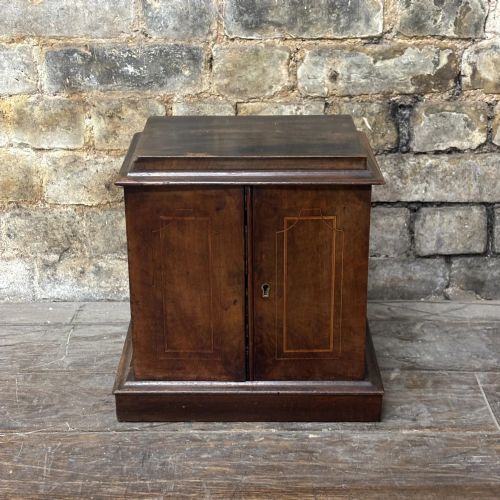
A vintage wooden stationery box brings order to a desk while showing the fine grain of mahogany, rosewood or oak.
Vintage Wooden Stationery Box
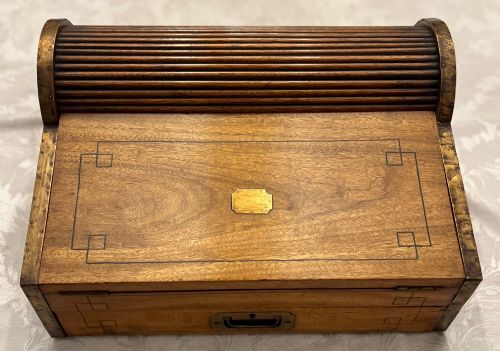
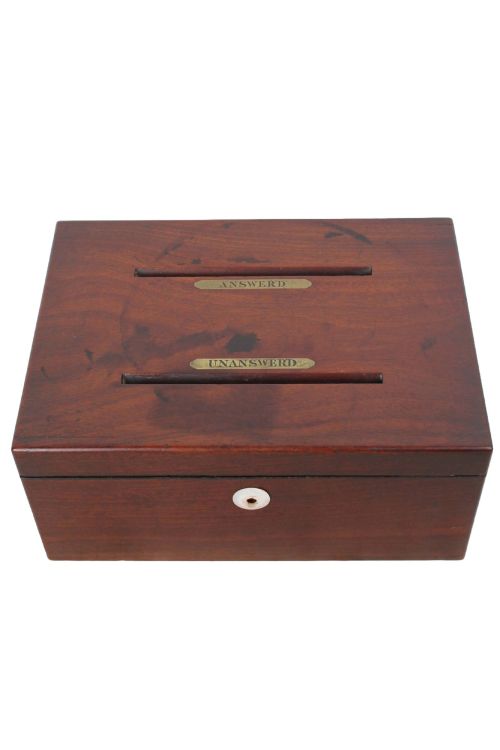
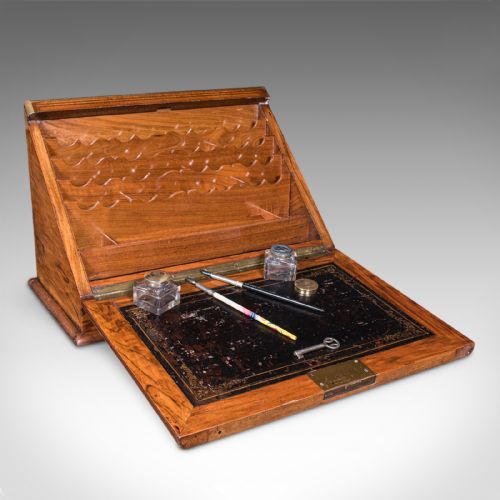
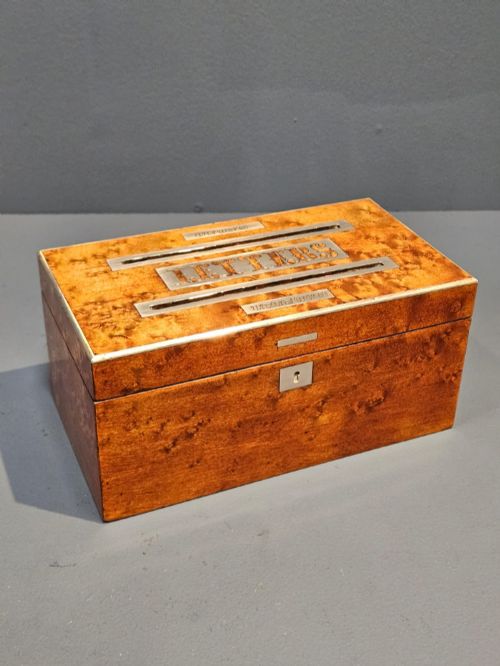
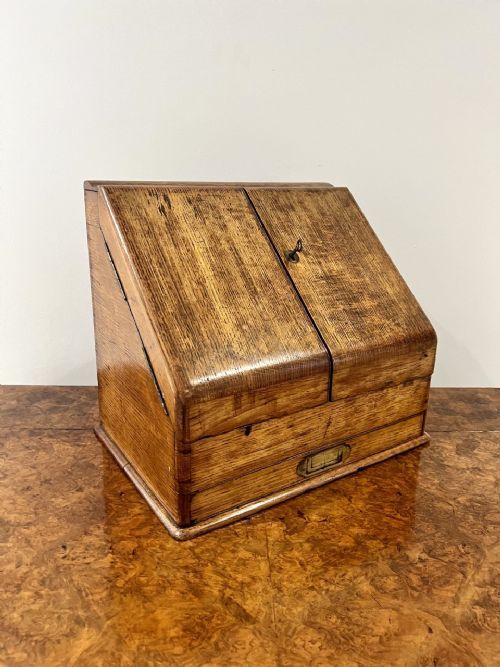
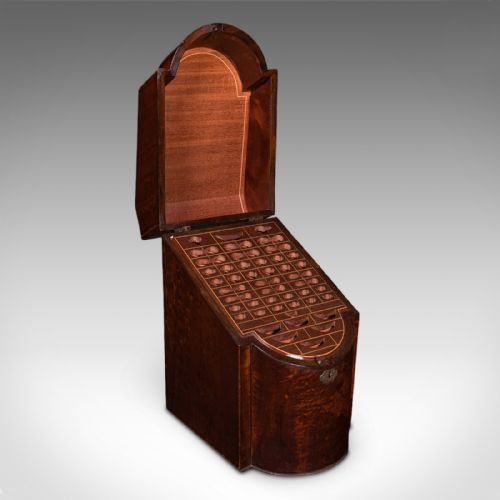
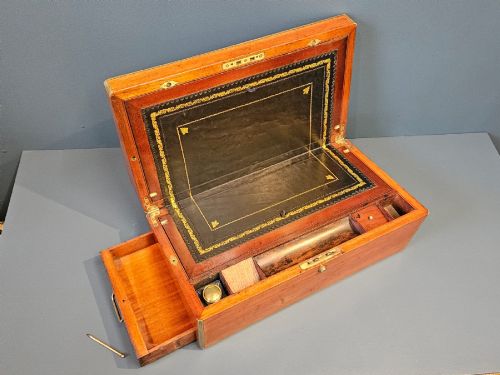
A vintage wooden stationery box organises correspondence, letters and papers on a desk or writing table. These pieces range from simple oak cabinets and desk boxes to slope-front writing cases and compartmentalised letter boxes.
You will most frequently meet Victorian and Edwardian examples on this page, often constructed from mahogany, walnut or rosewood. Many incorporate brass fittings, hinged lids and internal divisions designed for daily correspondence.
The selection also includes Georgian pieces, campaign boxes and Anglo-Indian variants featuring carved wood and bone details. Each box reflects the writing and organizational habits of its period.
Materials and construction
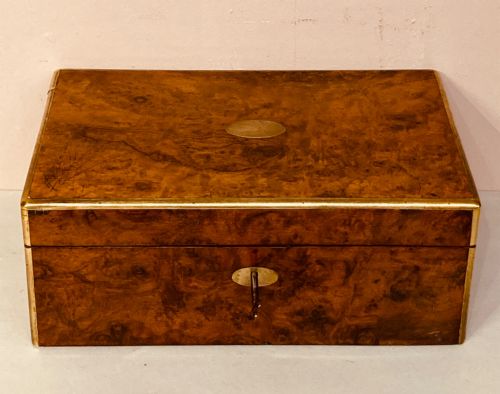
Cabinet makers utilised dense hardwoods such as mahogany, rosewood, walnut and oak to build durable containers that withstood daily desktop use. Finer examples integrated burr veneers, satinwood and ebony for decorative contrast.
Brass was commonly employed for corner bindings, hinges, escutcheons and campaign carrying handles to reinforce the structure. Internal sections often featured glass inkwells, bone details and secret drawers.
Listings feature periods from Georgian and Regency to Victorian and Edwardian, alongside Anglo-Indian styles.
What separates the grades
The grade of a piece depends on the selection of timber figures, such as burr walnut or figured mahogany, and the precision of the joinery. Superior boxes display crisp exterior brasswork, well-fitted internal compartments and intact secret drawers.
Design complexity also marks out better examples, from plain country house letter boxes to finely inlaid Regency and Anglo-Indian carved pieces that required advanced craftsmanship.
The Vintage Wooden Stationery Box Glossary
- Writing slope
- A desktop box with a hinged, slanted lid designed to hold paper and provide an angled writing surface. Inside, compartments store pens and inkwells.
- Campaign box
- A sturdy portable chest or writing case reinforced with brass corners and flush handles, originally built for travel. These pieces often feature secure locking mechanisms and compact internal fittings.
- Escutcheon
- A protective metal plate surrounding a keyhole, usually made of brass. It prevents the surrounding wood from wearing down with repeated use.
- Veneer
- A thin slice of decorative wood, such as burr walnut or satinwood, applied over a stable secondary timber. This technique allowed cabinet makers to display striking grain patterns.
- Secret drawer
- A concealed compartment built into a desk or box, accessed through a hidden release mechanism or by removing another drawer. These were used to store valuables and private papers.
Vintage Wooden Stationery Box: Frequently Asked Questions
What is a vintage wooden stationery box used for?
These boxes were designed to store writing paper, envelopes, letters and ink supplies on a desk or table. They kept correspondence organised and private in homes and offices.
Today, they serve the same practical desktop purpose while displaying traditional woodwork and period interior fittings.
How do I date a wooden stationery box?
Dating relies on timber choices, brass hardware styles, construction methods and overall decorative motifs. Mahogany and rosewood dominated 19th-century pieces, while oak was common in both Georgian and Edwardian examples.
Secondary clues include the presence of hand-cut dovetails, the type of lock used and any maker marks or stamps found inside.
How should I care for a wooden stationery box?
Keep the wood away from direct sunlight and radiators to prevent the timber and veneers from drying out and cracking. Occasional light polishing with a suitable wax maintains the finish.
Avoid using excess moisture on the wood or brass fittings, and check hinges gently to ensure they move freely.