


Vintage Wooden Slat Trunk
These vintage wooden slat trunk pieces combine robust construction with period utility, offering both practical storage and distinctive historical character for modern interiors.
Vintage Wooden Slat Trunk
A vintage wooden slat trunk provides sturdy storage solutions, appearing across various forms including travel chests and steamer trunks from the nineteenth and early twentieth centuries. These pieces emerge from periods spanning the Victorian era through the Edwardian years and into the 1920s.
Origins vary from English country houses to French workshops and Canadian makers, demonstrating diverse regional approaches to portable luggage. The forms range from dome-top chests to flat-topped wardrobe trunks equipped with original hardware.
How they were made
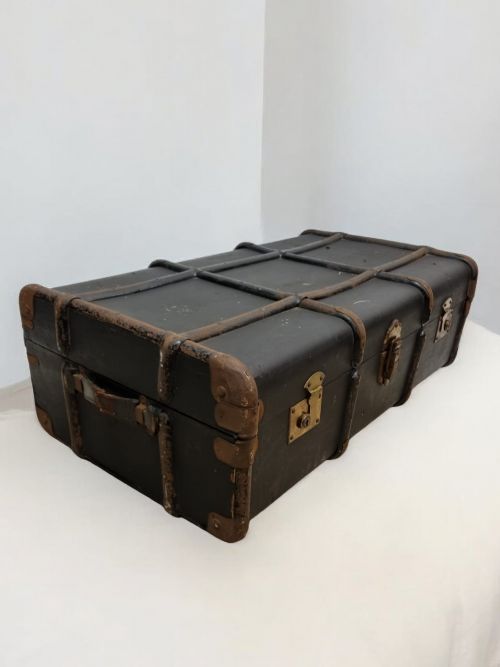
The construction relies heavily on solid timbers such as oak, mahogany, ash, and beech, frequently reinforced with iron and brass hardware to withstand travel. Wooden slats protect the main body of the trunk, while canvas and leather coverings add durability against the elements.
Joinery methods reflect the industrial and domestic demands of the nineteenth and early twentieth centuries, utilising metal rivets, braces, and stitched straps. Makers applied polished finishes to exposed hardwoods like oak, leaving utilitarian pine painted.
Several trunks bear original French stencil monograms and Paris labels, having crossed the Channel before settling into quiet retirement.
What varies in quality
Quality differentiates through the integrity of the original hardware, the selection of timber, and the presence of maker stamps or signatures. Trunks retaining their brass locks, leather handles, and canvas exteriors demonstrate superior original status.
The sophistication of the timber preparation, whether polished oak or figured mahogany, separates standard utility pieces from high-end workshop productions. Structural stability in the slat arrangement and internal framing dictates the overall grade of survival.
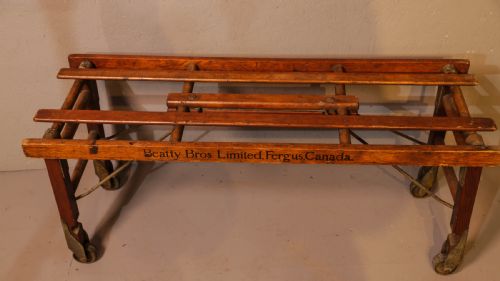
Beatty Bros Fergus Canada·Brown & Lamont·Waring & Gillow·Louis Vuitton
The Vintage Wooden Slat Trunk Glossary
- Steamer trunk
- A lower-profile luggage chest designed to fit beneath a ship's cabin berth during ocean transit. These pieces often feature reinforced wooden slats and metal corners.
- Wardrobe trunk
- An upright opening luggage piece containing compartments and hangers for clothing storage. This form represents a more complex internal arrangement than standard flat-topped chests.
- Luggage stand
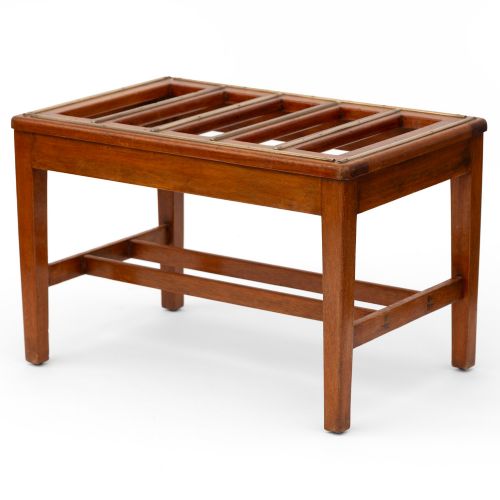
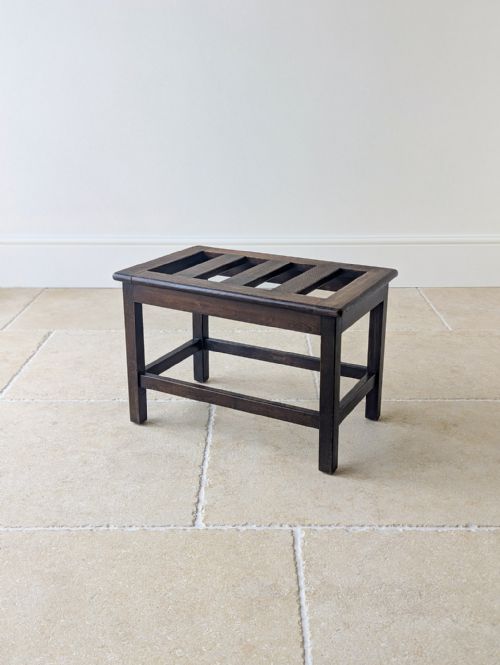
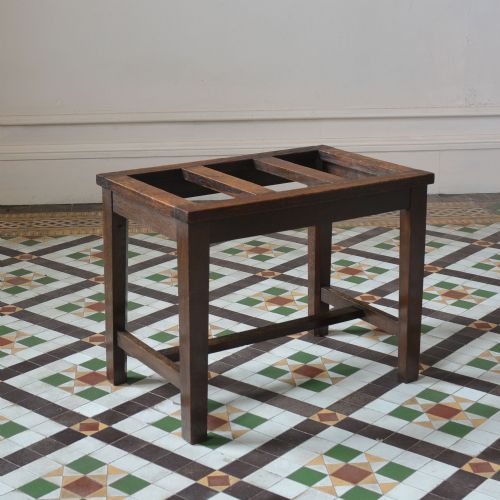
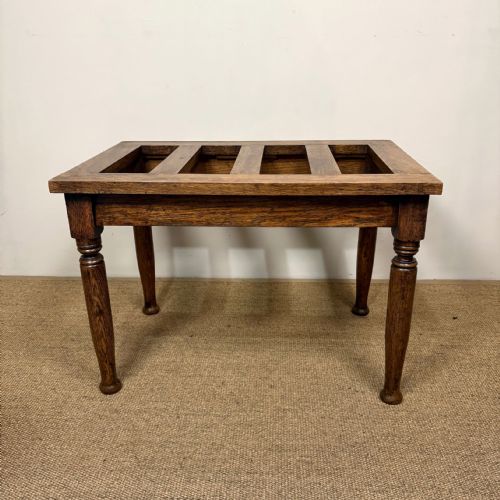
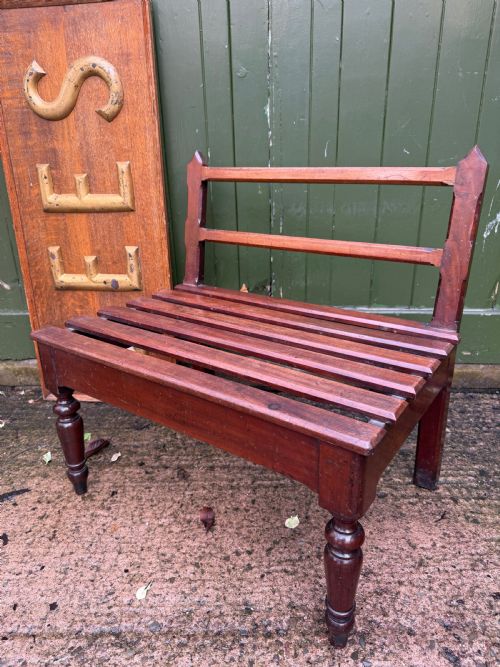
- A folding or fixed low frame designed to hold a suitcase or trunk at a convenient height. They appear frequently in polished oak, mahogany, and ash across Victorian and Edwardian examples.
- Dome top chest
- A storage trunk featuring a rounded upper lid designed to shed water during travel. This profile frequently utilises canvas coverings over wooden slats.
- Upstand support
- A raised rear barrier on a luggage stand that prevents items from sliding backward. This detail appears on deeper nineteenth-century country-house models.
Vintage Wooden Slat Trunk: Frequently Asked Questions
What is a vintage wooden slat trunk used for today?
These pieces serve primarily as functional coffee tables, blanket boxes, or decorative storage chests within contemporary living spaces. Their sturdy construction allows them to support everyday domestic items while adding period texture to a room.
Beyond surface use, the internal compartments provide concealed space for linens, books, or seasonal clothing. They integrate easily into both traditional and industrial interior schemes.
How do I date an Edwardian trunk or luggage stand?
Dating relies on identifying material preferences, construction hardware, and stylistic markers typical of the reign between nineteen hundred and nineteen ten. Edwardian pieces often favour lighter polished oak and refined Edwardian proportions compared to heavier Victorian counterparts.
Maker stamps, patent marks on brass fittings, and historical travel labels can also narrow down the manufacturing window. Comparing the joinery style to documented pieces helps confirm the period.
Were all wooden slat trunks used for travel?
Many examples saw heavy service on ocean liners, trains, and transatlantic crossings, while others remained stationary in domestic bedrooms and hotel rooms. Travel trunks typically feature reinforced wooden slats, iron brackets, and durable canvas or leather exterior protection.
Stands and racks were manufactured specifically for domestic or hotel hospitality use rather than transit. Examining the wear patterns and hardware helps distinguish travel-worn items from domestic furniture.
How should I care for the wood and canvas surfaces?
Maintenance involves dusting timber regularly with a soft cloth and applying appropriate wax to exposed hardwoods like oak and mahogany. Avoid harsh chemical cleaners that might strip the original polished finishes or dry out aged leather elements.
Canvas and metal hardware benefit from gentle cleaning to preserve stencils and stamps without removing historical patina. Keeping pieces away from direct heat sources prevents the wooden slats from warping.