


Antique Flat Top Trunk
An antique flat top trunk is a sturdy box built for travel and storage that now serves as a characterful coffee table or blanket chest.
Antique Flat Top Trunk
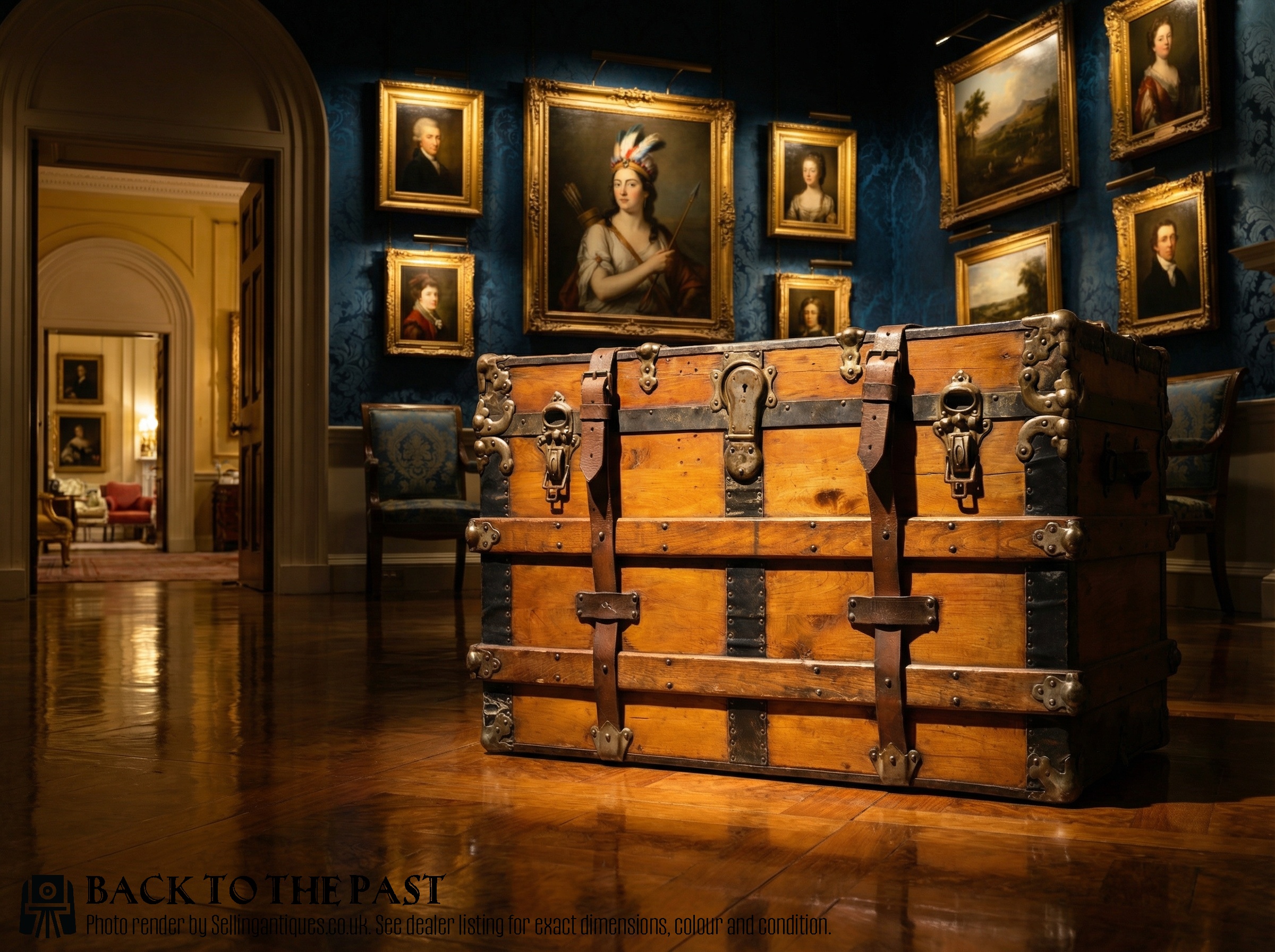
When you search for an antique flat top trunk, you are looking at practical storage boxes fashioned from timber and reinforced for journeys by land or sea. The examples gathered here span the nineteenth and early twentieth centuries, encompassing periods such as Victorian, Edwardian, and the Art Deco era.
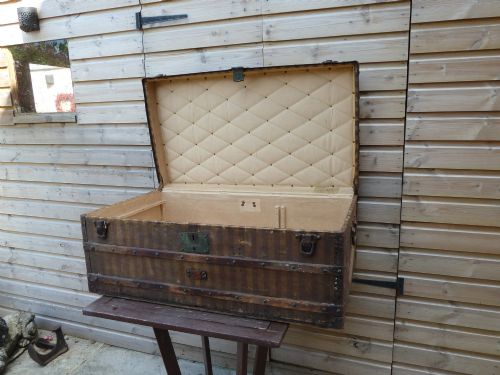
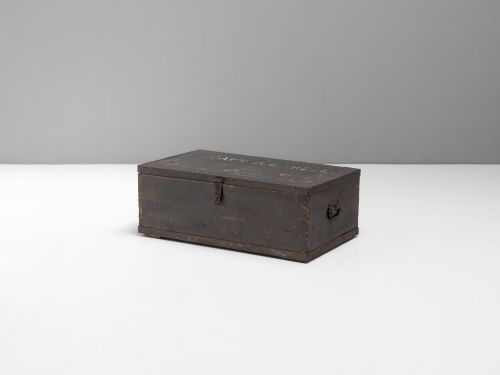
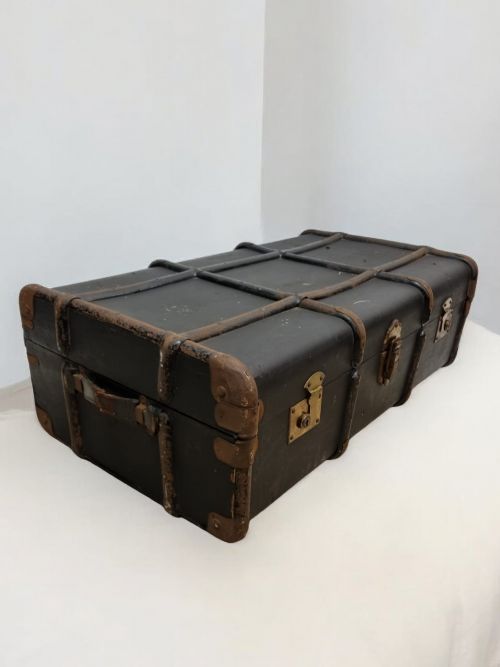
Most pieces you meet on this page are constructed from pine or elm, sometimes painted or waxed, alongside specialised travel luggage covered in canvas or leather. Form follows function closely, resulting in shapes designed to stack on ships or trains, from sea chests and travelling coffers to fitted luggage and low boxes utilised as coffee tables.
Origins range from British workshops to French makers and Scandinavian country houses, reflecting how diverse these utilitarian objects were. Whether you encounter a simple painted pine blanket box or a canvas-covered steamer trunk with original hardware, each piece bears the marks of its travelling history.
Materials and construction methods
The foundation of these pieces relies on solid timbers such as pine and elm, selected for strength and availability during the nineteenth and early twentieth centuries. Carpenters joined boards with dovetail or rebate joints to withstand the stress of transit, often mounting the boxes on robust wooden bases.
Protection and reinforcement came from metal fittings in iron and brass, securing the corners, edges, and lids against heavy handling. Leather, canvas, and fabric coverings were then applied to high-end travel luggage, fastened with metal studs and accompanied by original locks and handles.
Antique Flat Top Trunk Retail Price Guide 2026
Typical asking prices for flat top trunk among the pieces listed under this phrase on Sellingantiques today, from the lower quarter to the upper quarter. They describe what is for sale here now, not the wider market.
Distinctions in quality and execution
The standard of an antique flat top trunk is told by the integrity of its primary materials and the sophistication of its hardware. Superior pieces display finely selected timbers, intricate dovetailing, and heavy brass or iron mounts that retain their original working locks and leather straps.
Another measure lies in the completeness of internal fittings, such as original trays, compartments, and maker's labels. Simpler country pine chests rely on honest utility and well-preserved painted surfaces, whereas high-grade pieces from renowned makers exhibit exceptional craftsmanship in every structural detail.
Louis Vuitton·Aux Etats Unis
The Antique Flat Top Trunk Glossary
- Steamer trunk
- A lower-profile luggage piece designed to fit beneath a passenger ship berth during ocean voyages. These usually feature wooden frames covered in canvas or metal.
- Travelling coffer
- A heavy-duty storage chest built for transporting personal belongings across long distances. They often display robust iron carrying handles and reinforced corners.
- Blanket box
- A domestic chest utilised primarily at the foot of a bed for linens and blankets. They share the sturdy proportions of travel trunks but stayed at home.
Antique Flat Top Trunk: Frequently Asked Questions
What is a flat top trunk?
A flat top trunk is a rigid storage chest with a level lid, designed primarily for travel and luggage transport during the nineteenth and early twentieth centuries.
Unlike domed trunks, the level surface allowed multiple pieces to be stacked securely in cargo holds or railway carriages.
How do I use one at home?
These trunks serve double duty as practical storage containers and living room furniture items such as coffee tables or blanket boxes.
Placing one at the foot of a bed provides concealed storage for spare linens while adding period character to the room.
How do I date an antique trunk?
Dating relies on observing construction methods, timber types, and the evolution of hardware like locks, handles, and corner brackets.
Victorian and Edwardian pieces often utilise pine or elm with iron fittings, while later twentieth-century examples introduce canvas and specialised travel branding.
What woods were commonly used?
Pine and elm appear most frequently in the construction of these traditional travelling chests and blanket boxes.
Carpenters chose these native timbers for their resilience and availability, often supplementing them with metal reinforcements and fabric coverings.