



Antique Luggage Coffee Table
An antique luggage coffee table turns travel trunks and campaign chests into low tables with strong historical character.
Antique Luggage Coffee Table
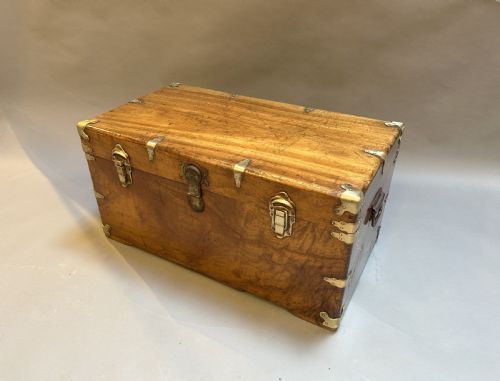
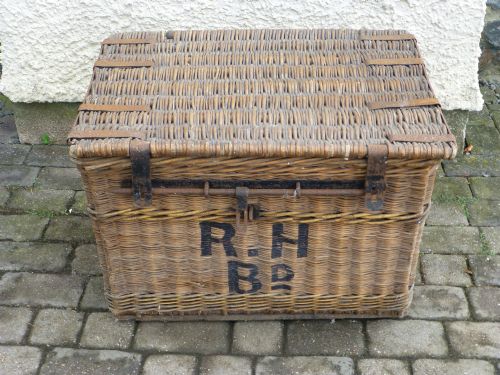
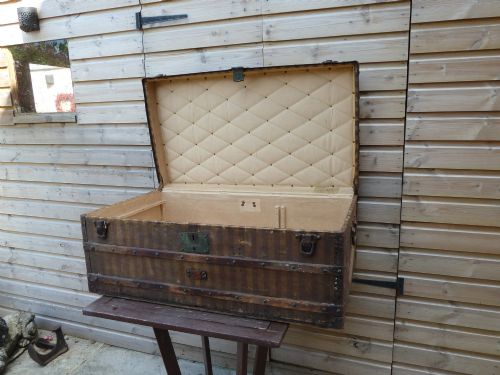
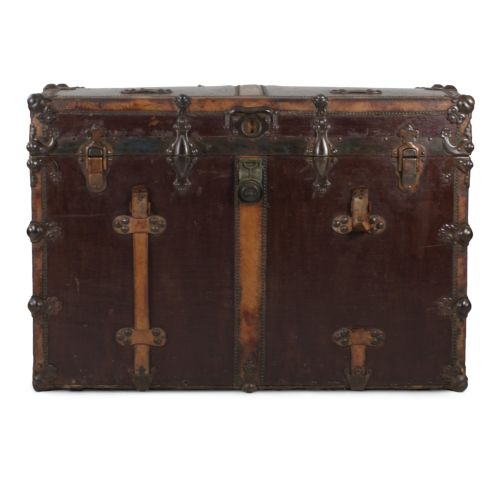
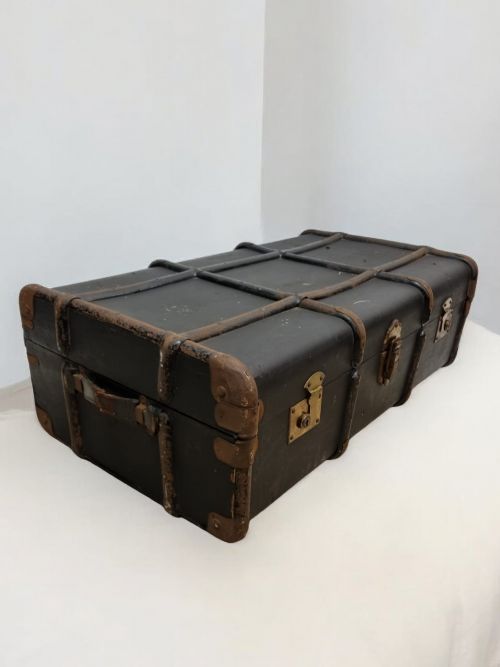
An antique luggage coffee table adapts vintage travel trunks, chests and luggage racks into low tables for the living room. You will frequently find these formed from Victorian and Edwardian steamer trunks, storage chests and folding luggage stands.
The selection ranges from robust nineteenth century campaign chests and cane travelling trunks to early twentieth century leather and canvas pieces. Makers adapted these forms to function as sturdy tables while retaining their original travel hardware and proportions.
How they were made
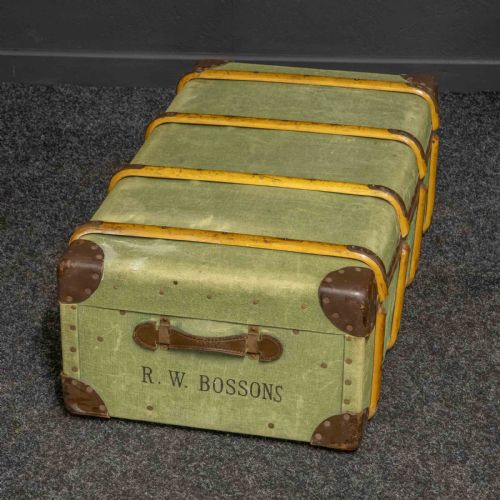
Makers constructed these pieces using a foundation of timber, camphor wood, mahogany, or oak, reinforced with metal, brass, and iron corners. Exterior surfaces typically feature leather, canvas, pig skin, or painted finishes secured with close-nailing.
Original travel trunks incorporate protective brass and iron fittings, wooden laths, and functional carrying handles. Luggage racks display turned or shaped yew and mahogany supports designed to fold flat or hold travel bags.
Some trunks retain famous family travel stamps and original shipping labels from ocean voyages across continents.
What varies in quality
Quality depends upon the integrity of the original construction and the preservation of authentic hardware such as brass locks and leather bindings. Pieces retain more character when their surface patination and internal fittings remain untouched by heavy alterations.
The choice of materials also dictates the standard of the piece, with camphor wood, yew wood, and heavy leather binding representing finer material selection than standard utility grades. Maker signatures and French or continental origins further separate standard storage chests from distinguished examples.
LOUIS VUITTON·Aux Etats Unis
The Antique Luggage Coffee Table Glossary
- Steamer trunk
- A lightweight travel trunk designed for the cabins of ocean liners during the late nineteenth and early twentieth centuries. These pieces often feature flat or slightly rounded tops suitable for conversion into low tables.
- Campaign chest
- A portable trunk or chest constructed in sections with recessed brass handles and corner brackets for military officers on the move. Such pieces utilise durable timbers like camphor wood or mahogany.
- Luggage stand
- A low wooden frame with folding or fixed legs designed to hold travel bags at a convenient height. Examples appear in mahogany and yew wood.
- Brassbound
- Furniture or luggage reinforced along the edges and corners with brass strips and brackets to withstand rigorous travel. This detail protects the wood and adds a decorative metallic contrast.
- Patina
- The surface sheen and colour acquired by materials like leather, wood and metal through age and handling. A rich patina indicates long use without harsh restoration.
Antique Luggage Coffee Table: Frequently Asked Questions
How do I choose the right height?
Consider the height of your surrounding seating to ensure comfortable access to the surface. Trunks and chests vary in depth, so measure your space before selecting a piece.
Lower steamer trunks offer a streamlined profile, while taller storage chests provide greater internal capacity alongside a more substantial presence.
Are these tables practical for daily use?
These pieces provide a stable surface for books and cups while offering concealed storage inside the trunk body. The robust construction of travel chests suits everyday living.
Leather, canvas and wood surfaces require only simple dusting and occasional conditioning to maintain their condition over time.
How do I care for the leather?
Keep leather surfaces away from direct heat sources and strong sunlight to prevent drying and cracking. Gentle cleaning helps preserve the natural grain and historic patination.
Apply a suitable leather balm sparingly if the material appears dry, following the natural texture of the hide.
How can I tell the period?
Examine the construction methods, lock mechanisms, and materials to estimate the date of manufacture. Victorian and Edwardian pieces display specific hardware styles and timber choices.
Maker stamps, brass labels, and travel destination stickers often provide direct evidence of the era and journey of the trunk.