

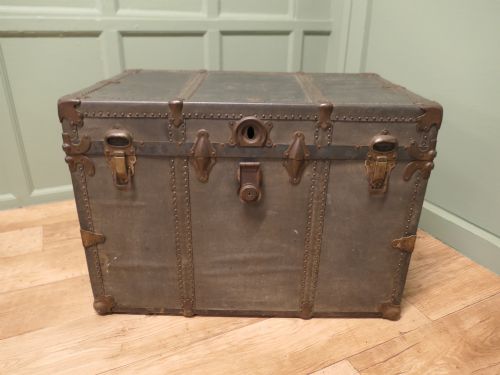
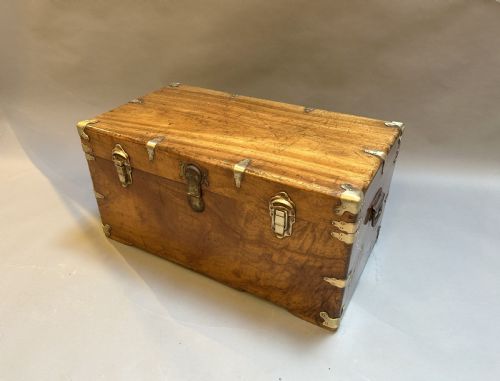
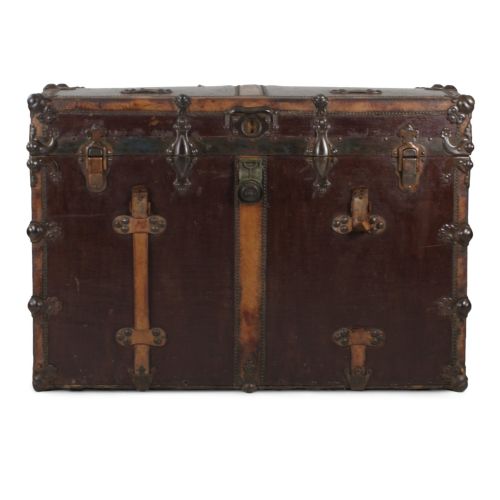
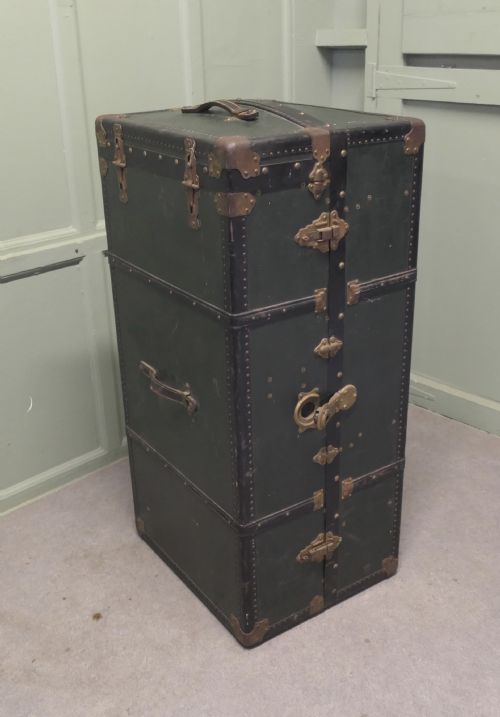
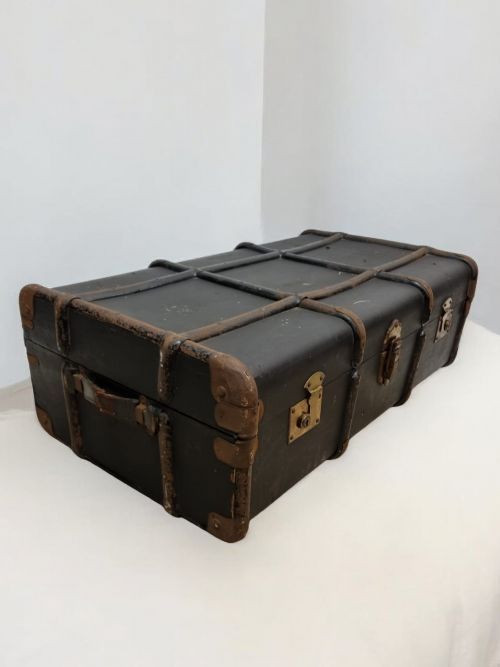

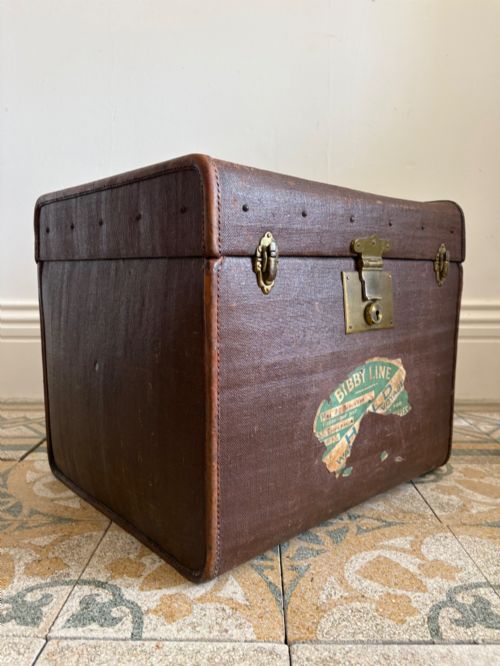


Brass Fitted Luggage Trunk
These brass fitted luggage trunk pieces are robust travel companions built for long journeys, offering both period charm and practical storage.
Brass Fitted Luggage Trunk
A brass fitted luggage trunk provides sturdy storage designed for transit, originating primarily from the Victorian, Edwardian, and early twentieth century periods. These cases take forms such as steamer trunks, cabin wardrobes, and vanity cases, built to accompany travellers across land and sea.
The selection here includes examples in leather, canvas, wood, and vulcanised fibre, often reinforced with metal and detailed brass hardware. Buyers encounter pieces from English, French, and American makers, ranging from utilitarian travel chests to luxurious fitted gentleman's cases.
Camphor wood and traditional leather dominate the earlier examples, while later nineteenth and twentieth century pieces incorporate specialised internal fittings and durable exterior coverings. Each trunk reflects the travel demands of its era, combining internal organisation with rugged exterior protection.
Materials and construction
Construction relies on a sturdy core of wood or metal covered in protective materials like leather, canvas, faux leather, or vulcanised fibre. Makers secured these outer layers with metal studs and heavy brass hardware to withstand the rigours of transit.
Internal compartments, trays, and hanging spaces utilised wood, fabric, and fitted leather to secure garments and personal items during travel. Brass locks, hinges, and corner brackets provided essential reinforcement to high-wear areas.
Brass Fitted Luggage Trunk Retail Price Guide 2026
Typical asking prices for brass fitted luggage trunk among the pieces listed under this phrase on Sellingantiques today, from the lower quarter to the upper quarter. They describe what is for sale here now, not the wider market.
Many trunks carry faded shipping labels and hotel stickers from long-ago journeys across ocean liners and European railways.
Assessing quality
Quality rests upon the integrity of the original hardware, the resilience of the primary materials such as leather or camphor wood, and the complexity of any internal fittings. Pieces retaining their original locks, keys, and compartment trays demonstrate higher craftsmanship.
The reputation of the maker, evident in stamps from firms like Louis Vuitton, Harrods, or Finnegans, distinguishes exceptional pieces from standard utility trunks. Superior examples show careful attention to internal lining and durable exterior binding.
Triumph·Seaward·Harrods·C. Antrobus·Finnegans of Bond Street·Louis Vuitton
The Brass Fitted Luggage Trunk Glossary
- Steamer trunk
- A lower-profile travel trunk designed to fit beneath the cabin berth on ocean liners. These pieces often feature internal wooden ribs and reinforced corners.
- Malle penderie
- A French wardrobe trunk containing a vertical hanging section and drawers. This design allowed travellers to transport garments without heavy creasing.
- Vulcanised fibre
- A laminated material made from compressed cellulose, utilised for lightweight yet tough luggage construction from the late nineteenth century onward.
- Camphor wood
- An aromatic timber frequently used for campaign and travel chests due to its natural insect-repellent properties. It protects stored textiles from moths and dampness.
- Portmanteau
- A large travelling case or suitcase, typically made of leather, that opens into two equal compartments.
Brass Fitted Luggage Trunk: Frequently Asked Questions
How do I date a brass fitted luggage trunk?
Dating relies on materials, construction techniques, and maker marks stamped on the hardware or leather. Earlier nineteenth-century examples often utilise camphor wood or heavy leather over timber, while twentieth-century pieces introduce vulcanised fibre and fitted internal wardrobe trays.
Hardware styles and lock manufacturers also provide clues, as patented brass mechanisms evolved significantly between the Victorian era and the 1920s. Travel labels affixed to the exterior can further establish the timeline of a trunk's usage.
Were these trunks meant for ships or trains?
These pieces served both maritime and rail travel, with specific designs tailored to different modes of transport. Lower steamer trunks slid easily beneath cabin bunks on ocean liners, while upright wardrobe trunks suited railway compartments and hotel stays.
Sturdy exterior bindings of brass and metal protected the contents from rough handling by porters and baggage staff. Canvas and leather coverings were chosen specifically to resist the moisture found in ship holds.
How can I use a vintage trunk at home?
Vintage trunks offer practical storage solutions for blankets, out-of-season clothing, or bed linen while serving as decorative coffee tables or side tables. Their flat tops and robust construction make them suitable surface areas in living rooms or bedrooms.
Smaller vanity cases and fitted travel boxes work well on dressing tables or shelves to hold smaller accessories and keepsakes. Opening the lid allows collectors to display internal compartments and original fabric linings.
What maintenance do leather and brass trunks need?
Leather surfaces benefit from occasional conditioning to prevent drying and cracking, using suitable conservation balms rather than modern polishes. Brass hardware retains its character with gentle cleaning to remove active tarnish without stripping the underlying metal.
Keeping trunks away from direct sunlight and damp environments preserves both the wooden core and any original fabric linings. Proper ventilation helps maintain the condition of older materials like camphor wood and canvas.