



Edwardian Travel Trunk
An Edwardian travel trunk is a robust companion of transit, built to endure global voyages while maintaining structural integrity and practical elegance.
Edwardian Travel Trunk
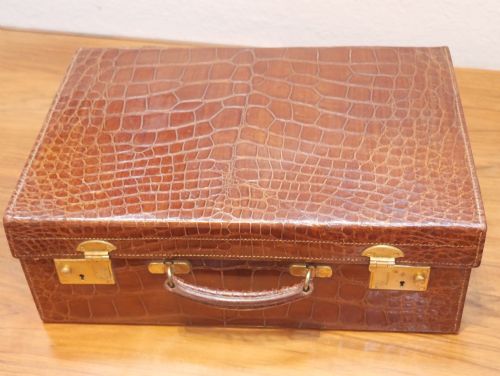
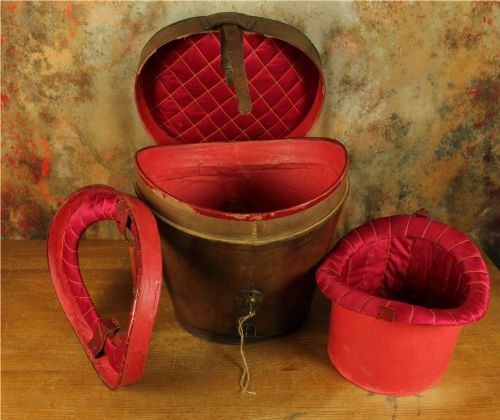
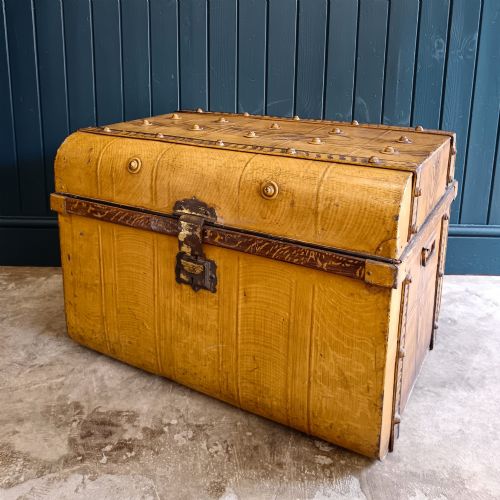
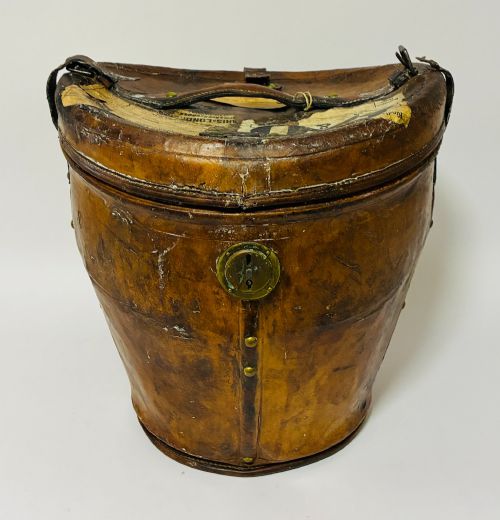
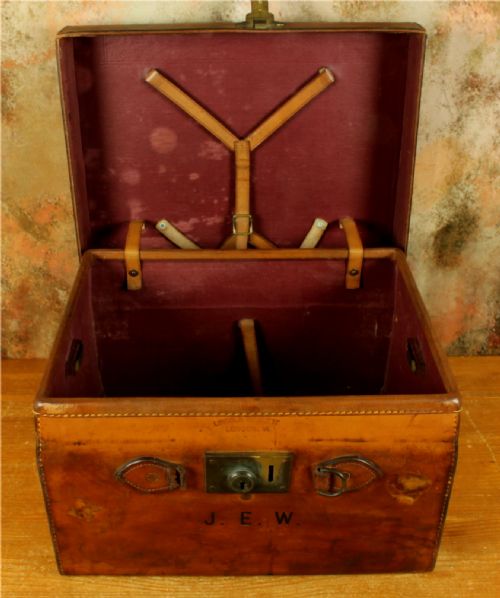
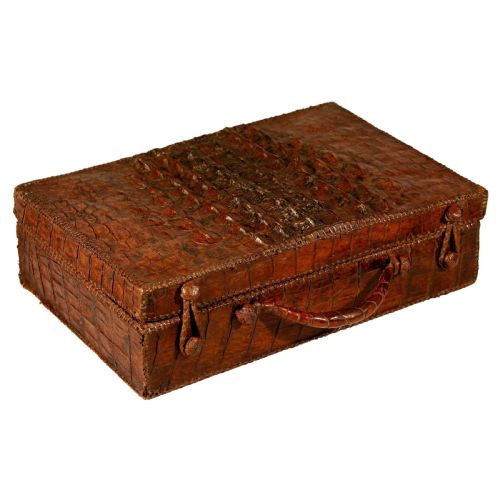
An edwardian travel trunk encompasses a diverse category of luggage and storage pieces designed for the rigours of transit during the early twentieth century. You will encounter various forms on this page, ranging from compact leather hat boxes and vanity cases to large steamer trunks and campaign chests.
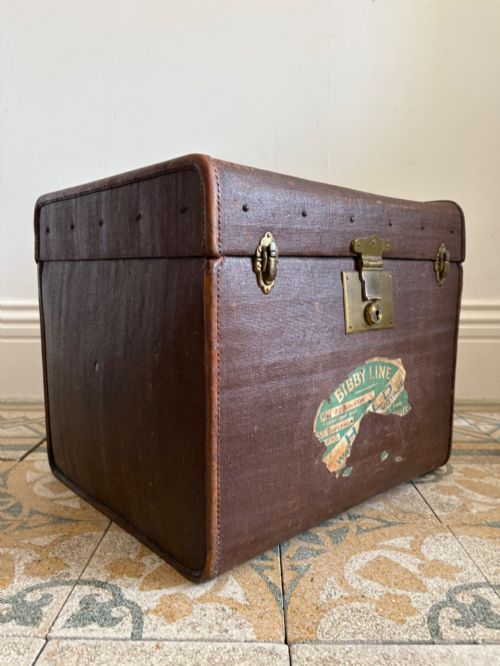
The materials reflect the utilitarian and aesthetic demands of travel, spanning robust leather, canvas, painted metal, and hardwoods such as teak and oak. Many examples bear the marks of actual journeys through travel labels, monograms, and reinforced brass or iron corners.
How They Were Made
Craftsmen built these pieces using a combination of timber frames, such as pine, oak, camphorwood, or teak, clad in protective outer layers of leather, canvas, vellum, or painted metal. Structural durability was reinforced with iron, brass, or steel bindings, studs, and corner brackets to withstand rough handling during transit.
Interiors often featured tailored compartments, fitted trays, lift-out sections, and specialised spaces for hats, suits, or silver. Makers utilised quality fasteners, locks, and handles designed to secure contents safely through extended journeys by rail, ship, or carriage.
Listings feature items spanning the Victorian era through the 1930s, utilising leather, canvas, oak, camphorwood, brass, and aluminium.
What Varies In Quality
Quality rests upon the integrity of the original construction and the degree of structural preservation over time. Pieces retaining their internal fittings, original linings, functioning brass locks, and maker marks command greater interest than those stripped of their interior elements.
The choice of primary materials also distinguishes the range, from standard pine and canvas combinations to dense hardwoods like camphorwood or teak, alongside luxury maker attribution and documented travel history.
Lincoln Bennett·Army and Navy·Allen of London·John Pound·Harrods·Louis Vuitton·Goyard
The Edwardian Travel Trunk Glossary
- Steamer trunk
- A lower-profile luggage chest designed specifically to fit beneath a passenger ship cabin berth. These pieces often feature flat or slightly rounded tops to optimize storage space.
- Campaign chest
- A portable set of drawers or a trunk made for military officers on active service. They frequently feature recessed brass handles and sectional construction for ease of transport.
- Hat box
- A specialised rigid container designed to protect tall top hats or ladies' headwear during travel. They often incorporate internal wooden mounts or secured partitions to prevent shifting.
- Vellum
- Fine parchment typically made from calfskin used as a luxury outer covering for high-end luggage trunks. It provides a smooth, durable finish that accepts travel labels and markings distinctively.
- Portmanteau
- A large travelling case or suitcase, typically made of leather, that opens into two equal compartments. The term derives from French roots describing a case for carrying cloaks.
Edwardian Travel Trunk: Frequently Asked Questions
How were these trunks used during travel?
Travel trunks served as primary luggage for individuals undertaking extended journeys by steamship, railway, or carriage. They were packed with wardrobes, personal belongings, and specialised items, then stowed in ship holds or luggage vans.
Upon arrival at hotels or residences, the trunks often doubled as permanent storage chests in guest rooms. Fitted interiors allowed owners to keep garments and accessories organised while away from home.
Can I use an antique trunk as a coffee table?
Many people adapt these sturdy trunks for modern living by placing them in sitting rooms as coffee tables. Their flat tops and robust construction make them suitable surface areas while providing hidden interior storage.
When utilising a trunk this way, ensure the surface is protected from moisture and that the historical exterior finish is preserved. The internal space remains useful for storing blankets, books, or seasonal items.
How do I identify an Edwardian piece?
Edwardian pieces date from the reign of King Edward VII between 1901 and 1910, though the broader Edwardian era style extends slightly around this decade. Look for construction techniques, materials, and hardware typical of early twentieth-century manufacturing.
Maker stamps, specific label types, and historical documentation or travel stickers can also help anchor a piece firmly within this period. Comparing the structural form against dated examples clarifies the timeline.
What do travel labels on a trunk signify?
Original travel labels and hotel stickers document the actual journeys and physical path taken by the trunk. They offer historical context and a sense of provenance, reflecting where the piece has travelled.
Collectors often value these labels because they contribute to the narrative and character of the object. Removing them can diminish the documented history attached to the piece.