




Vintage Wooden Single Bed
A vintage wooden single bed brings character and craftsmanship to a smaller bedroom.
Vintage Wooden Single Bed
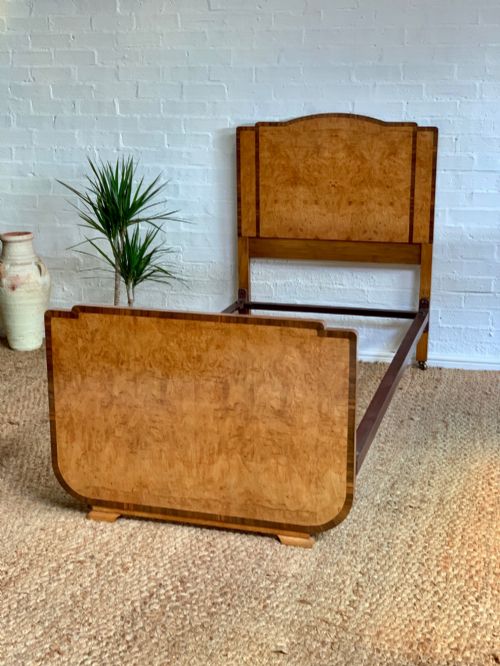
A vintage wooden single bed is a practical sleeping frame built from timber during the nineteenth and twentieth centuries. When searching for a vintage wooden single bed, you encounter a range of forms from plain Edwardian oak frames to elaborate Art Deco burr walnut designs.
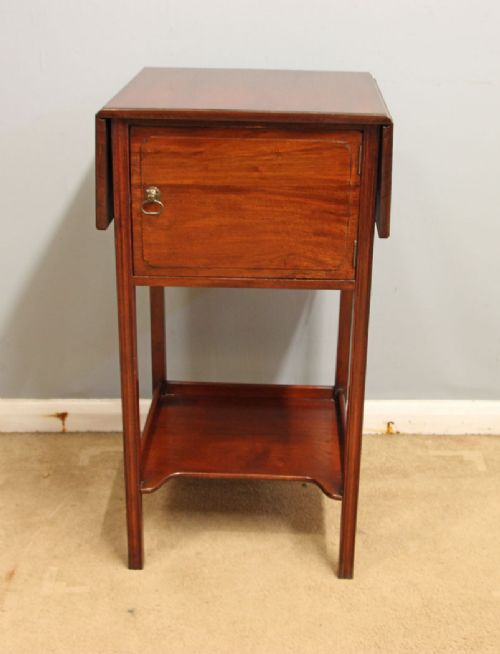
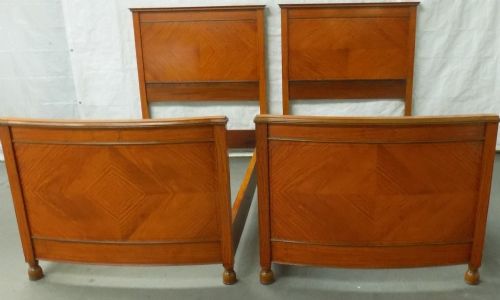
The selection on this page spans several decades, including Victorian and Edwardian examples alongside Art Deco and Arts and Crafts pieces. Buyers frequently find single beds made from mahogany, fruitwood, and satinwood, sometimes accompanied by matching bedside tables.
Many listings show specific regional or stylistic influences, such as French corbeille shapes or Queen Anne style walnut frames. These smaller beds suit guest rooms or children's bedrooms while offering solid timber construction missing from modern alternatives.
Materials and construction
Cabinetmakers constructed these frames using dense hardwoods like oak, mahogany, and walnut, frequently selecting figured veneers such as burr walnut and satinwood for visible headboards. Subsidiary timbers provided internal support while primary surfaces displayed polished grains or painted finishes.
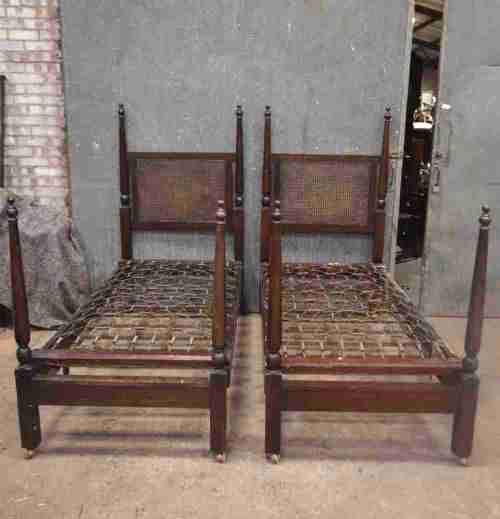
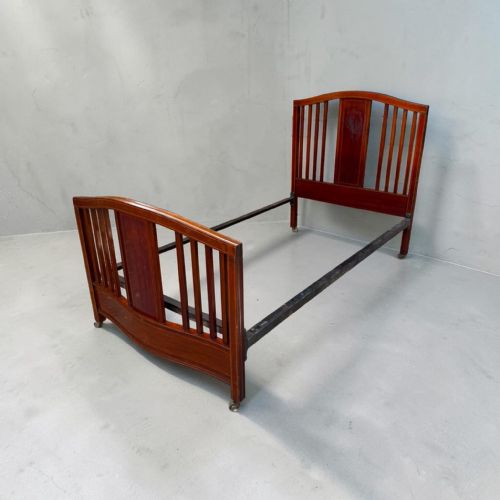
Joinery methods relied on traditional techniques, including panelled construction for headboards and footboards, alongside inlaid details in contrasting woods. Some pieces incorporate carved wooden elements, woven bergere panels, or parquetry patterns.
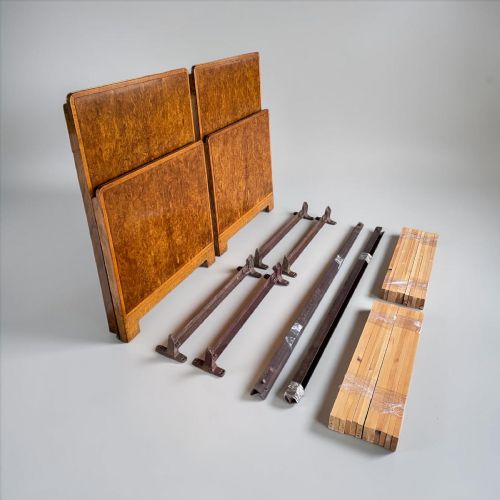
Makers utilised metal fittings such as iron and brass to secure the wooden sections, ensuring the frames could be dismantled and reassembled. Surface finishes ranged from limed oak treatments to traditional French polish.
One remarkably honest bed frame comes labeled for a child, proving that even historic Victorians understood the value of small-scale slumber.
Distinctions in quality
Quality in these beds rests upon the selection of timber and the execution of decorative details like stringing, marquetry, and carved mouldings. Superior pieces display carefully matched veneer grains across the headboard and footboard panels.
The reputation of the maker influences desirability, with documented pieces carrying maker labels or attributable designs standing apart from anonymous workshop production. Structural integrity also dictates worth, particularly the retention of original side rails and sturdy corner joints.
The purity of the stylistic execution marks the better examples, whether an Arts and Crafts oak frame or an Art Deco burr walnut design. Original surfaces that have aged without heavy intervention command greater attention from collectors.
Oliver Morel·Waring and Gillow·Betty Joel·Heal and Son
The Vintage Wooden Single Bed Glossary
- Bergere
- A traditional French upholstered chair or bed panel featuring woven cane work. This technique adds texture and lighter visual weight to solid wooden headboards.
- Burr walnut
- A prized timber veneer taken from the growth growths of a walnut tree. It produces intricate, swirling grain patterns that decorate high-end cabinet work.
- Inlay
- A decorative technique where small pieces of contrasting wood or shell are inserted into the primary timber surface. Edwardian makers utilised this method for geometric or floral borders.
- Parquetry
- A geometric mosaic of wood pieces used for decorative surface patterns. It appears on panelled headboards and footboards of certain continental and British frames.
- Corbeille
- A French bed style featuring a curved, rounded headboard and footboard resembling a basket. These frames often carry painted or polished finishes.
Vintage Wooden Single Bed: Frequently Asked Questions
Will a standard modern mattress fit these vintage beds?
Many vintage single beds measure slightly differently from contemporary standard sizes, particularly older nineteenth-century frames which can vary in length and width.
Buyers should check the internal dimensions of the specific bed frame before purchasing a mattress to ensure a correct fit.
How do I date a wooden single bed?
Dating relies on stylistic clues such as the geometric lines of Art Deco pieces or the inlaid satinwood typical of the Edwardian period. Maker labels, construction methods, and the choice of timber also provide clear indicators of the era of manufacture.
Cabinet hardware and the type of polish applied to the wood further help narrow down the decade.
Are these beds easy to dismantle and move?
Most antique wooden single beds utilise standard iron or brass bolt brackets that connect the headboard, footboard, and side rails. This modular construction allows the frame to be taken apart completely for transport and reassembled in the bedroom.
Care is required when tightening vintage metal fixings to protect the surrounding wood.
How should I care for the wood finish?
Maintenance involves dusting with a soft cloth and occasionally applying a quality beeswax to nourish polished hardwood surfaces. Avoid placing antique wooden beds near direct heat sources or strong sunlight, which can dry out the timber and crack veneers.
Promptly wiping away moisture prevents water marks on the polished finish.