


1930s Art Deco Headboard
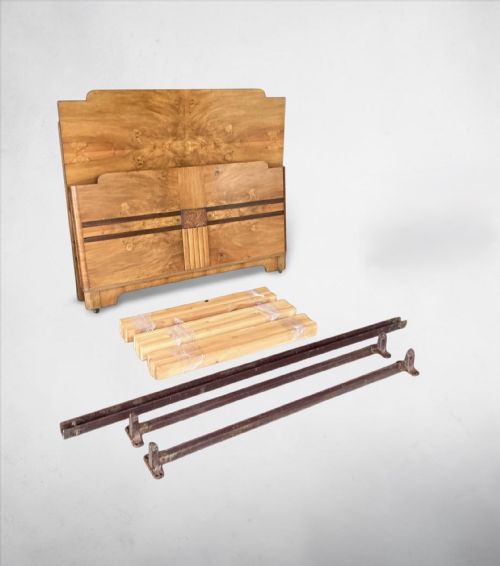
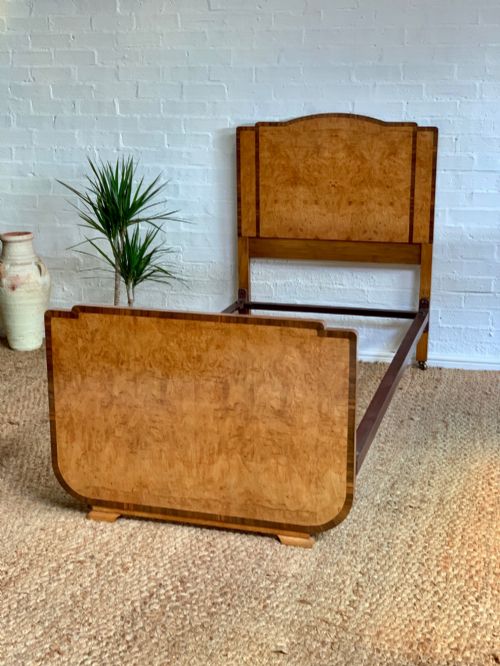
A 1930s art deco headboard anchors a bedroom with geometric symmetry and rich cabinetwork, offering integrated bedside storage and striking wood figures.
1930s Art Deco Headboard
A 1930s art deco headboard often forms part of an integrated bedroom suite complete with attached bedside tables, cabinets or nightstands. These pieces range from standalone panels to expansive frameworks designed to unify the sleeping area.
Buyers will most frequently encounter double and single bed configurations, alongside occasional king-size examples. French origins and English workshops dominate the selections available on this page, reflecting distinct continental and domestic design preferences of the era.
The silhouettes display signature architectural influences, spanning fan shapes, curvaceous outlines and skyscraper profiles. Many designs incorporate streamlined geometry that defines the modernist aesthetic of the interwar period.
How they were made
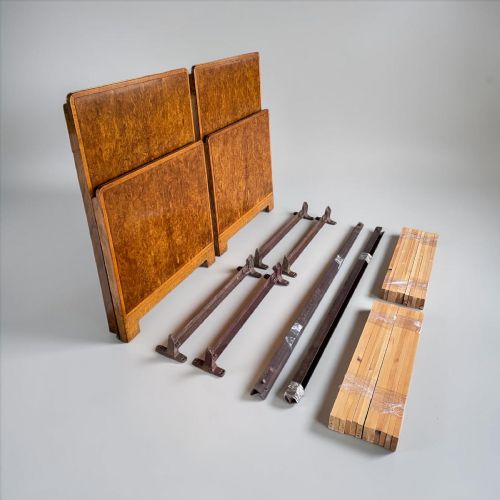
Veneers were carefully matched and arranged across broad planes to create dramatic symmetrical effects, particularly chevron and book-matched grain displays. Metal and iron elements occasionally reinforce the structural composition of these frames.
The selection spans pieces originating from English workshops and French cabinetmakers.
What varies in quality
The distinction between standard production and exceptional quality rests upon the selection and handling of the timber veneer. Highly figured burr walnut, Macassar ebony accents and striking satinwood displays indicate elevated craftsmanship.
Design complexity also separates pieces, with integrated cabinetry, carved details and architectural elements like skyscraper tiers marking out superior commissions. The integration of matching bedside tables demonstrates thoughtful spatial design from renowned makers.
Waring and Gillow England·Betty Joel·H.L. Epstein Brothers
The 1930s Art Deco Headboard Glossary
- Veneer
- A thin slice of decorative wood applied over a sturdier underlying timber base. This technique allowed cabinetmakers to showcase dramatic natural grains across large flat surfaces without risking heavy warping.
- Burr walnut
- A prized wood growth featuring swirling, knotty patterns that create a mottled texture. It provides exceptional visual depth on art deco panels and headboards.
- Skyscraper style
- An architectural design influence characterised by stepped vertical tiers and soaring profiles. This motif mirrors the rise of modern metropolitan architecture in the interwar period.
- Macassar
- A dark, densely figured exotic wood utilised for striking contrast details. It frequently appears alongside blonde maples and satinwoods to define geometric borders.
1930s Art Deco Headboard: Frequently Asked Questions
What is an art deco headboard?
An art deco headboard is a bedroom panel dating from the interwar period, characterised by geometric lines, symmetrical wood veneers and often built-in bedside storage.
These pieces capture the modernist optimism of the era through streamlined silhouettes and sophisticated materials.
How do I style a vintage headboard?
Vintage headboards pair well with minimalist bedroom surroundings that allow the figured wood grains and architectural shapes to remain the focal point.
Keeping surrounding decoration understated highlights the bold veneers and integrated cabinetry typical of these designs.
Are bedside tables always attached?
Many examples feature integral bedside cabinets or tables attached directly to the main headboard structure, creating a unified ensemble.
Standalone panel headboards also exist for those seeking a more flexible arrangement within the bedroom.
What woods were commonly used?
Walnut, burr walnut, satinwood and blonde maple serve as the primary woods for these decorative frames.
Cabinetmakers selected these specific timbers for their ability to take high polishes and display striking natural grain figures.