

Vintage Wooden Secretary Desk
A vintage wooden secretary desk combines concealed writing compartments with domestic storage, offering both traditional craftsmanship and practical workspace.
Vintage Wooden Secretary Desk
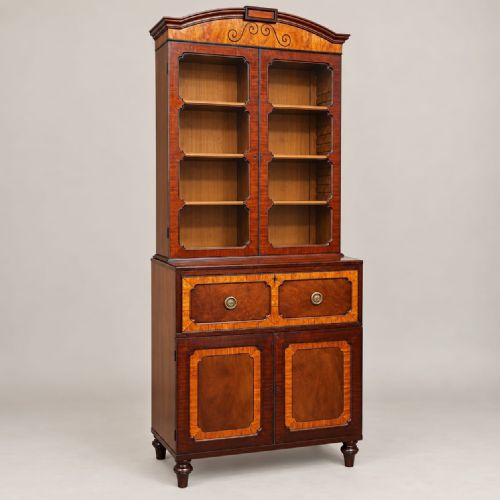
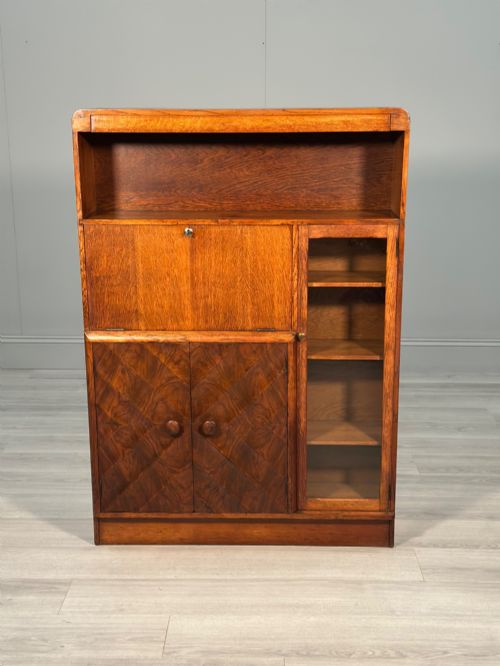
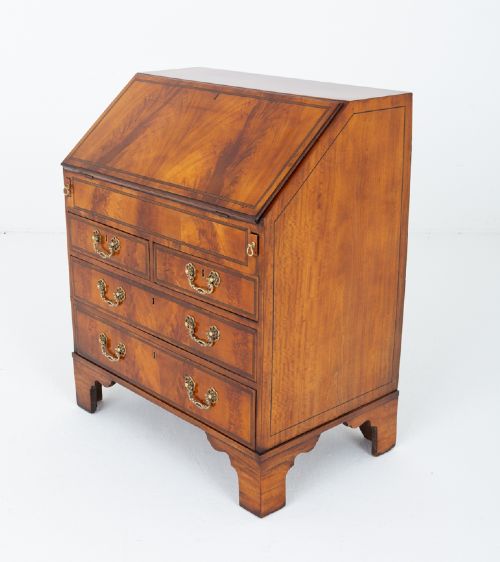
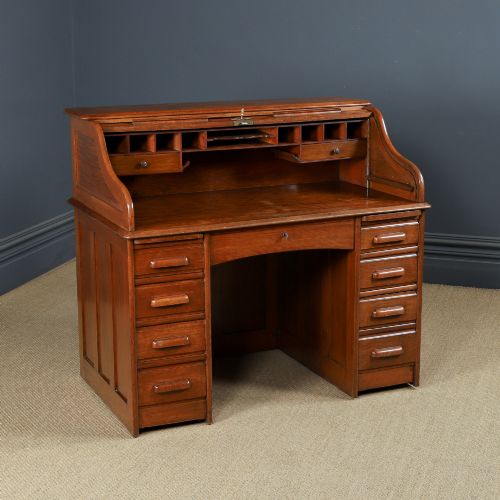
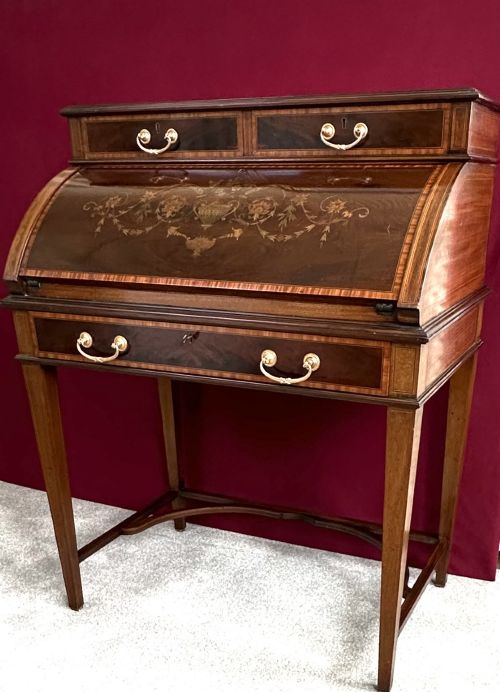
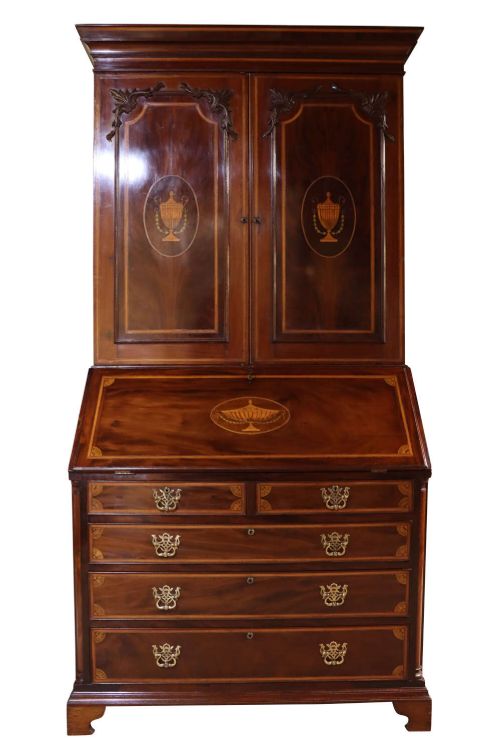
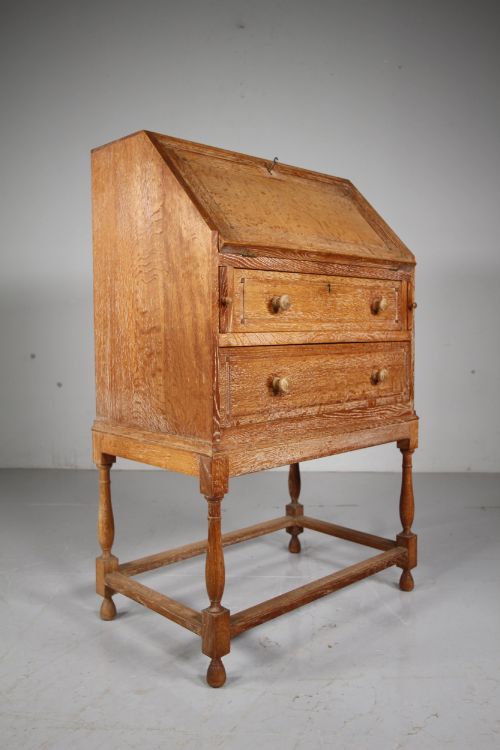
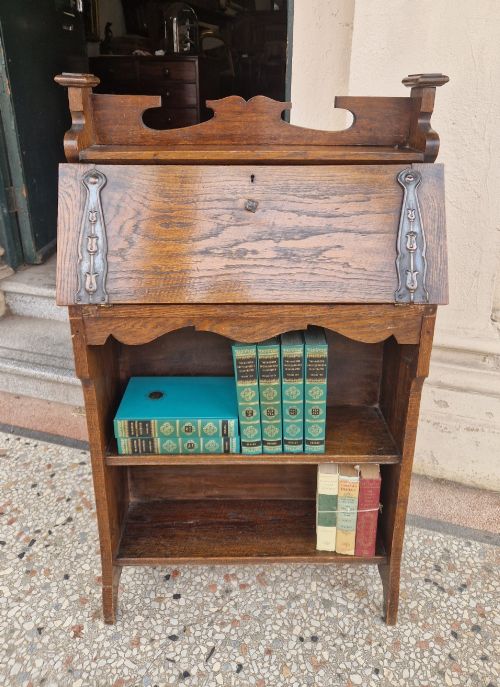
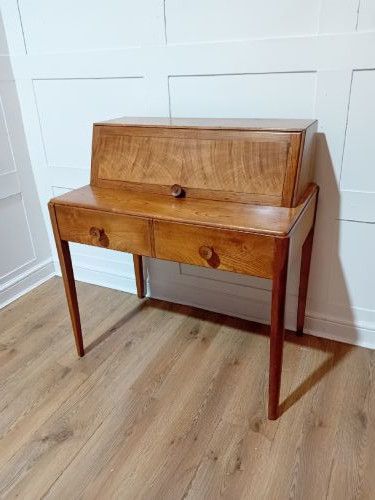
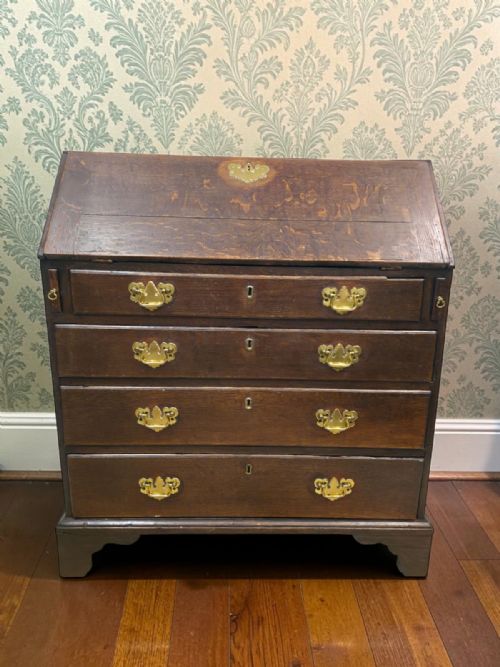
A vintage wooden secretary desk encompasses fall-front bureaux, cylinder desks, and bureau bookcases designed for domestic writing and storage. When searching for a vintage wooden secretary desk, buyers encounter forms ranging from compact Edwardian and Arts and Crafts examples to substantial Georgian and Victorian two-part bookcases.
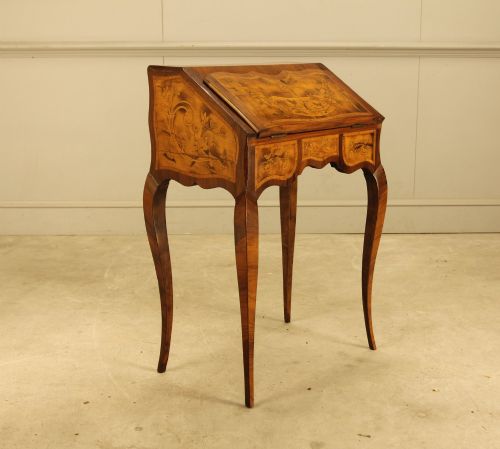
The pieces on this page span several centuries of cabinet-making, featuring straightforward oak student pieces alongside finely inlaid mahogany and walnut specimens. Formats vary from narrow writing bureaux with fitted stationary interiors to massive bureau bookcases with glazed upper cabinets.
Makers and regional workshops left distinct signatures through timber choices and internal configurations, creating variety within the broad category of writing furniture. Buyers select these items for their combination of architectural presence and functional compartmentalisation.
Materials and construction methods
Cabinet-makers relied heavily on indigenous and imported hardwoods, constructing primary carcasses in mahogany, oak, walnut, and elm. Secondary timbers like pine often appeared in drawer linings and internal dividers.
Surface decoration incorporated brass hardware, leather writing inserts, and decorative veneers including satinwood and burr timbers. Joinery techniques such as dovetailed drawer construction ensured structural longevity across decades of daily use.
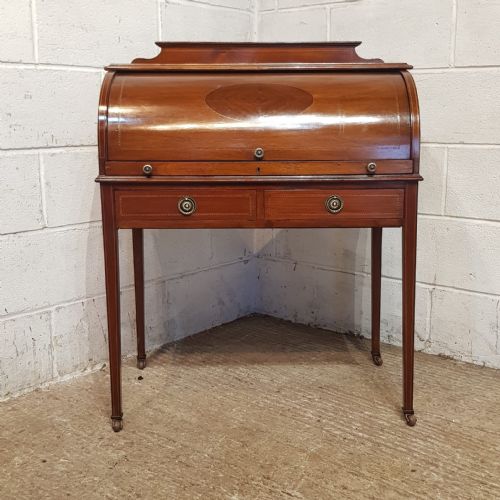
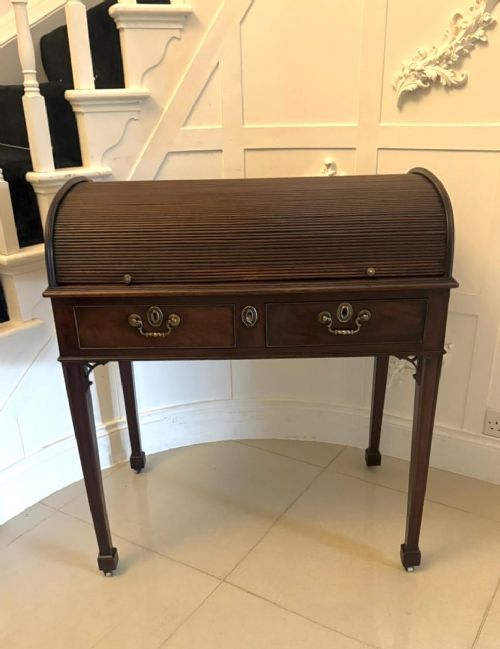
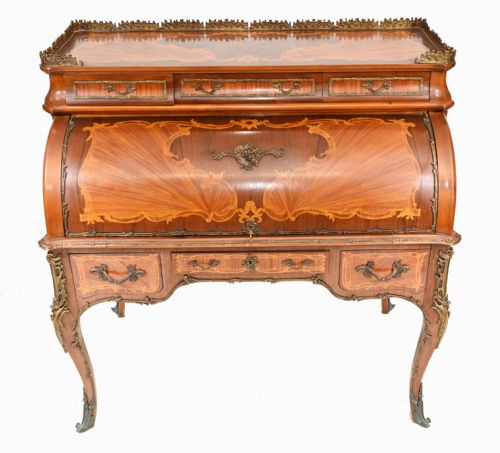
Fall-front mechanisms required specialised hinges and internal pigeonholes, while cylinder and tambour tops utilised intricate slat tracks to conceal the writing surface smoothly.
Listings feature oak, mahogany, walnut, and elm pieces spanning from the eighteenth century through the Edwardian era and the Arts and Crafts movement.
Distinguishing quality in secretary desks
The distinction between standard utility furniture and superior examples lies in the selection of timber figures and the precision of internal cabinetry. Grain matching across drawer fronts and fall-front panels indicates higher workshop standards.
Complexity and integration of the internal fittings, such as secret compartments, hidden drawers, and sliding writing surfaces, separate mass-produced items from master carpenter output. Original hardware, intact keys, and maker labels further elevate the standing of a piece.
Structural integrity of the fall-front hinges and smooth operation of tambour or cylinder mechanisms reflect the original precision of construction and subsequent care.
Heals of London·Arthur Basil Reynolds
The Vintage Wooden Secretary Desk Glossary
- Bureau
- A writing desk with a sloping hinged lid that drops down to reveal compartments and a writing surface. These pieces often sit atop a chest of drawers.
- Secretaire
- A piece of furniture containing a drawer or compartment that pulls out or folds down to form a writing desk. It frequently appears integrated into bookcase cabinets or campaign chests.
- Fall-front
- A writing flap hinged at the bottom edge that opens downward to a horizontal position. This design supports the user's weight while writing and conceals the inner stationery compartments when closed.
- Tambour
- A flexible surface constructed from narrow strips of wood glued to canvas, allowing it to slide along a track. This mechanism rolls back to reveal the desk interior.
- Pigeonhole
- A small, open compartment within the desk interior used for sorting letters and papers. These sections often feature small hidden drawers beneath them.
Vintage Wooden Secretary Desk: Frequently Asked Questions
How do I use a secretary desk daily?
Lower the fall-front flap to utilise the internal writing surface, keeping stationery organised within the fitted pigeonholes and small drawers. Close the front when finished to conceal work materials and restore a tidy appearance to the room.
Ensure the support arms or brackets are engaged before placing weight on the fold-down flap. Use the lower drawers for larger household storage needs.
How do I date an antique wooden bureau?
Examine the timber species, construction methods, and hardware styles to estimate the period of manufacture. Georgian pieces often display rich mahogany with hand-cut dovetails, while Edwardian examples frequently utilise lighter oak and machine-cut elements.
Maker labels, brass lock plates, and regional variations in cabinet-making styles provide further clues for narrowing down the decade of production.
Where should I place a bureau bookcase?
Position the piece against a sturdy interior wall away from direct sunlight and heat sources to protect the wooden veneers and solid timbers. Ensure there is adequate floor clearance in front of the desk for the fall-front flap to open fully.
Tall bureau bookcases require stable placement on level flooring, often utilising wall fixings for added security if small children or pets are present.