
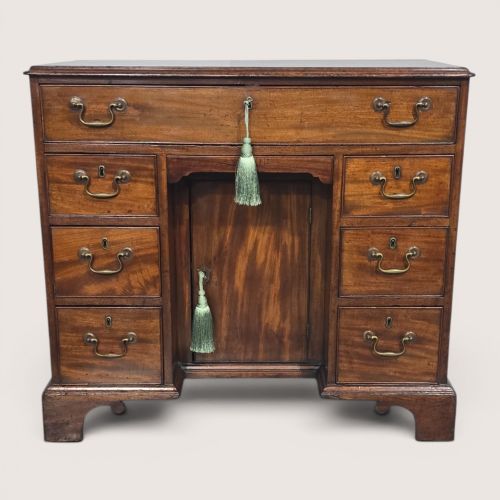
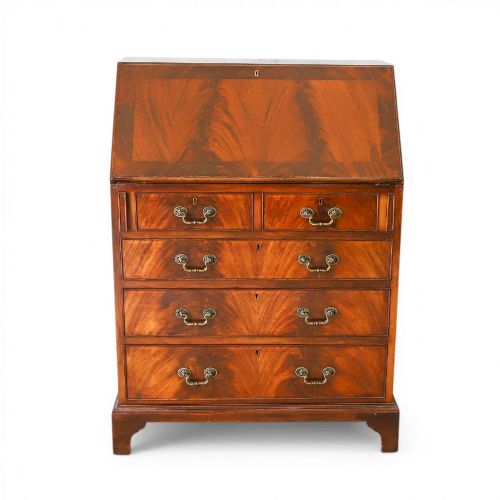
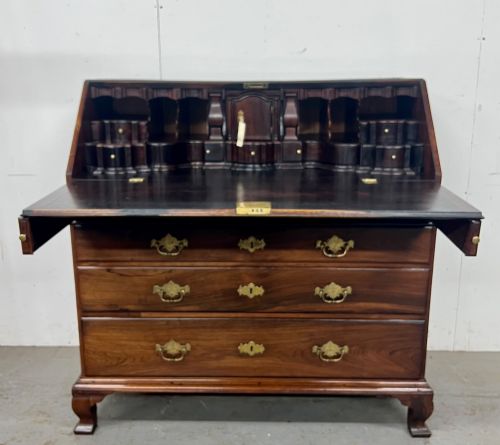


Georgian Style Writing Chest
A georgian style writing chest is a dual-purpose piece built for correspondence, combining deep drawers with a fitted writing surface that turns up across multiple periods.
Georgian Style Writing Chest
A georgian style writing chest brings together the storage of a chest of drawers with the practical surface of a desk, taking forms from desks, bureaux, and secretaires. The version you are most likely to meet on this page is constructed from mahogany, appearing in authentic 18th century examples alongside later revivals from the Victorian, Edwardian, and 1930s eras.
The layout typically involves a fall-front flap that drops to reveal small pigeonholes and drawers, or a dedicated writing drawer integrated into a bachelors chest or tallboy. These variations span periods from George II through to the 20th century, drawing on Irish, Scottish, English, and Iberian origins.
Craftsmen built these pieces to serve as functional writing stations while maintaining the formal appearance of a standard chest of drawers or housekeeper's cupboard. Whether you encounter a lowboy, a kneehole dressing chest, or a secretaire bookcase, the core purpose remains combining private storage with a stable place to write.
How they were made
Makers relied primarily on dense hardwoods, utilising solid mahogany, burr walnut, Brazilian rosewood, oak, and yew wood for the primary carcases and drawer fronts. These timbers were selected for grain pattern and durability, often enhanced with figuration or flame fronting.
Secret compartments inside these chests often hid private correspondence from prying eyes long before the invention of modern locks.
What varies in quality
The distinction between tiers of quality rests on the selection of timber figures, such as flame mahogany or burr walnut, and the depth of warmth in the natural colour. Finer examples display meticulous attention to internal stationery compartments and secondary woods.
Construction methods and the integrity of the original brasses also separate standard items from superior specimens. Pieces retaining their original baize and uncompromised structural joinery command greater appreciation among collectors.
The Georgian Style Writing Chest Glossary
- Bureau
- A desk featuring a sloping lid that drops down to form a writing surface, concealing small drawers and pigeonholes inside. This form is central to the history of domestic correspondence.
- Secretaire
- A piece of furniture containing a drawer or compartment disguised as a standard drawer that pulls out to reveal a writing desk fitted with stationery spaces.
- Bachelors Chest
- A low, compact chest of drawers equipped with a fold-over top or a pull-out slide used for writing or serving. They were designed for smaller bedchambers.
- Lowboy
- A small table with drawers, resembling the lower section of a tallboy, frequently utilised as a dressing table or writing desk in 18th century interiors.
- Tallboy
- A tall chest of drawers made in two sections, often combining a chest of drawers base with a chest or secretaire on top to maximise vertical storage.
Georgian Style Writing Chest: Frequently Asked Questions
What is a georgian style writing chest?
A georgian style writing chest is a piece of furniture that merges drawer storage with a dedicated writing surface, taking the form of a bureau, secretaire, or bachelors chest.
These pieces were produced both during the 18th century and in later revival periods using timbers like mahogany, walnut, and oak.
How were these desks used historically?
They served as private domestic stations where owners penned letters, managed household accounts, and stored important documents securely behind locked fall-fronts.
The integration of drawers allowed personal belongings to be kept close at hand in bedchambers and private studies.
How do I tell an 18th century piece from a revival?
Authentic 18th century pieces exhibit period construction techniques, timber shrinkage, and hand-cut dovetails that differ from Edwardian or 1930s reproductions.
Examining the secondary woods inside the drawers and the style of the brass hardware helps clarify the actual period of manufacture.
Where do I put a writing chest in a modern home?
These chests fit well in studies, living rooms, or bedrooms where their dual function provides both surface space and concealed storage.
Their compact proportions, particularly in bachelors chests and lowboys, make them practical for rooms with limited floor space.