
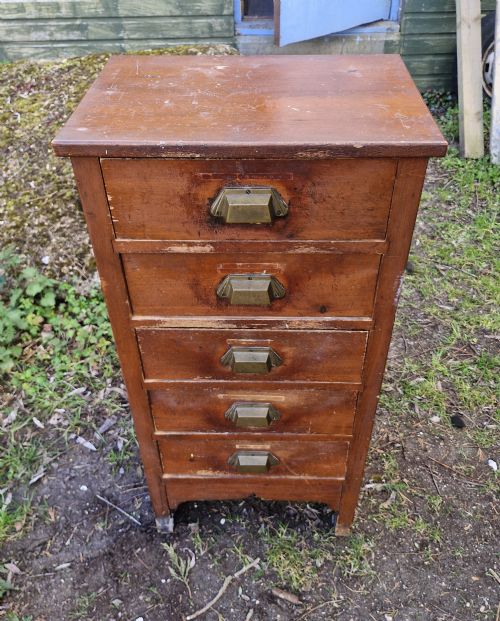
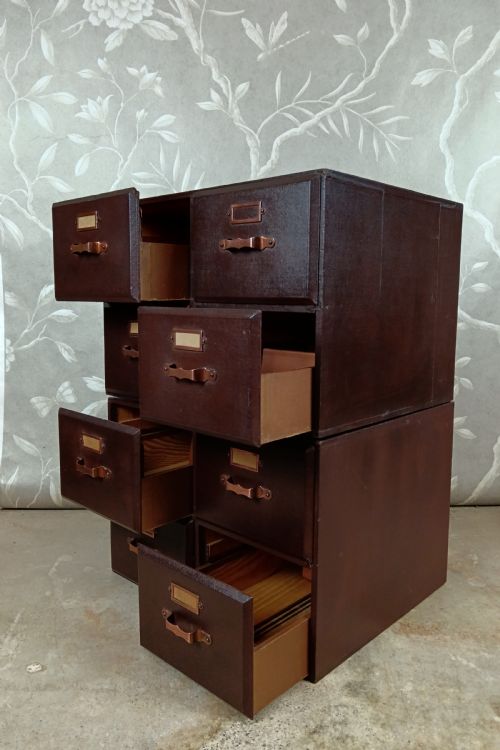


Vintage Wooden Index Cabinet
A vintage wooden index cabinet brings practical compartmentalisation to a room, offering small drawers designed for sorting cards, letters and papers.
Vintage Wooden Index Cabinet
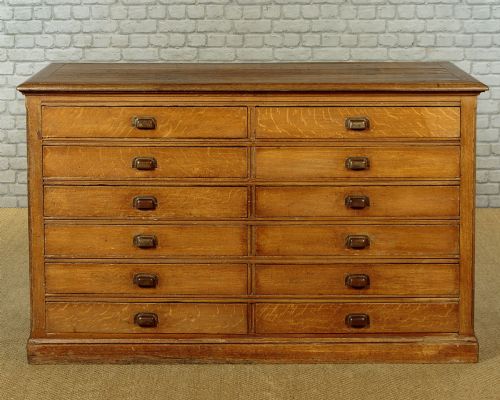
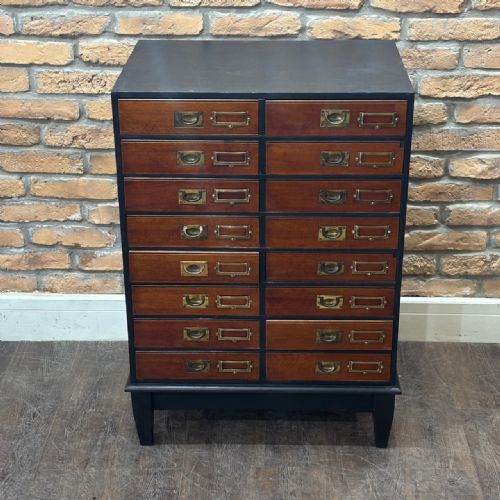
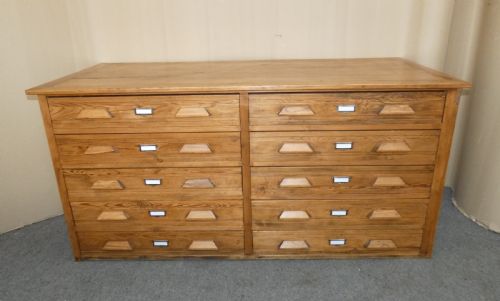
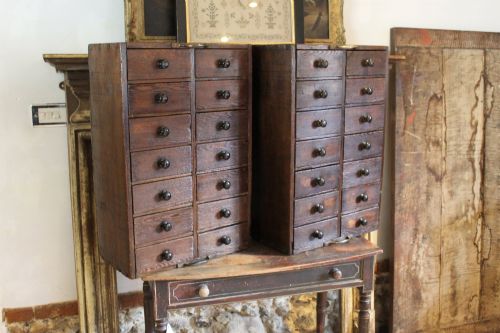
A vintage wooden index cabinet serves as a structured home for small documents, cards and specimens, originating largely from office, library and workshop environments. These pieces range from compact desktop filing drawers to large multi-drawer banks and tall watchmakers cabinets, accommodating varied storage needs.
The versions most commonly encountered on this page date from the late nineteenth century through to the mid-twentieth century, encompassing Edwardian, Victorian and industrial utility styles. Makers from this era produced sturdy units intended for heavy daily use, resulting in surviving examples that remain robust and functional today.
Materials and construction
Construction relies heavily on hardwoods such as oak, mahogany and walnut, alongside utility timbers like pine, beech and painted wood. Cabinet makers joined these materials using robust techniques to withstand the weight of loaded drawers and frequent pulling.
Hardware details consist predominantly of brass handles, label holders and patented locking mechanisms that identify the filing systems of the period. These metal fittings provide secure grips and identification slots integral to the function of an index cabinet.
Some cabinets still retain handwritten index labels listing contents from a century ago.
Quality and proportion
Quality in a vintage wooden index cabinet depends upon the integrity of its internal drawer runs and the choice of primary timber. Finer examples display thoughtful grain matching on the drawer fronts and well-fitted joints that allow smooth movement without modern runners.
Proportion and scale distinguish standard utility office furniture from specialist pieces made for institutions, watchmakers or collectors. The presence of original maker branding, patent mechanisms and cast brass hardware elevates the standing of an individual cabinet.
D Napier & Sons·Brady·Amberg·Shannon
The Vintage Wooden Index Cabinet Glossary
- Index cabinet
- A piece of furniture containing multiple small drawers specifically proportioned for holding index cards, letters or reference slips. These units were standard fixtures in early offices and libraries.
- Tambour front
- A sliding shutter door made of narrow vertical strips of wood glued to a canvas backing, allowing it to curve around a track and conceal the drawers within.
- Collectors cabinet
- A specialised storage unit featuring shallow drawers intended for organising specimens, coins, or small artefacts rather than standard office paperwork.
- Bank of drawers
- An extensive cluster of storage compartments arranged in a multi-tiered formation, often associated with workshops, haberdashers and large offices.
- Patent letter file
- A proprietary filing apparatus, such as those by Amberg, incorporating mechanical clamping devices or drop-fronts to keep correspondence secure and organised.
Vintage Wooden Index Cabinet: Frequently Asked Questions
What were index cabinets used for?
Index cabinets served as organising systems in offices, libraries and institutions for sorting small records, correspondence and index cards.
They allowed clerks and researchers to locate specific documents quickly before digital filing systems existed.
How do I date an oak filing cabinet?
Dating relies upon examining construction methods, handle styles and patent dates stamped on the hardware or interior mechanisms.
Edwardian and Victorian examples often feature solid timber backs and hand-cut dovetail joints, whereas later industrial pieces show machine milling.
Are tambour doors difficult to maintain?
Tambour doors operate on tracks that require occasional cleaning and waxing to ensure the slats slide smoothly around the curves.
Keeping the canvas backing and wooden slats free from excessive moisture prevents warping and jamming.
Can I use a library card file at home?
Library card files adapt well to modern domestic spaces for storing jewellery, craft supplies, art materials or small stationery.
The shallow drawer depths prevent clutter from accumulating at the back of each compartment.