




Tall Pine Chest Drawers
Tall pine chest drawers bring robust utility and warm grain to bedrooms, evolving from simple domestic storage into striking country house focal points.
Tall Pine Chest Drawers
A tall pine chest drawers serves as a vertical storage solution designed to maximise floor space while offering multiple tiers of drawers for household textiles and apparel. These pieces emerge predominantly from the Victorian period and the nineteenth century, though earlier Georgian examples and later twentieth-century pieces also appear.
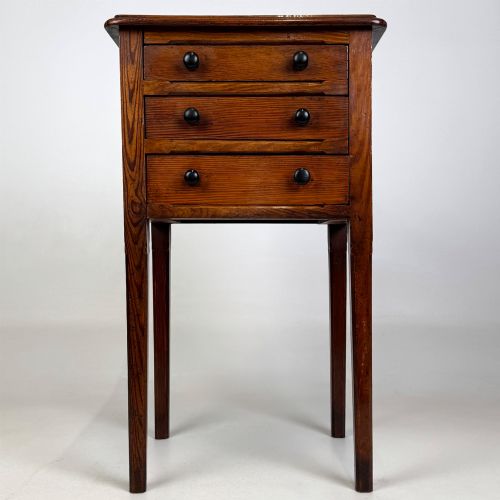
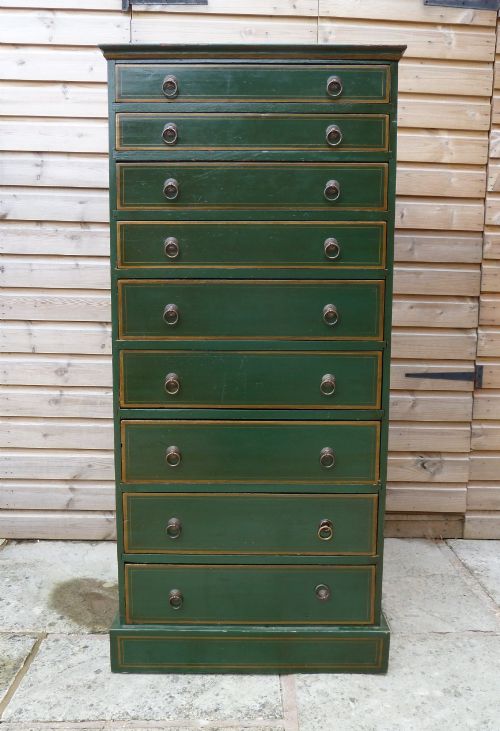
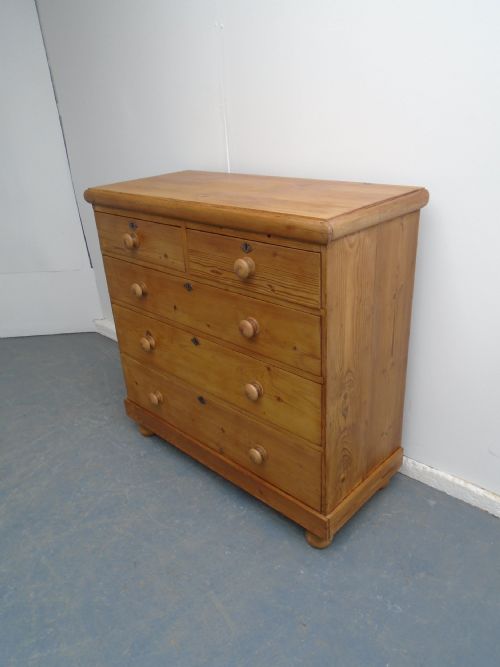
The most common format on this page is the Victorian five-drawer or six-drawer configuration, often built with plank ends or waxed surfaces. Variations include narrow proportions, Scottish designs, and specialised workshop units like apothecary or watchmakers banks.
How they were made
Construction relies on solid pine and pitch pine timbers, frequently joined with traditional methods to endure heavy daily use. Surfaces are either left in a natural waxed state, painted with original country house scumble, or finished with metal and brass hardware.
Internal components utilise secondary woods for drawer linings, while structural elements incorporate turned handles and sturdy framework that allow the timber to settle over decades.
Some workshop banks conceal secret compartments alongside dozens of tiny drawers designed for tiny components.
What varies in quality
Quality rests in the integrity of the timber, the thickness of the pine boards, and the retention of original surface treatments such as early paint or scumble. Pieces retaining their original turned wooden or brass handles command greater interest than those with later replacements.
Structural joinery, smooth drawer action, and undisturbed proportions distinguish finer domestic pieces from utilitarian workshop variants, though both hold distinct historical character.
Gillows
The Tall Pine Chest Drawers Glossary
- Scumble paint
- A decorative surface treatment applied to mimic finer wood grains or create mottled patterns. This technique appears frequently on country house furniture.
- Plank end
- A form of cabinet construction where vertical side panels are formed from solid planks rather than frame-and-panel assemblies. It provides exceptional structural rigidity.
- Wellington chest
- A tall, narrow chest of drawers secured by a hinged locking side stile that fastens over the drawer edges. These units originated in the nineteenth century.
Tall Pine Chest Drawers: Frequently Asked Questions
How do I date a tall pine chest drawers?
Dating relies on construction traits, handle types, and timber choice. Nineteenth-century examples often display hand-cut dovetails and solid pine carcass construction.
Later pieces from the twentieth century introduce machine-cut joints and different internal framing methods. Examining the backboards and drawer linings provides further clues to the manufacturing era.
Should I choose waxed or painted finish?
Waxed surfaces highlight the natural grain and knots of the pine, developing a warm patina over decades of handling. Painted finishes, including original scumble, offer a bolder aesthetic and preserve historical decoration.
Personal interior preference and the existing room palette guide this choice, as both finishes reflect authentic period treatments.
Are these chests suitable for modern bedrooms?
Their vertical orientation makes them ideal for rooms with limited floor space, offering generous storage capacity upwards rather than outwards. The neutral tones of pine integrate easily into contemporary and traditional schemes alike.
Solid construction ensures they handle daily clothing storage with ease.
What causes drawers to stick in old pine furniture?
Seasonal humidity changes cause solid pine to expand and contract slightly, which can affect drawer movement within the housing. Proper wax lubrication along the runners usually resolves minor friction.
Traditional chests settle over time, so drawers are best kept paired with their original openings.