
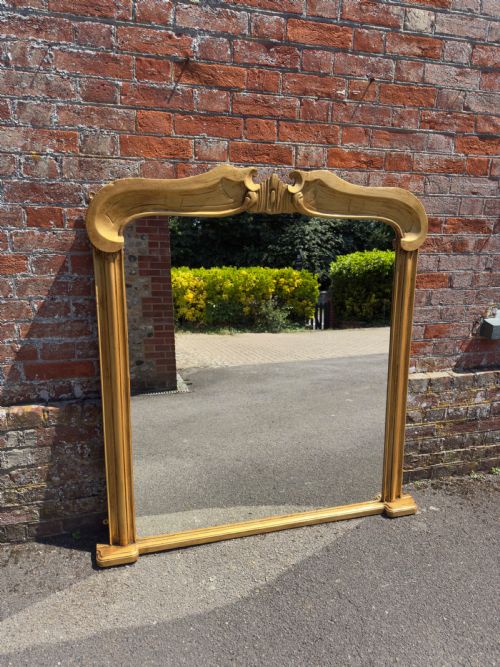
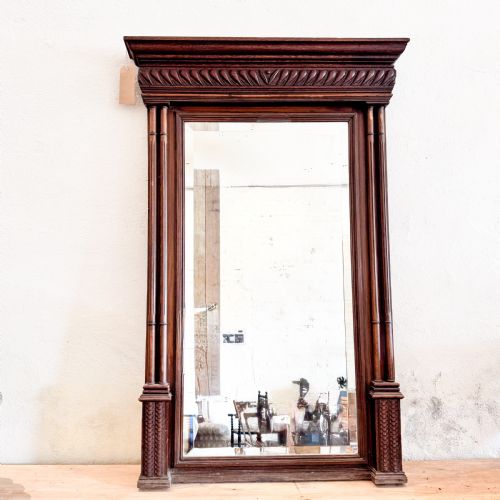


Vintage Wooden Fireplace Mirror
A vintage wooden fireplace mirror centres the room, anchoring the hearth with timber frames and reflective glass designed to catch the fire's glow.
Vintage Wooden Fireplace Mirror
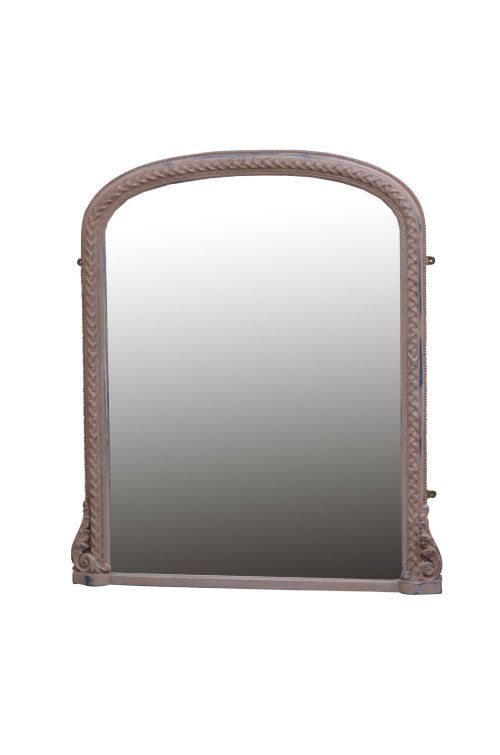
A vintage wooden fireplace mirror, frequently described as an overmantel mirror, mounts directly above a mantelpiece to visually expand a hearth. These substantial frames emerge across the nineteenth and twentieth centuries in forms spanning plain rectangular plates to carved architectural shapes.
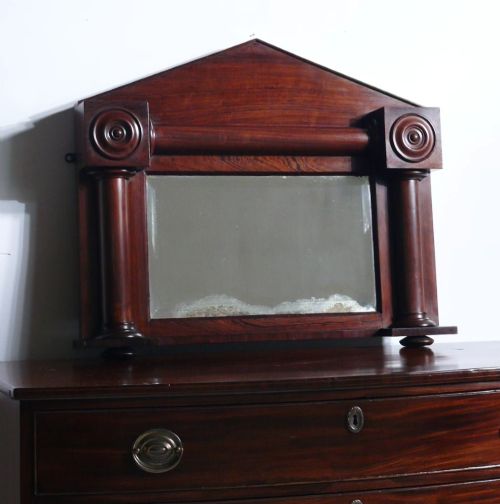
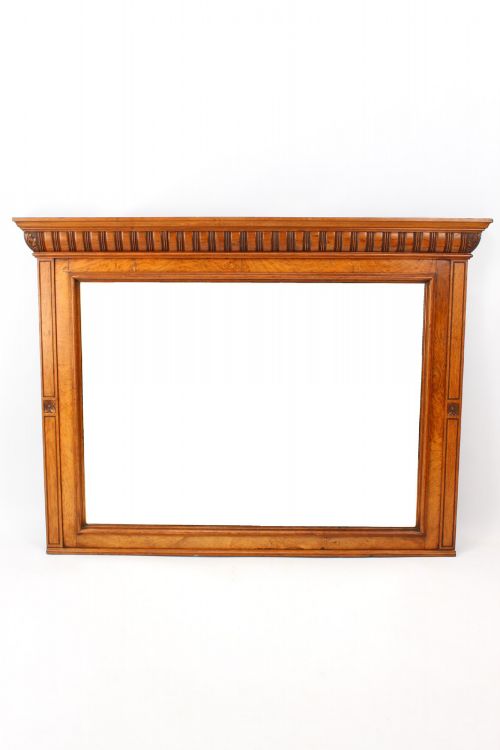
The pieces listed on this page run from early nineteenth-century rosewood and mahogany examples through Victorian oak and walnut designs to Edwardian painted or marquetry pieces. Overmantel mirrors and wall mirrors dominate the selection, accompanied by occasional related fireside furnishings.
Makers and artisans adapted these frames to changing domestic tastes, producing arched tops, triptych formats, and triple mirror configurations. Buyers most commonly encounter heavy timber mouldings designed to sit securely on stone or wooden mantel shelves.
Materials and construction methods
Makers utilised solid hardwoods including oak, walnut, rosewood, and mahogany, often applying gesso beneath paint or gilding to build up decorative surface relief. Marquetry inlay, brass detailing, and carved wood elements appear across the nineteenth-century and Edwardian pieces.
Glass plates are set into rebated wooden frames, sometimes secured with traditional backboards that show age through oxidation and foxing. Painted finishes range from simple white to layered lilac and ink blue palettes on carved wood.
Arts and Crafts, Regency, Edwardian, and Victorian styles appear across the selection, featuring brass detailing, marquetry, and carved wooden motifs.
Distinctions in craftsmanship
Quality rests in the depth and crispness of the timber carving, the choice of figured veneers like burr walnut or rosewood, and the integration of brass detailing or marquetry. Superior examples display balanced proportions that complement large fireplace surrounds without overwhelming the wall.
The integrity of the frame construction and the preservation of original painted or polished surfaces dictate the standing of an individual mirror. Pieces featuring complex triptych layouts or shaped arched tops demand greater joinery skill than simple rectangular frames.
The Vintage Wooden Fireplace Mirror Glossary
- Overmantel mirror
- A large mirror specifically designed to hang or stand upon the mantelpiece above a fireplace. These frames often match the horizontal proportions of the hearth below.
- Marquetry
- Decorative woodwork where small pieces of veneer are fitted into a backing to form geometric or floral patterns. Edwardian rosewood frames frequently employ this technique on the flat sections of the surround.
- Purdonium
- A specialised Victorian fireside cabinet designed to store coal next to the fireplace. Some timber examples accompany mirror listings in this category.
- Gesso
- A plaster-like mixture applied to wood surfaces to create a smooth base for painting or gilding. Nineteenth-century makers used this under layer to build up relief ornament.
- Triptych
- A mirror divided into three panels, usually with a larger central glass and two narrower flanking sections. Victorian fretted models often utilise this tripartite division.
Vintage Wooden Fireplace Mirror: Frequently Asked Questions
How do I hang a heavy overmantel mirror?
These large wooden frames require secure fixing directly into wall studs or masonry using heavy-duty brackets rated for the weight of the timber and glass. Many historical pieces were designed to rest partially on the mantel shelf while being anchored to the wall for safety.
Consult a professional installer if the wall construction is uncertain, as nineteenth-century rosewood and oak frames carry substantial weight.
Are these mirrors meant to stand on the mantel?
Many overmantel mirrors are constructed to sit directly on the mantel shelf, sometimes secured with original fixing lugs or stability brackets at the rear. Others are built primarily as wall mirrors to hang independently above the fireplace.
Examine the base of the frame for weight-bearing surfaces or footings that indicate whether the piece was intended to bear its own weight on the shelf.
How do I date an antique wooden mirror?
Dating relies on timber selection, such as Regency mahogany or late Victorian burr walnut, alongside construction methods like hand-cut screws, backboard construction, and bevelled glass techniques. Stylistic markers from periods like the Arts and Crafts movement or Edwardian era provide further chronological clues.
Examine the patination of the wood and the condition of the mirror plate to understand the manufacturing period.
Can these mirrors be used in rooms without fireplaces?
While originally proportioned to sit above hearths, these frames function effectively as wall mirrors in hallways, living rooms, or dining spaces. Their horizontal scale makes them useful for reflecting light across larger wall surfaces.
Ensure the hanging fixings match the chosen wall type regardless of whether a mantel is present below.