


Victorian Triptych Mirror
These Victorian triptych mirror pieces bring three-panel symmetry and period presence to a room, offering the classic depth and reflection that collectors seek.
Victorian Triptych Mirror
A victorian triptych mirror divides reflection across three distinct panels, creating a sense of width and architectural structure within interior spaces. The examples found here span the Victorian era, alongside pieces referencing earlier Regency and Chippendale revival aesthetics.
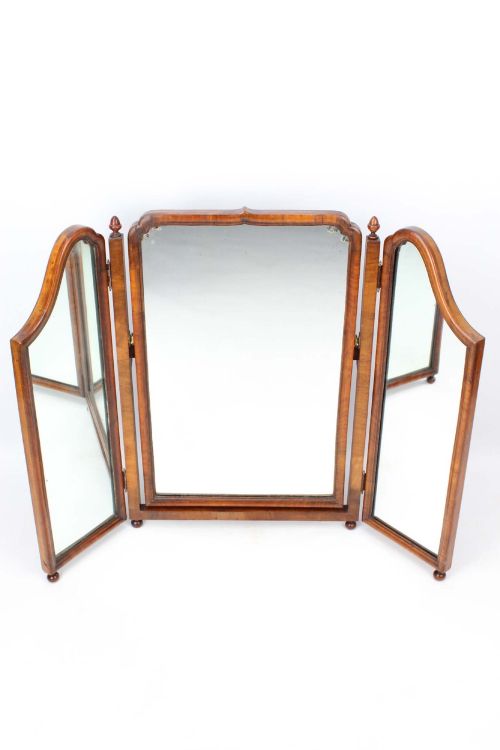
The form appears primarily as large overmantel mirrors designed to sit above a fireplace, though dressing table versions also occur in the record. Walnut, mahogany, oak and painted finishes provide the wooden framing, frequently paired with giltwood and composition ornament.
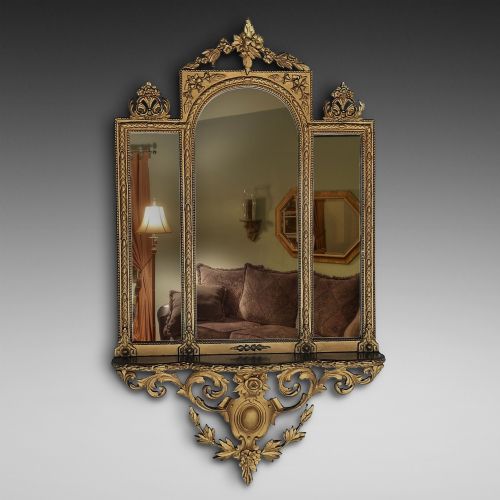
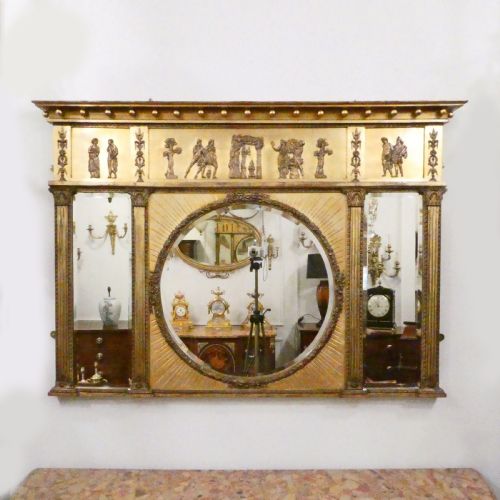
Makers drew on diverse design vocabularies during the period, producing works that range from ornate Rococo Revival and Gothic interpretations to clean-lined neoclassical shapes. Each piece balances functional reflective glass with decorative framing characteristic of nineteenth-century craftsmanship.
Construction and materials
Makers constructed the structural frames of these mirrors using hardwoods such as mahogany, walnut and oak, often providing a sturdy foundation for intricate ornamentation. Joined timber frames supported the weight of three separate glass panels secured within individual rebates.
Decorative surface detail relies heavily on carved wood, gesso and composition applied to the wooden substrates. Giltwood finishes and gold leaf were then applied to these moulded surfaces to catch the light and create a rich metallic sheen.
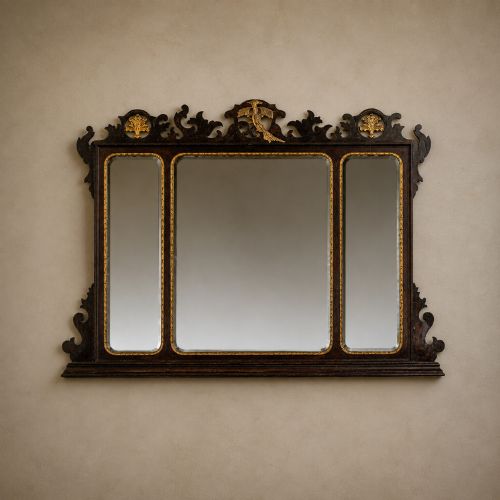
Certain mahogany overmantels feature carved Ho-Ho bird crestings, adding a whimsical touch of exotic revival fancy to the domestic hearth.
Markers of quality
The sophistication of the carved detailing and the crispness of the gesso and composition ornamentation set finer examples apart from simpler work. Hand-carved wooden elements display a depth and precision that moulded substitutes lack.
The treatment of the wooden frames, whether figured mahogany, rich walnut or carefully gilded surfaces, dictates the visual impact of the piece. Original mirror glass with age-appropriate foxing also contributes to the authenticity and character of the object.
The Victorian Triptych Mirror Glossary
- Triptych
- A three-panel arrangement where a central mirror plate is flanked by two smaller hinged or fixed side mirrors. This configuration allows the reflected light to be angled across an interior space.
- Overmantel mirror
- A large wall-hanging or mantel-resting mirror specifically proportioned to sit above a fireplace surround. These pieces dominated nineteenth-century drawing rooms and parlours.
- Gesso
- A plaster-like mixture applied to wooden frame surfaces to form a smooth base for gilding or intricate low-relief moulding. Skilled artisans carved and chased the dried gesso to produce crisp decorative motifs.
- Composition
- A moulded material made from whiting, resin, glue and oil used to create ornate decorative details quickly. It served as a cost-effective alternative to hand-carved wood on nineteenth-century frames.
- Chippendale Revival
- A decorative style popular in the nineteenth century that reinterpreted the mid-eighteenth-century designs of Thomas Chippendale. These pieces often feature asymmetrical scrolling, pierced fretwork and distinctive bird crestings.
Victorian Triptych Mirror: Frequently Asked Questions
Where should I hang an overmantel mirror?
These mirrors are traditionally designed to sit directly on a mantelpiece or be secured to the wall immediately above a fireplace. Their generous proportions anchor the chimney breast and draw the eye upward.
When hanging one away from a fireplace, ensure the wall structure can support the substantial weight of the timber frame and multiple glass plates.
How do I date a Victorian mirror?
Dating relies on examining the timber species, framing style, construction methods and the backboards used to secure the glass. Stylistic clues such as Gothic Revival or Rococo Revival motifs offer strong chronological indicators.
Examining the silvering on the mirror glass and the composition of the gesso underneath the gilding also helps confirm the nineteenth-century origins of the piece.
Are the mirror plates original?
Many nineteenth-century mirrors retain their original glass, which often displays minor foxing, dark spots or slight distortions from the manufacturing process. These minor imperfections confirm the age and authenticity of the object.
Replacement glass tends to look exceptionally clear and uniform, lacking the subtle waviness and patina found in period mirror plates.