




Carved Mahogany Fireplace Mirror
A carved mahogany fireplace mirror brings warmth and reflective depth to a reception room, anchoring the hearth.
Carved Mahogany Fireplace Mirror
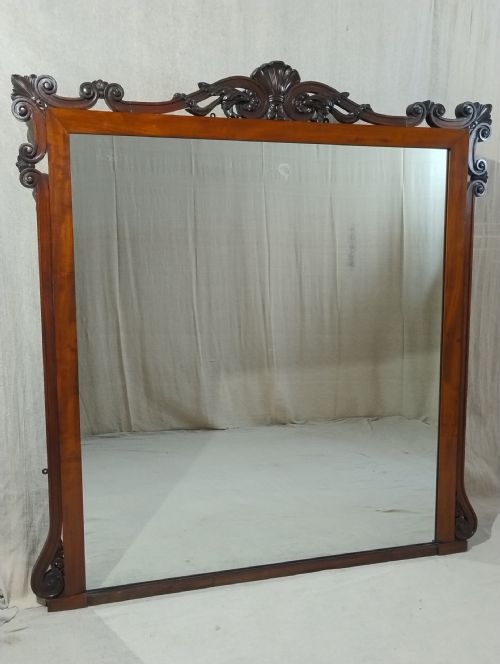
When you search for a carved mahogany fireplace mirror, you are looking at substantial overmantel mirrors designed to sit above a mantelpiece. These large wall frames command attention in a room, drawing the eye directly to the hearth and bouncing natural light across the space. The examples recorded here span the Victorian and Edwardian eras, stretching from mid-nineteenth century workshops to the turn of the twentieth century.
The version you are most likely to meet on this page is the Victorian overmantel mirror, often framed in solid mahogany or rich rosewood. Many pieces adopt revival aesthetics, drawing heavily on Chippendale and Chinese Chippendale vocabulary with intricate fretwork and crested motifs. You will also encounter Edwardian iterations, which sometimes scale down in size or incorporate delicate marquetry and wood inlay.
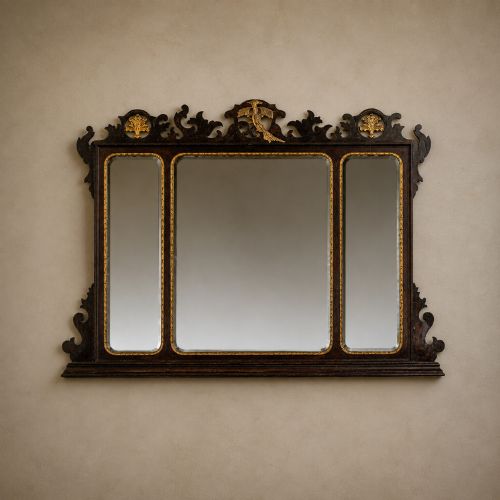
Forms range from simple rectangular frames to elaborate triptych mirrors flanked by smaller side panels and topped with distinctive ornaments like the Ho-Ho bird. Country house pieces demonstrate robust craftsmanship designed for domestic permanence rather than delicate display. Whether large and architectural or fretted and decorative, each piece serves as both a functional glass and a focal point for the interior.
How they were made
Makers relied primarily on mahogany and rosewood as foundational hardwoods, selecting timber for deep grain patterns and strength. Craftsmen shaped these materials through hand carving, fret-sawing, and precision joinery to create intricate pierced cresting and substantial structural frames. Gold leaf details occasionally accent the carved wooden elements, catching the light alongside the reflective glass.
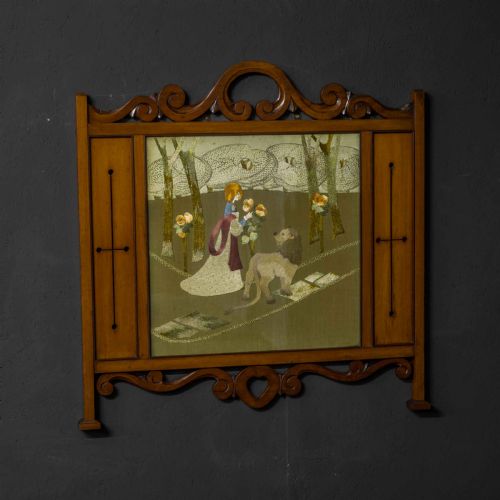
Surface decoration frequently embraces wood inlay and marquetry, setting contrasting timbers into the primary mahogany ground. Mirror plates were set securely into the heavy timber rabbets, backed to protect the silvering from atmospheric moisture near the fireplace. Artisans of the Arts and Crafts periods later emphasised honest construction, leaving visible tool marks that celebrate the physical act of woodworking.
Styles recorded in the inventory range from straightforward Victorian overmantels to intricate Chippendale Revival and Arts and Crafts interpretations.
What varies in quality
Quality rests upon the crispness of the hand carving and the depth of the timber selection. Finer pieces display deeply undercut foliage, sharp fretted fretwork, and carefully balanced proportions that do not overwhelm the central mirror plate. Poorer examples rely on shallow stamping or lack the architectural harmony seen in the best revival work.
The integrity of the frame construction and the condition of the original mirror plate further divide the range. Superior pieces retain their early or original glass, showing subtle imperfections and silvering wear that signal age without obscuring reflection. Well-joined mitres and sound timber framing ensure the heavy overmantel hangs securely above the warmth of the fireplace.
The Carved Mahogany Fireplace Mirror Glossary
- Overmantel mirror
- A large wall mirror specifically designed to hang on the chimney breast directly above a fireplace mantel. These pieces traditionally coordinate with the architectural scale of the room.
- Triptych overmantel
- A mirror divided into three distinct vertical sections, usually featuring a larger central plate flanked by two narrower panels. This format expands the horizontal field of reflection.
- Chippendale revival
- A stylistic movement drawing inspiration from eighteenth-century furniture designs, characterised by elaborate fretwork, asymmetry, and Asian-influenced motifs. It experienced a strong resurgence during the Victorian period.
- Marquetry
- The art of applying small pieces of veneer to a structure to form decorative patterns and pictures. Makers used contrasting coloured woods to create intricate surface enrichment.
- Ho-Ho bird
- A mythical Chinese phoenix motif frequently incorporated into the carved wooden cresting of eighteenth-century and revival mirrors. It adds an exotic focal point to the top of the frame.
Carved Mahogany Fireplace Mirror: Frequently Asked Questions
How do I hang a heavy overmantel mirror?
These substantial wooden frames require secure fixing directly into masonry or heavy wall studs using appropriate heavy-duty brackets. Because of their weight, professional installation is strongly advised to distribute the load safely above the fireplace.
Ensure the hanging wire or integrated mirror plates are rated to hold the specific mass of the mahogany frame and glass safely against the wall.
Were these mirrors made for coal fireplaces?
Many of these pieces hung above working coal or wood hearths, which historically exposed them to rising heat and domestic soot. Timber frames developed dry patina over decades in rooms heated by open fires.
Regular dusting and careful placement help preserve the finish of both the mahogany wood and the antique mirror plate against environmental shifts.
How do I tell Victorian from Edwardian mirrors?
Victorian examples tend toward heavier proportions, darker mahogany tones, and exuberant revival carvings like the Chippendale fretwork or Ho-Ho bird cresting. They often prioritize architectural presence and dark, rich timber finishes.
Edwardian pieces frequently introduce lighter marquetry, rosewood elements, or simplified Arts and Crafts lines that reflect a shift toward airier domestic interiors.
Can I clean the original mirror plate?
Antique glass often exhibits foxing, minor speckling, and silvering degradation that bears witness to its age. Cleaning should involve gentle wiping with a soft, dry cloth rather than harsh chemical sprays.
Avoid disturbing the edges where the mirror plate meets the mahogany rabbet, as historic backing materials can be fragile.