
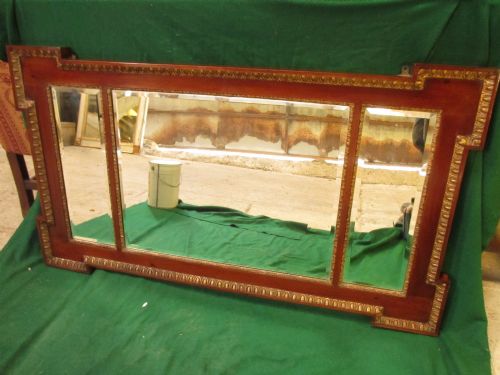


19th Century Mahogany Overmantel
A 19th century mahogany overmantel brings architectural presence to a room, offering warm timber frames and expansive glass designed to anchor a fireplace.
19th Century Mahogany Overmantel
A 19th century mahogany overmantel is a large mirror created to hang above a mantelpiece, reflecting light and anchoring the fireplace wall. The selection spans structural wall mirrors, pier mirrors, and triple plate configurations designed for principal reception rooms.
The form appears across several periods represented on this page, including Georgian, Regency, George IV, and Victorian eras. Makers utilised prevailing aesthetics, resulting in examples executed in Chippendale style, Empire Revival, and Biedermeier designs.
Most pieces combine rich timber frames with original mirror glass, occasionally incorporating parcel gilding, giltwood, or bone details. Buyers encounter both single plate formats and tripartite arrangements that divide the reflection across multiple panels.
How they were made
Frames rely on solid mahogany or mahogany veneers applied to secondary timbers, shaped with carved mouldings or fretwork depending on the stylistic period. Workshops frequently integrated parcel gilt highlights or gilded brass elements to accentuate the timber grain.
Mirror glass was secured within the wooden rebate, sometimes accompanied by oil paint panels or decorative slip frames. Heavier overmantels required robust internal framing and reliable hanging points to support the combined weight of timber and glass.
Listings feature mahogany overmantels spanning the Georgian, Regency, and Victorian periods, incorporating styles from Chippendale to Empire Revival.
What varies in quality
Quality rests primarily in the selection of the mahogany timber and the crispness of any carved details or fretwork. Superior examples display carefully matched veneer grains and well-executed joinery that remains stable over centuries.
The character of the mirror glass contributes significantly to the visual weight of the piece, with heavier bevels and well-preserved silvering separating finer specimens from standard utility mirrors.
The 19th Century Mahogany Overmantel Glossary
- Overmantel mirror
- A large mirror specifically designed to be positioned on the wall directly above a fireplace mantelpiece. These pieces often span the width of the fireplace insert to balance the proportions of the hearth below.
- Pier mirror
- A tall mirror intended to hang on the wall space between two windows, known as the pier. Many pieces in this category share structural traits with overmantels of the same era.
- Triple plate mirror
- A mirror featuring three distinct glass panels set within a single frame, common in wider overmantel formats. The division creates a structured reflection popular in formal nineteenth century interiors.
- Parcel gilt
- Portions of a wooden frame highlighted with gold leaf while leaving the surrounding mahogany exposed. This technique adds subtle contrast and catches candlelight or natural daylight.
- Fretted
- Timber cut into intricate openwork patterns using a fretsaw, frequently seen on the crests and ears of Chippendale style frames.
19th Century Mahogany Overmantel: Frequently Asked Questions
Where should an overmantel mirror be hung?
These mirrors are traditionally positioned centrally above a fireplace mantelpiece to reflect light and create a sense of scale in a room. They can also be mounted on low console tables or principal walls where their architectural proportions balance large items of furniture.
Because of their substantial weight, installation requires securing directly into structural wall studs or masonry rather than relying solely on plasterboard fixings.
How do I identify the period of a mahogany overmantel?
Dating relies on stylistic cues, such as the bold scrolls of the Regency period, the fretwork associated with Chippendale revivals, or the restrained geometry of Biedermeier design. Secondary timbers and construction methods visible at the reverse provide further clues to the decade of manufacture.
Examining the mirror glass itself can also assist, as older plates often exhibit subtle distortions, hand-bevelling, or original silvering characteristics unique to nineteenth century production.
Can these mirrors be cleaned safely?
Dust timber frames regularly with a dry, soft cloth to prevent the accumulation of grime within carved recesses and mouldings. Avoid commercial spray polishes that can build up a residue and dull the polished surface of the mahogany over time.
Glass panels require gentle cleaning with a mild, non-ammonia glass cleaner applied to a cloth rather than sprayed directly onto the surface, protecting the historic edges and frame rebate from moisture damage.
What is the difference between a pier mirror and an overmantel?
Pier mirrors were originally designed for the narrow wall space between windows, leading to taller and narrower proportions. Overmantels are typically wider formats engineered to span the horizontal expanse of a fireplace surround.
Despite their original architectural functions, both forms utilise similar mahogany construction techniques and share overlapping stylistic vocabularies across the nineteenth century.