

Vintage Wooden Filing Drawers
Vintage wooden filing drawers bring tactile order to a room, offering sturdy compartmentalised storage shaped by decades of office and workshop use.
Vintage Wooden Filing Drawers
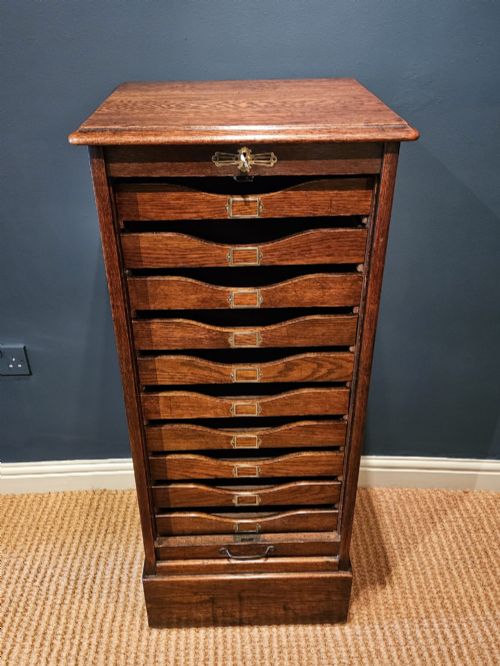
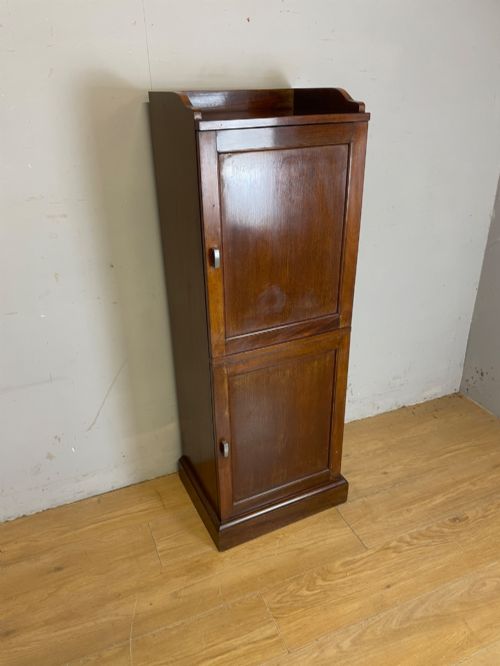
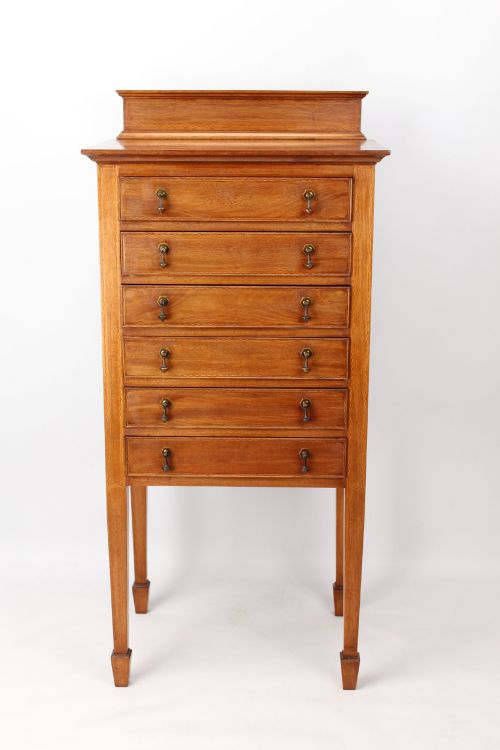
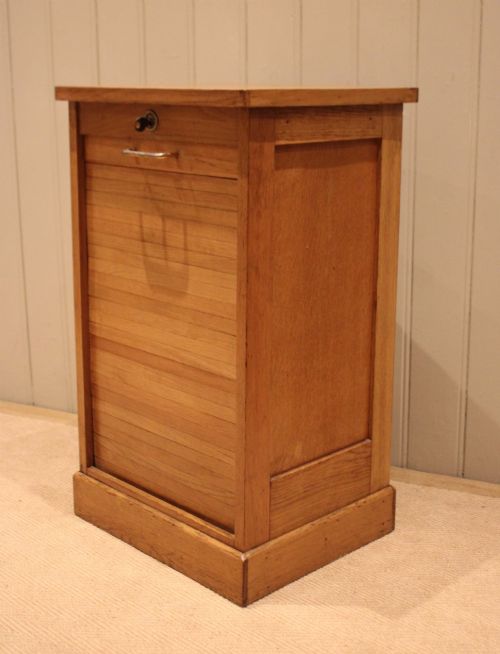
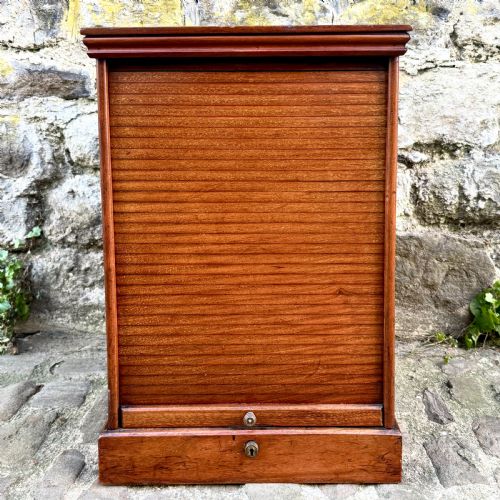
When you search for vintage wooden filing drawers, you encounter practical storage furniture built for offices, libraries, and workshops across the nineteenth and twentieth centuries. These pieces range from modest desktop organisers and music cabinets to substantial multi-drawer banks and tambour front cabinets designed to hold papers and records securely.
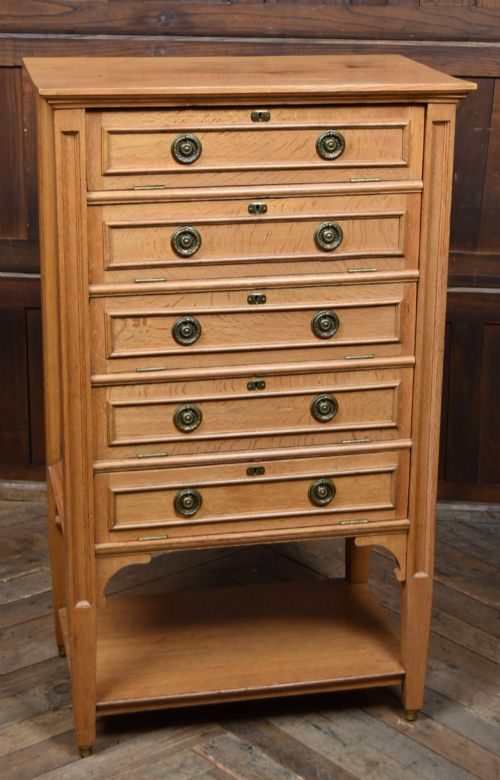
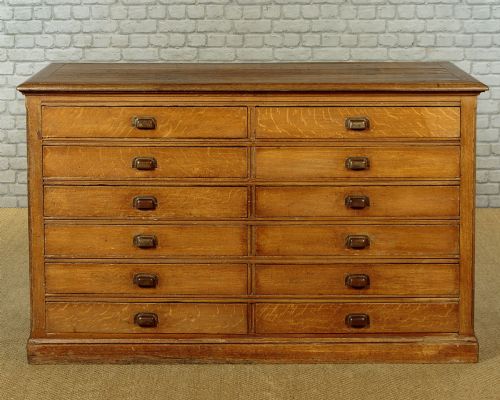
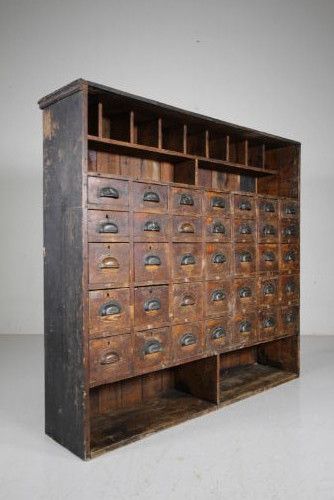
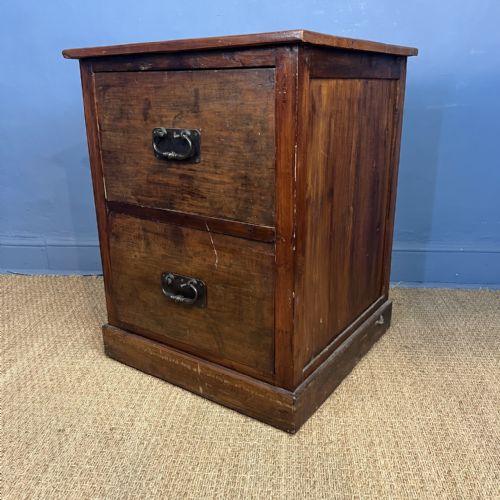
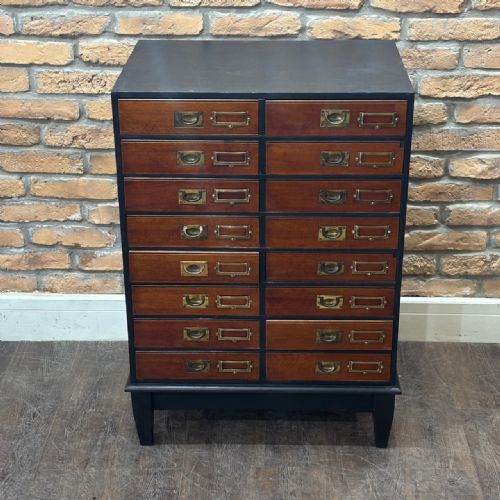
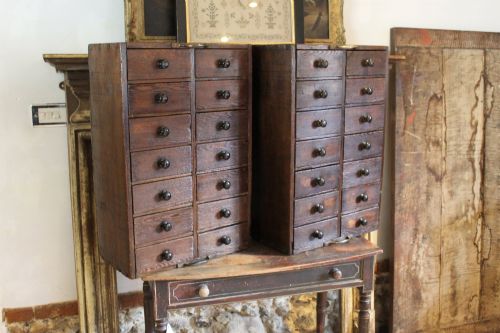
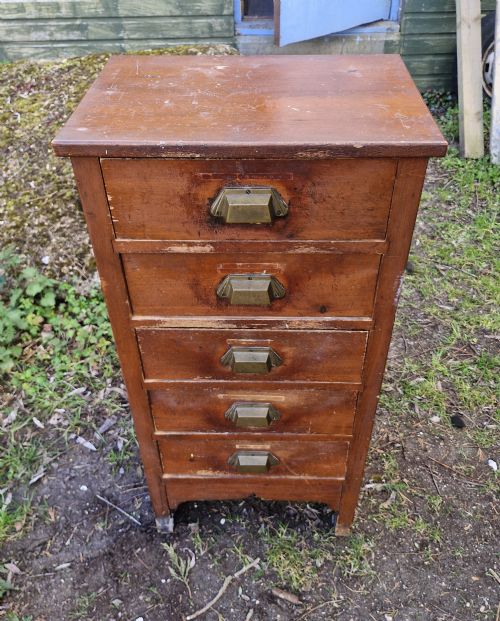
You are most likely to meet Edwardian and early twentieth-century examples on this page, typically constructed in oak or mahogany. Common forms include tall filing cabinets, index card drawers, and banks of numerous small drawers once utilised in commercial premises.
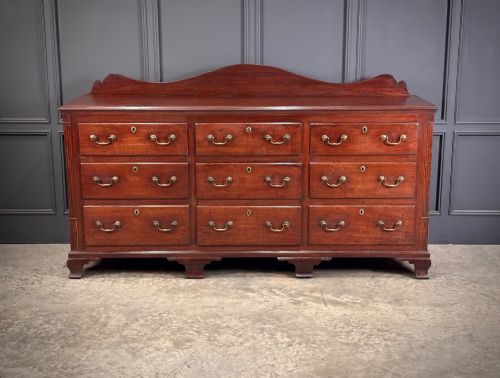
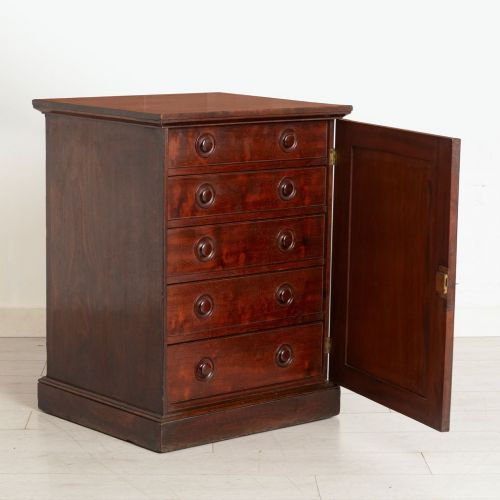
Earlier pieces extend back to the eighteenth and nineteenth centuries, taking the form of large mahogany banks of drawers, Wellington chests, and collectors' cabinets. These heavier items reflect the robust cabinetry of their respective periods, built to withstand daily clerical labour.
What varies in quality
The standard of timber selection and joinery marks the primary difference across these pieces. Fine examples display carefully matched grain patterns, tight dovetail joints on the drawer construction, and substantial framing that prevents warping over time.
Hardware and mechanism integrity also separate utility pieces from finer items. High-quality cabinets incorporate original brass pulls, functioning patent locking systems, and smooth-running runners that bear the weight of full drawers without sagging.
Some nineteenth-century filing systems proudly bore patent names like Amberg's, offering Victorian offices a revolutionary method to keep correspondence sorted.
Maple and Co·D Napier and Sons
The Vintage Wooden Filing Drawers Glossary
- Tambour front
- A flexible door made of narrow strips of wood attached to a fabric backing, designed to slide horizontally or vertically along a recessed track.
- Wellington chest
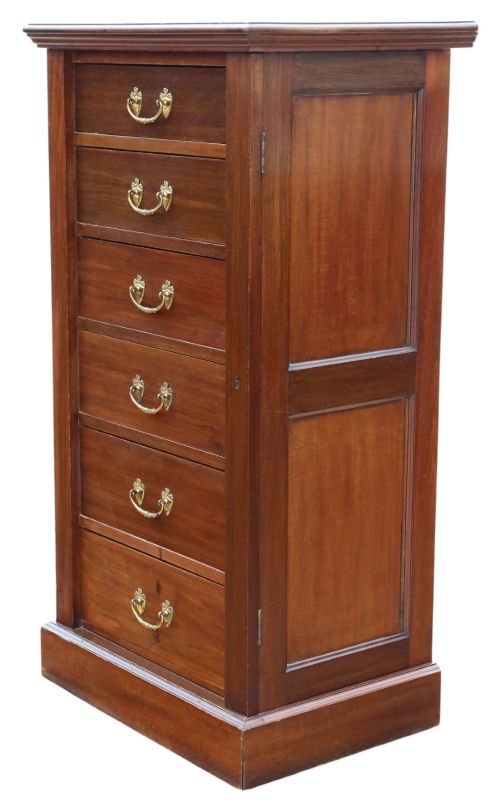
- A tall, narrow chest of drawers secured by a locking side flap that is hinged to the cabinet and fastens over the drawer edges.
- Dovetail joint
- A traditional interlocking woodworking joint formed by interlocking wedge-shaped fingers, providing high tensile strength to drawer corners.
- Plan chest
- A wide, shallow set of drawers specifically designed for storing large architectural drawings, maps, and flat documents.
Vintage Wooden Filing Drawers: Frequently Asked Questions
What were vintage filing drawers originally used for?
These cabinets served in offices, banks, and libraries to organise correspondence, index cards, and documents before modern lateral filing systems emerged.
Workshop and music variations also stored specialised items like sheet music or small tools, reflecting the specific organizational needs of Edwardian and Victorian workplaces.
How do I identify an Edwardian filing cabinet?
Edwardian pieces typically feature light oak or polished mahogany construction, often displaying honest Arts and Crafts influence in their straightforward lines and brass label pulls.
They frequently incorporate specialised mechanisms like tambour shutters or vertical drop-front drop drawers designed for efficient office sorting.
Are these drawers suitable for modern paper sizes?
Many older filing compartments and card index drawers were built for historical paper dimensions rather than standard modern A4 sheets.
It helps to check internal drawer measurements against your intended use, as collectors' cabinets and older letter files vary considerably in depth and width.
How should I care for a wooden filing cabinet?
Keep wooden cabinets away from direct heat sources and drastic humidity changes to prevent the timber and drawer runners from binding.
Regularly feeding the wood with a traditional wax polish helps maintain the finish and protects the surface from daily handling.