
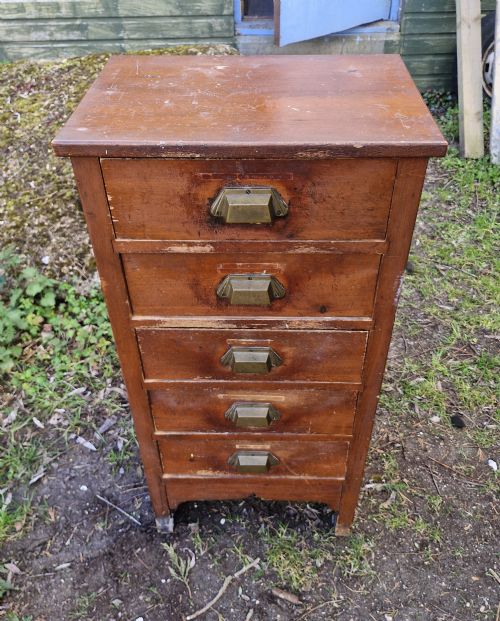


Antique Office Storage Chest
An antique office storage chest brings order to modern spaces with solid period timber and practical drawers.
Antique Office Storage Chest
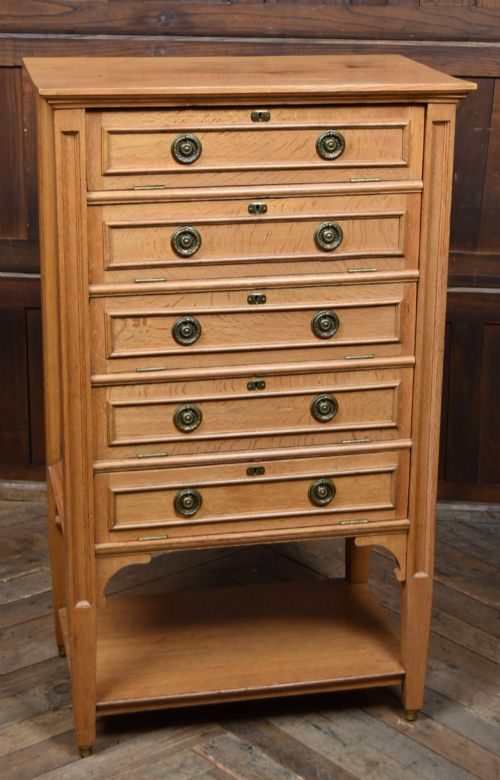
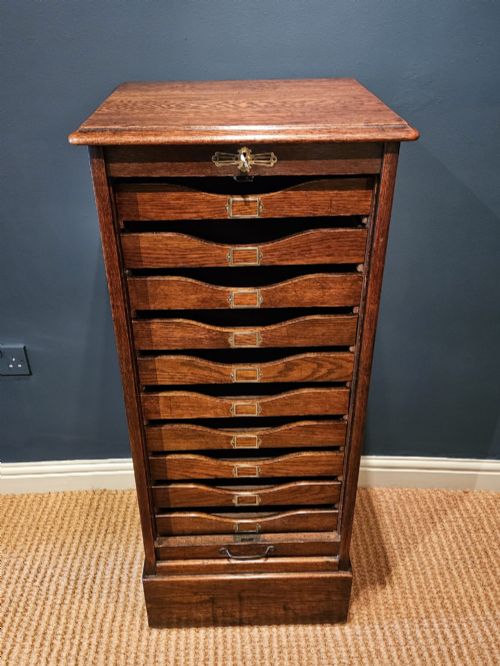
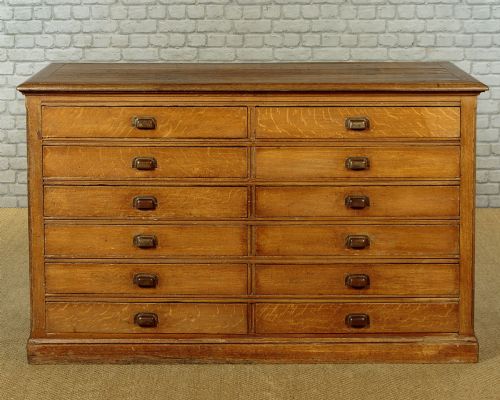
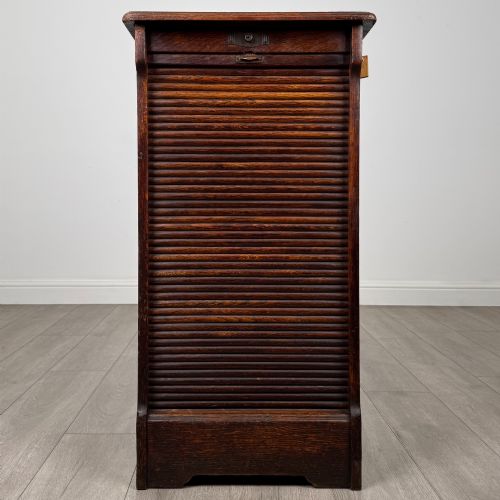
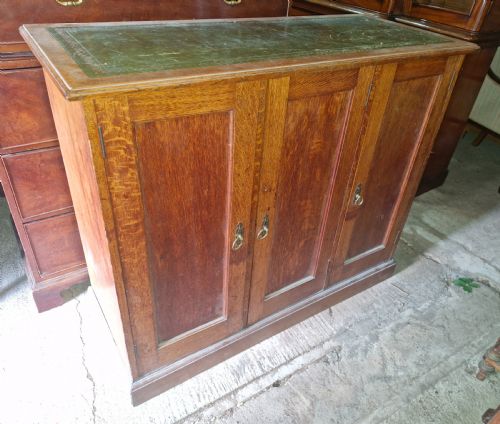
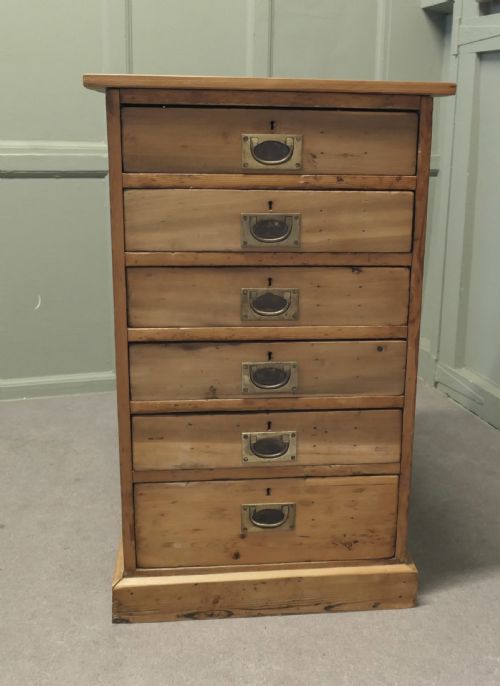
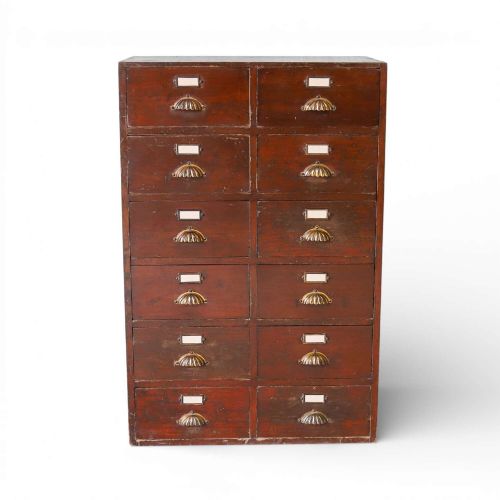
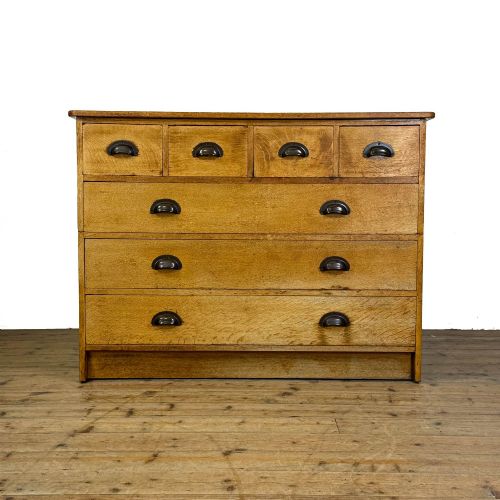
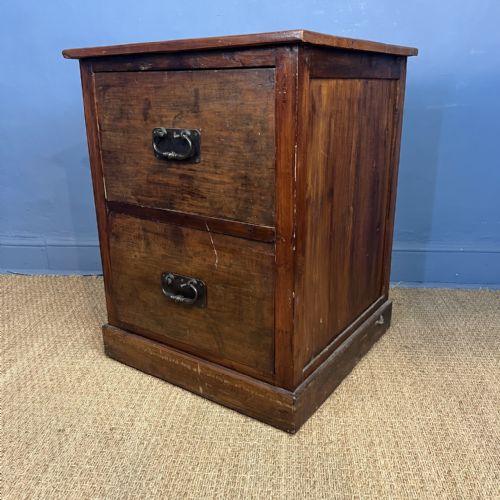
Forms vary considerably from tall banks of drawers and tambour front cabinets to shallow pine filing units and specialised music or folio cabinets. Oak and mahogany dominate the offerings, frequently accompanied by brass label holders and shell pulls that indicate their original clerical purpose.
Origin and stylistic influences stretch from British Edwardian and Victorian workshops to French industrial hubs and Anglo Indian commissions. Buyers regularly find specialised filing systems, such as patent letter files and multi drawer haberdashery units, adapted for contemporary domestic organisation.
Materials and construction methods
Makers relied heavily on durable hardwoods like oak and mahogany, supplemented by utility pine, walnut, and teak for specific regional or functional demands. These timbers provided the structural integrity required for heavy daily clerical use in offices and libraries.
Metal and brass hardware played an integral functional role, appearing as sturdy drawer pulls, label holders, and patent mechanisms that governed tambour fronts and index drawers. Leather elements also surface on specialised pieces like French cartonnier filing cabinets to accent writing surfaces and document slots.
Joinery techniques prioritised longevity, utilising solid timber panels and precise drawer construction to withstand frequent opening and closing in busy institutional environments.
Some nineteenth century filing cabinets still contain forgotten paper index tabs within their brass label holders.
Distinctions in quality and execution
Quality rests upon the selection of timber, such as figured flame mahogany or quarter sawn oak, and the integrity of the original hardware. Pieces retaining their specific period brass shell pulls and legible label holders demonstrate superior preservation.
Sophistication of mechanism separates standard cabinetry from finer examples, particularly in smooth operating tambour fronts and patented letter files by makers like Amberg. The precision of the joinery in multi drawer configurations and haberdashery units dictates the overall calibre of the piece.
The Antique Office Storage Chest Glossary
- Tambour
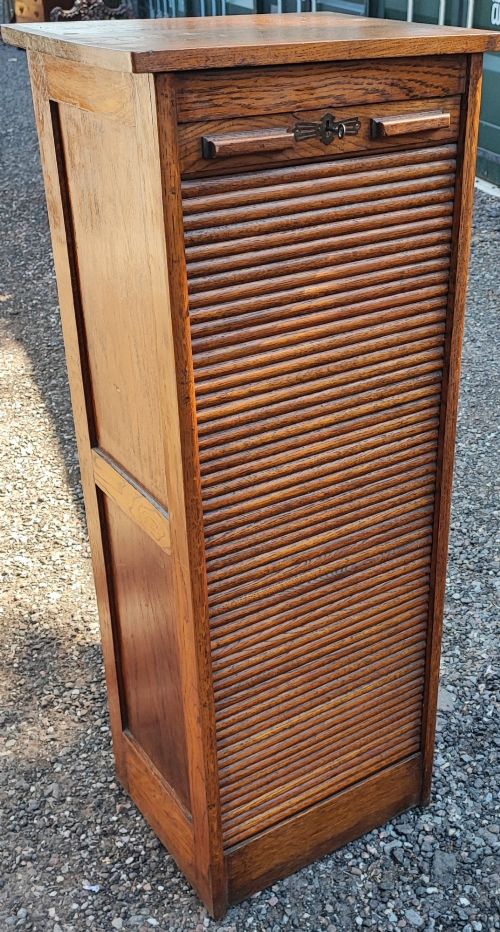
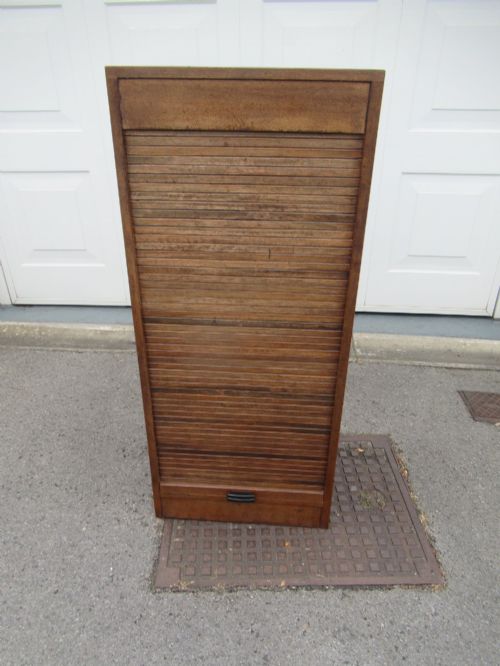
- A flexible sliding door made from narrow strips of wood glued to canvas or leather backing. This mechanism allows the door to track around a curve and conceal filing compartments.
- Cartonnier
- A piece of furniture fitted with tiers of pasteboard boxes or leather covered drawers used for sorting documents and papers. These French storage units often feature rich mahogany and leather accents.
- Haberdashery cabinet
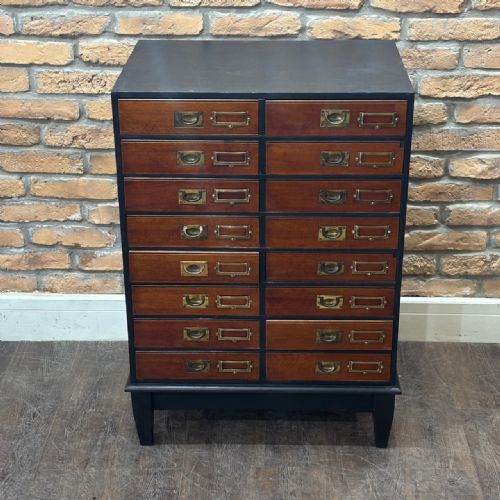
- A multi drawer storage unit originally designed for retail display of small dry goods. These cabinets translate exceptionally well into office storage for organising stationery and craft items.
- Shell pull
- A stamped or cast metal handle shaped like an inverted scallop shell, commonly incorporating a slot for a paper label. They appear frequently on early filing drawers and banks of small drawers.
- Folio cabinet
- A tall storage piece designed specifically to hold large sheets of paper, prints, or maps flat. They offer deep, wide shelving or shallow drawers suited to large format documents.
Antique Office Storage Chest: Frequently Asked Questions
What is a tambour front cabinet?
A tambour front cabinet utilises a flexible door made of narrow wooden slats attached to a backing fabric. This ingenious sliding system allows the door to curve smoothly around the side of the cabinet to reveal interior filing slots.
Such designs proved especially popular during the Edwardian period for office furniture because they saved space by eliminating outward swinging doors in cramped workspaces.
How do I use a bank of drawers?
A bank of drawers provides deep, compartmentalized storage ideal for sorting paperwork, stationery, and small office accessories. Their numerous shallow or medium sized compartments keep loose items separated and instantly accessible.
Living with these pieces involves placing them in a study, kitchen, or hallway where their numerous pulls and label holders add utilitarian character to modern rooms.
Are these cabinets suitable for modern paper sizes?
Many early twentieth century filing cabinets and index drawers accommodate standard modern paper formats like A4 quite comfortably. However, older nineteenth century pieces and specialised furniture may feature compartment dimensions tailored to historical ledger sizes.
Checking internal drawer measurements ensures the storage matches your specific filing requirements before placing documents inside.
How do I distinguish Edwardian from Victorian office furniture?
Victorian office storage frequently employs heavier, darker timbers with robust proportions intended for formal nineteenth century institutions and libraries. Edwardian examples often display slightly lighter construction, brighter oak finishes, and inventive space saving mechanisms like tambour doors.
Examining the hardware, such as brass label holders and shell pulls, also helps date the piece alongside prevailing styles of the era.