
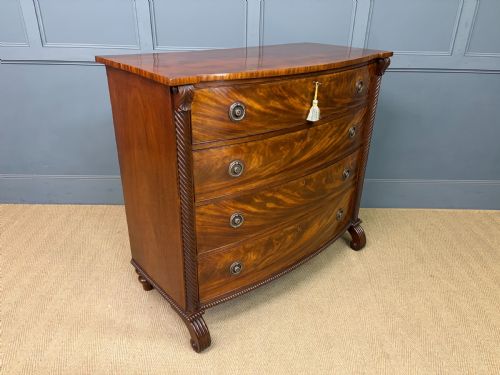
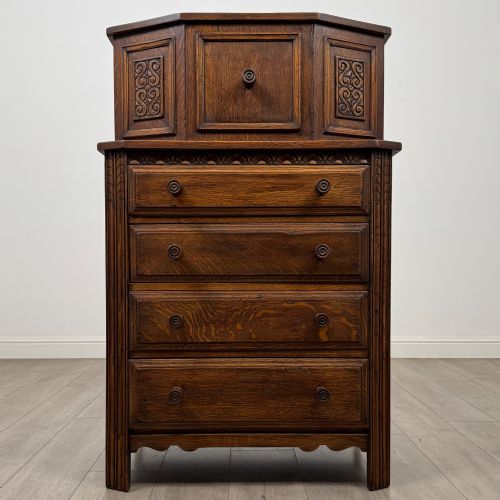
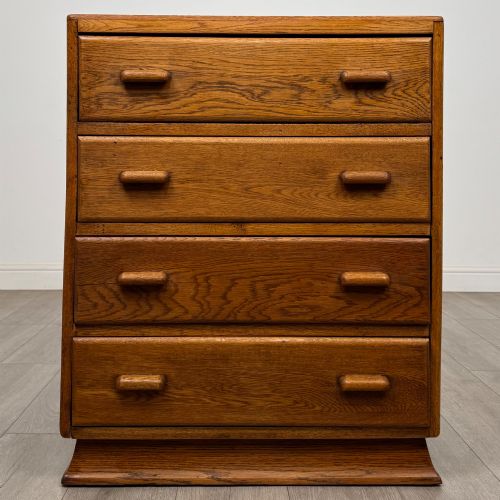
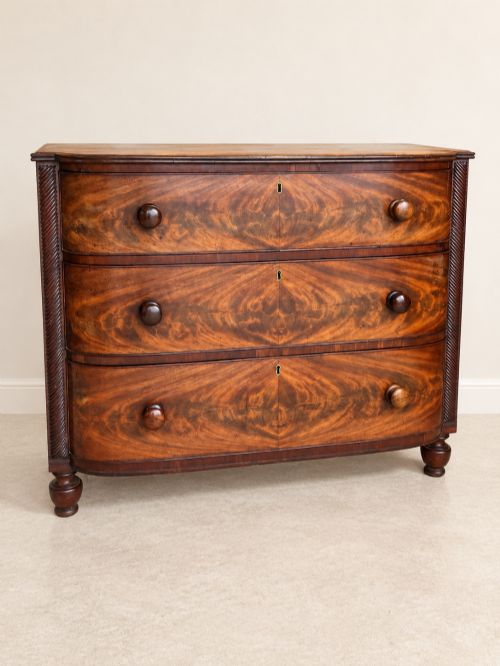
Vintage Wooden Drawers
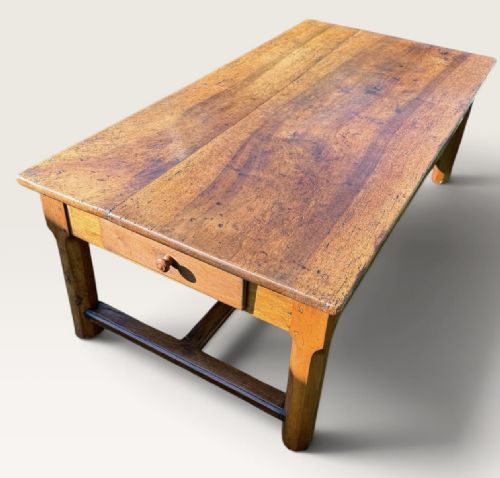
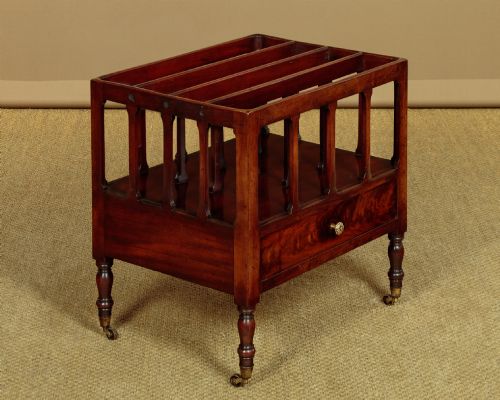
Vintage wooden drawers bring character and practical storage to a room, ranging from robust pine chests to polished mahogany cabinets.
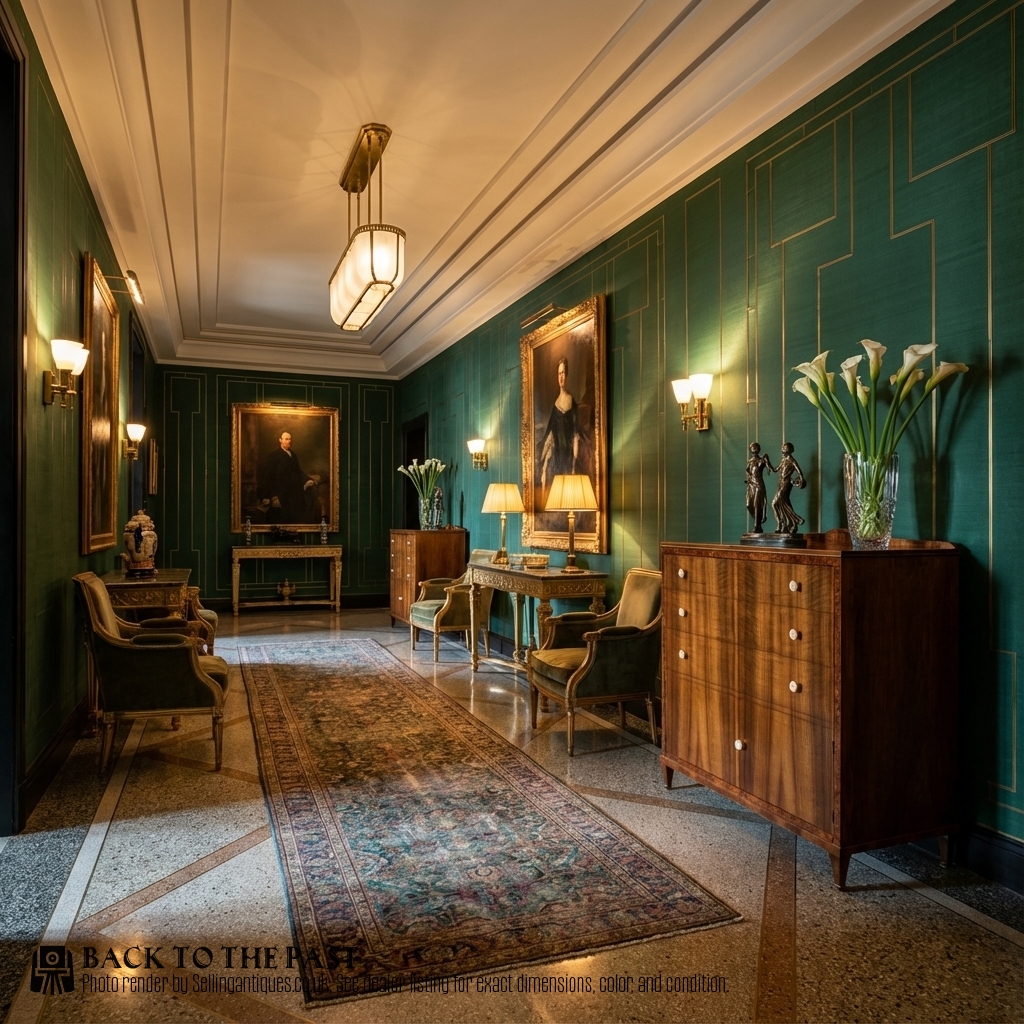
Vintage Wooden Drawers
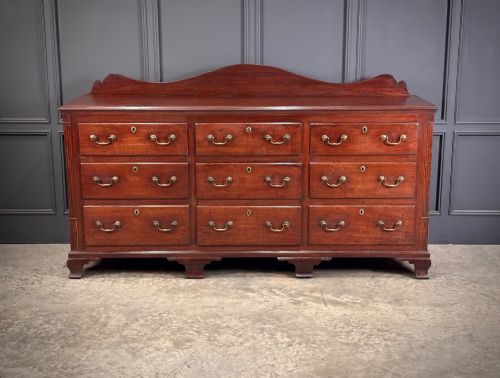
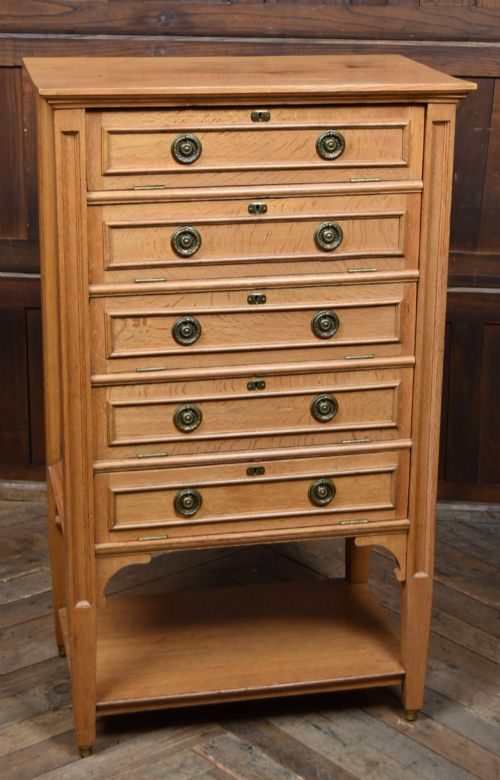
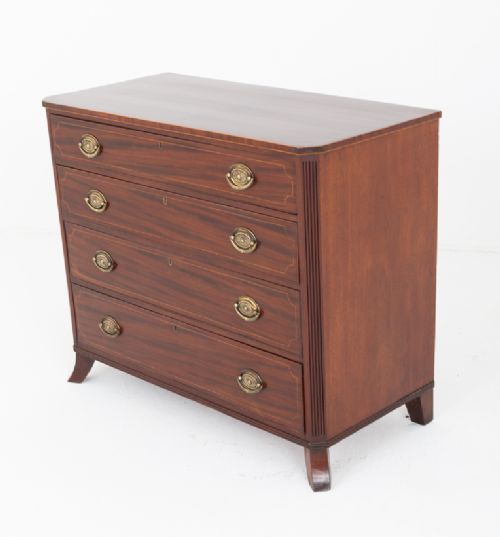
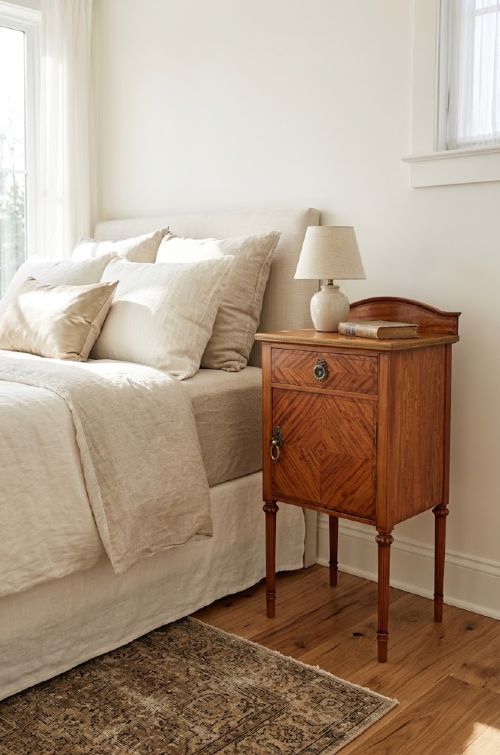
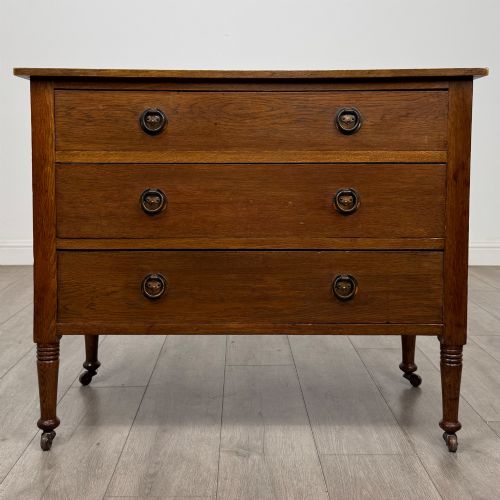
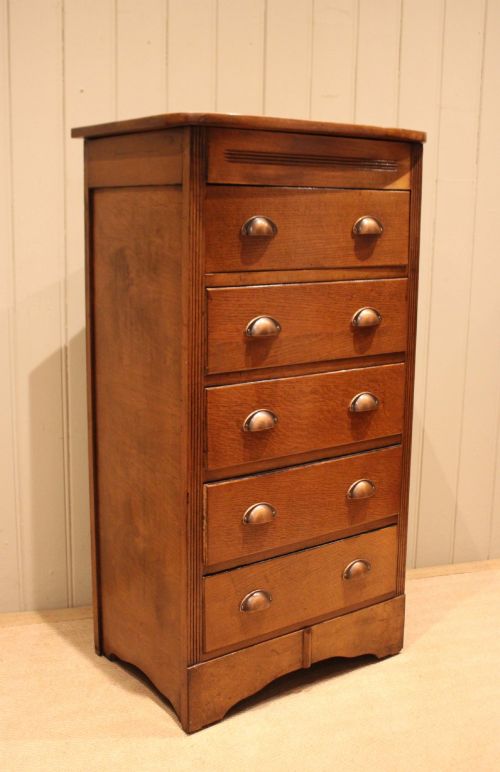
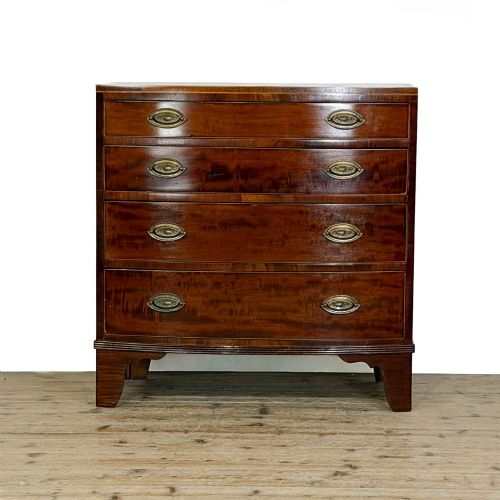
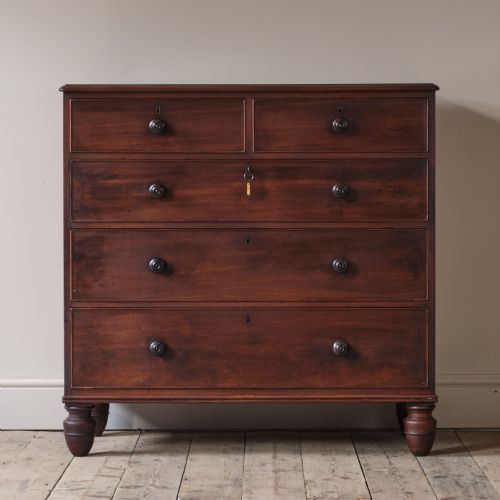
When you search for vintage wooden drawers, you encounter a wide array of storage pieces spanning multiple centuries and regional workshops. The selection here leans heavily towards chest of drawers formats, along with filing cabinets, cupboards, and bedside tables.
The periods represented stretch from the eighteenth century through the Edwardian era and into the Art Deco twentieth century. You find formal mahogany pieces alongside rustic farmhouse pine and oak designs intended for everyday domestic service.
How they were made
Cabinet makers utilised solid timbers such as oak, pine, walnut, and mahogany, often applying flame mahogany or burr walnut veneers to primary display surfaces. These materials provide both structural integrity and striking visual grain patterns.
Hardware typically includes cast brass pulls and handles, while internal construction relies on traditional joinery methods. Secondary timbers line the drawer boxes and backs, supporting the primary wood chassis.
Vintage Wooden Drawers Retail Price Guide 2026
Typical asking prices for vintage wooden drawers among the pieces listed under this phrase on Sellingantiques today, from the lower quarter to the upper quarter. They describe what is for sale here now, not the wider market.
The listings here include oak, pine, mahogany, and walnut woods across Edwardian, Victorian, and Regency periods.
What varies in quality
The standard of timber selection and veneer matching defines the upper tier of these pieces. Fine grain figures in walnut and mahogany command attention, whereas utility pieces in pine prioritise robust function over decorative flourish.
Joinery execution and drawer construction reveal the diligence of the maker. Smooth movement within the carcass and careful dovetail work distinguish superior examples from standard commercial production.
t g seddon·maples & co
The Vintage Wooden Drawers Glossary
- Bow front
- A convex curved front on a chest of drawers or cabinet. This shape requires skilled carpentry to bend wood or shape solid timbers smoothly.
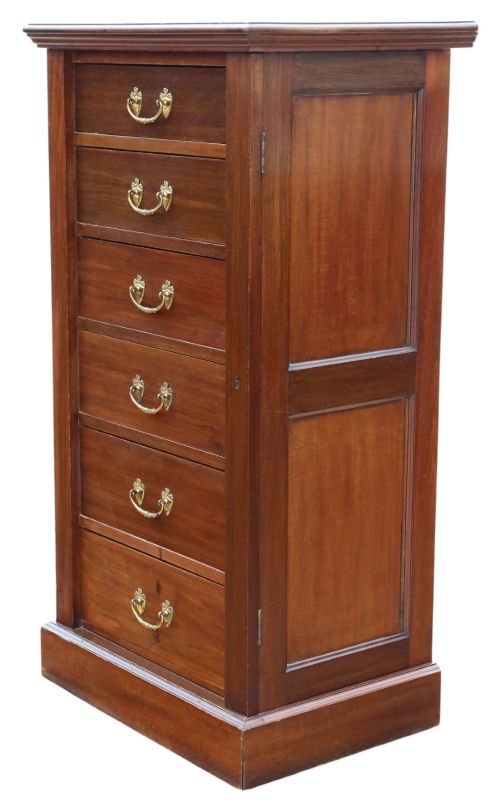
- Wellington chest
- A tall, narrow chest of seven drawers secured by a hinged locking side bar. It originated in the nineteenth century for efficient document storage.
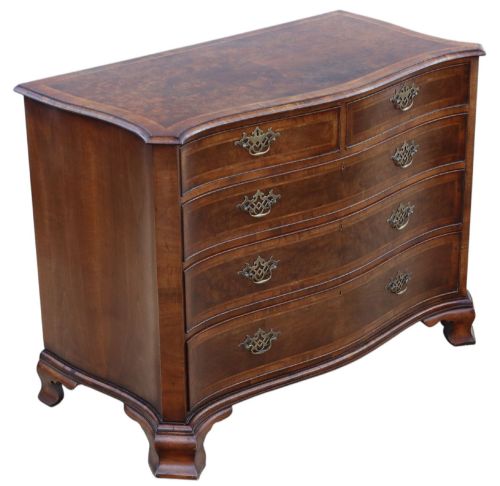
- Serpentine commode
- A chest with a front profile curving inward at the centre and outward at the sides. It represents a more complex form of case furniture.
- Crossbanded
- A decorative border technique where veneer strips run perpendicular to the grain of the central panel. This frames the primary timber surface.
- Brush slide
- A pull-out shelf integrated above the top drawer of a chest. It served as a temporary writing or clothes-brushing surface in Georgian interiors.
Vintage Wooden Drawers: Frequently Asked Questions
How do I date a wooden chest?
Look at the construction methods of the drawer boxes and the type of secondary wood used inside. Machine-cut elements typically indicate a later nineteenth or twentieth century origin, while hand-cut dovetails suggest earlier periods.
Hardware styles and timber choices also offer strong clues. Mahogany and walnut rose to prominence in formal pieces during the Georgian and Victorian eras, whereas pine saw widespread domestic use across the nineteenth century.
Where should I place a tallboy?
A tall chest of drawers works well in bedrooms or hallways where floor space is limited. Their vertical proportions maximise storage capacity without demanding a wide footprint.
Ensure the piece is anchored securely to the wall if it is exceptionally tall or narrow. This prevents tipping, especially when multiple heavy drawers are opened simultaneously.
Can I use a filing cabinet at home?
Antique wooden filing cabinets provide practical storage for paperwork in a home office or living room. Their tambour fronts or stacking drawer formats offer discreet organisation.
Oak and mahogany filing pieces blend traditional furniture aesthetics with modern utility. They suit studies and libraries where standard metal office furniture looks out of place.
What is a commode?
A commode is a decorative chest of drawers or cabinet, often featuring serpentine or bow fronts. Originating in French and English traditions, these pieces served as focal points in reception rooms.
Unlike utility chests intended solely for bedrooms, commodes often display fine burr walnut or crossbanded veneers. They function effectively as side tables or statement storage units in hallways and lounges.