
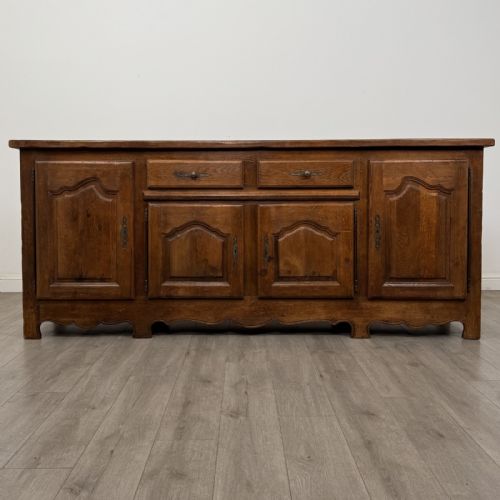
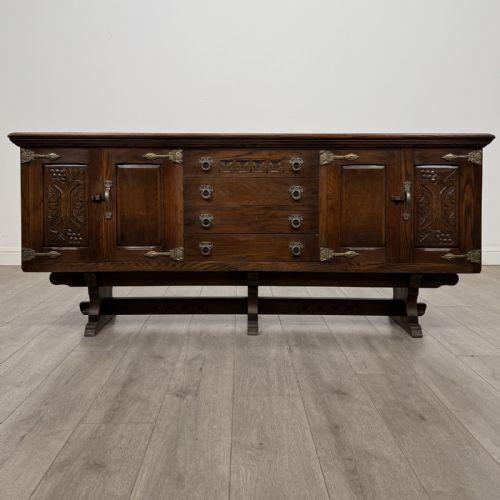
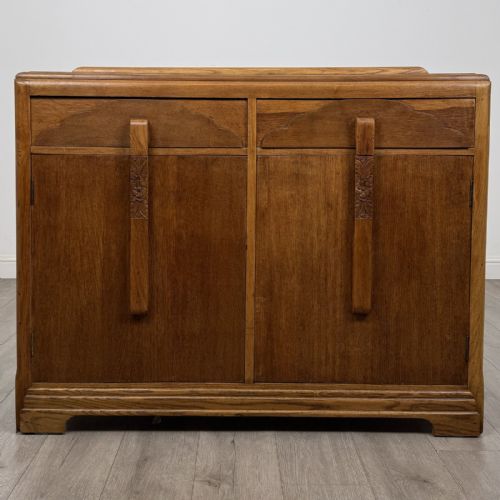
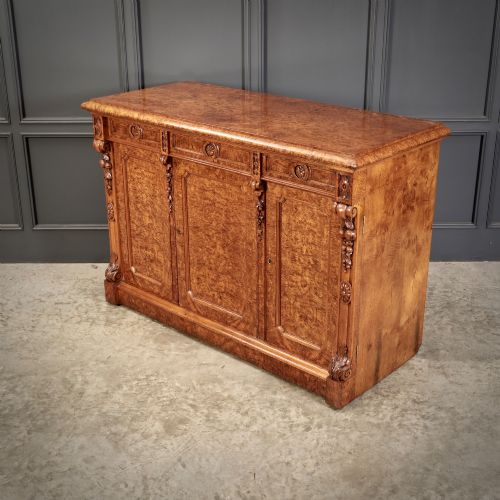
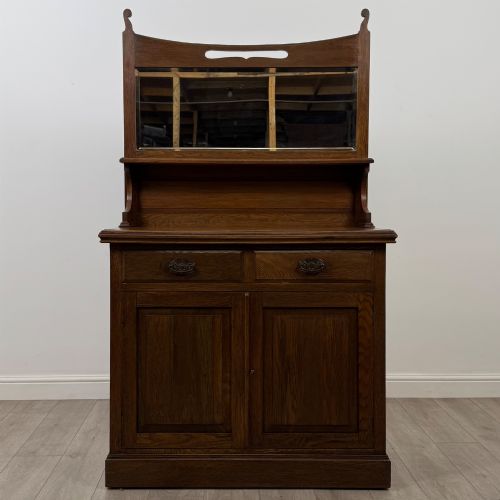
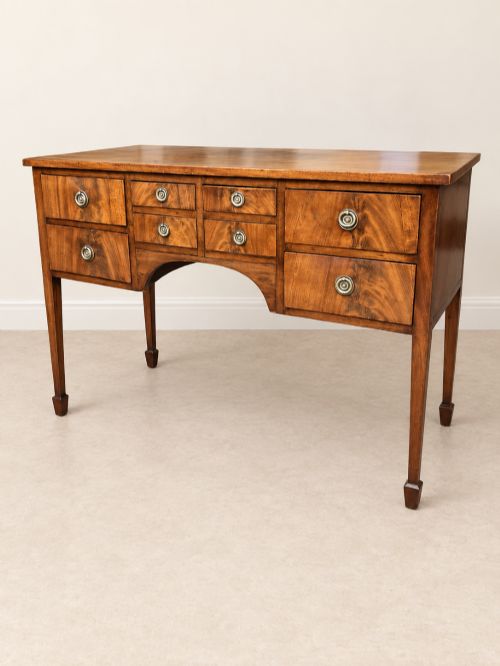
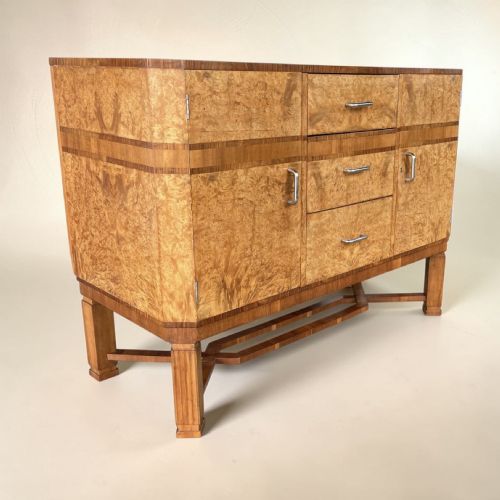
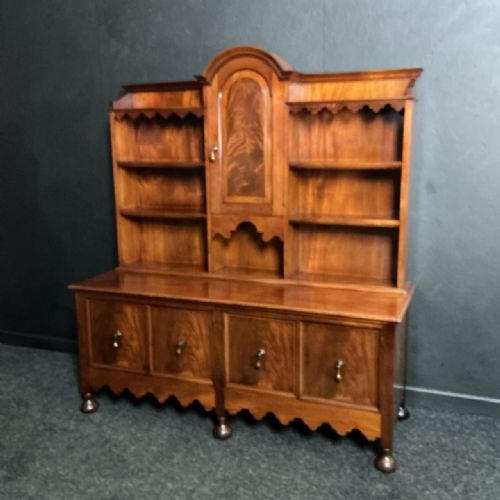
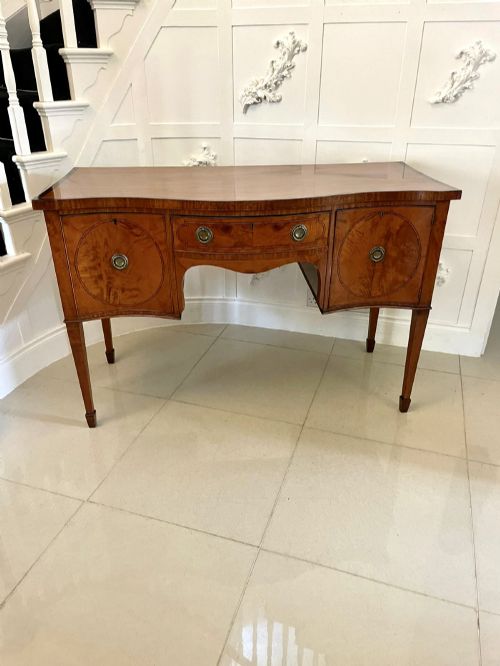
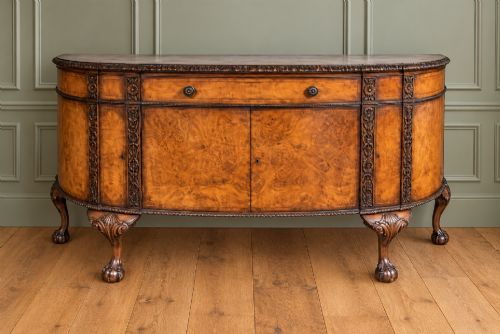
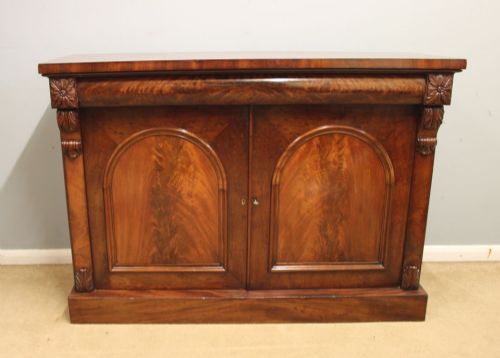
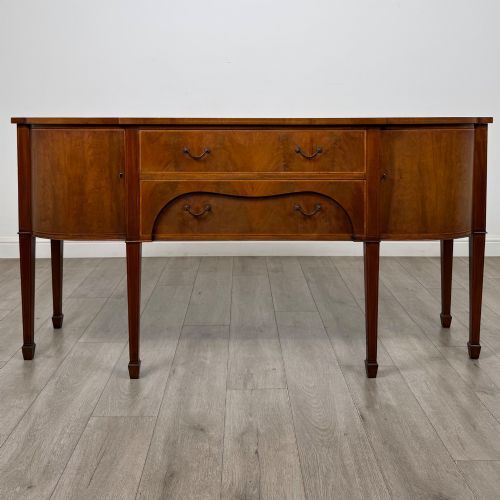
Vintage Wooden Dining Sideboard
A vintage wooden dining sideboard anchors a room with timber grain and history, offering deep storage for silver, linen, and bottles.
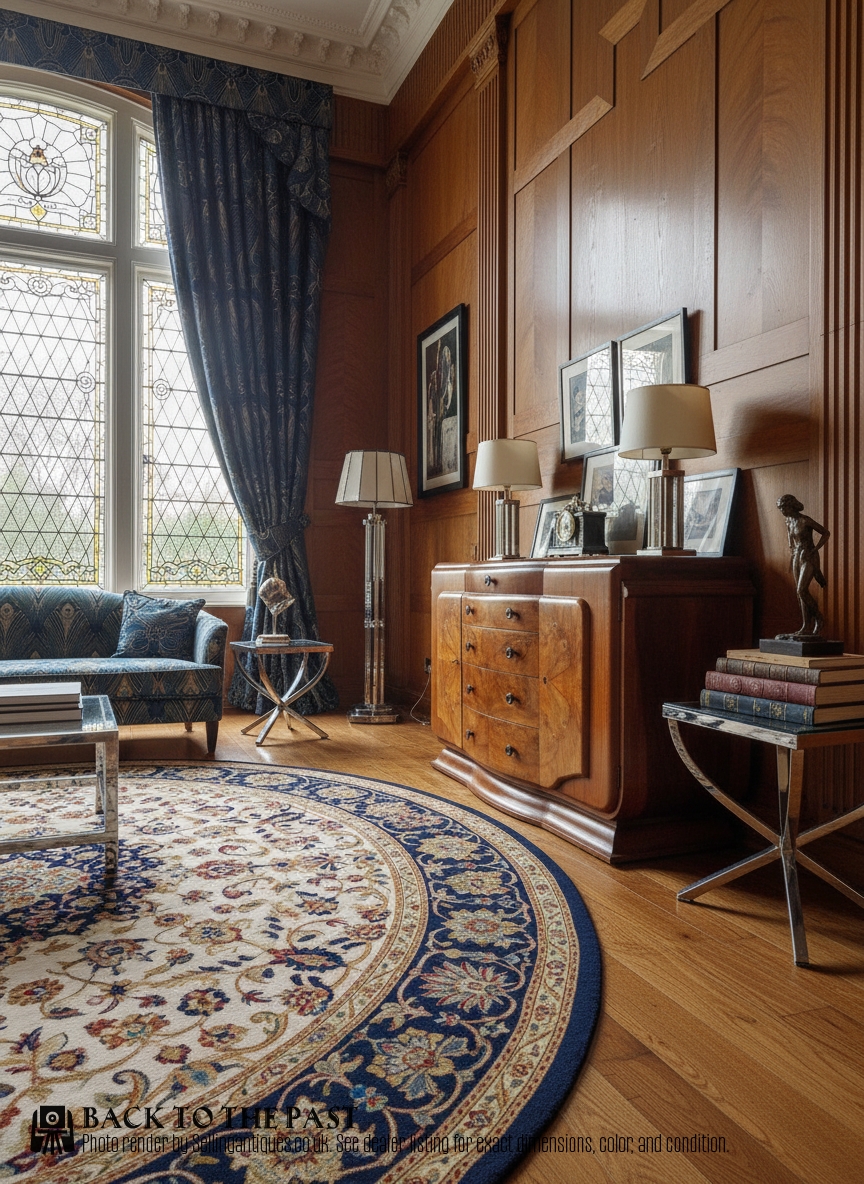
Vintage Wooden Dining Sideboard
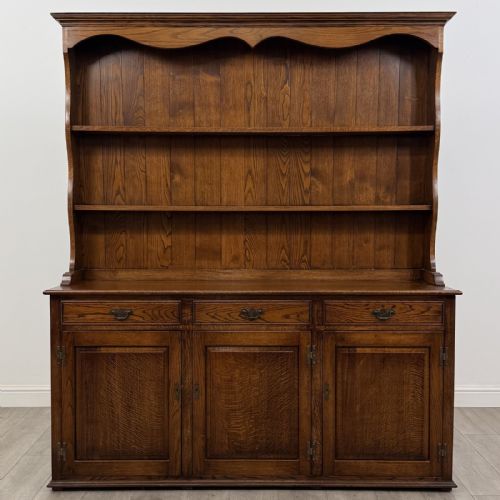
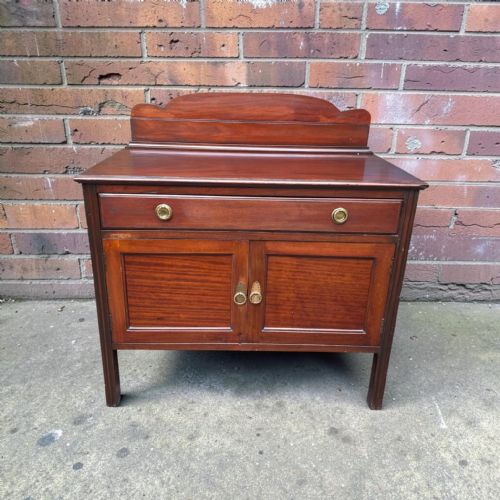
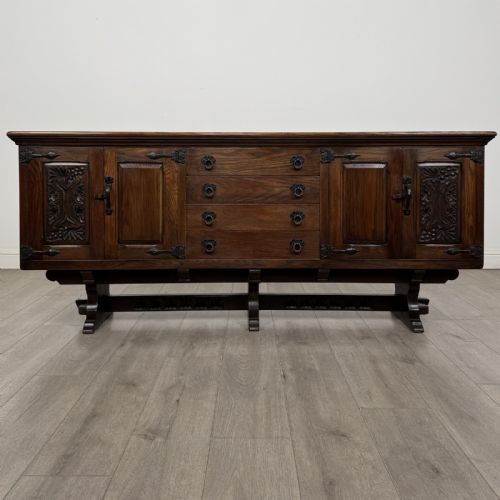
When you search for a vintage wooden dining sideboard, you encounter substantial dining room storage spanning multiple centuries, from Georgian proportions to Art Deco curves. These pieces take the form of sideboards, dressers, chiffoniers, and cabinets designed to serve meals and store dining room wares.
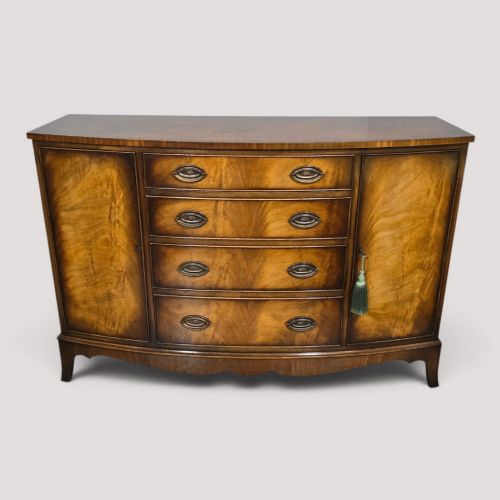
The selections on this page are dominated by mahogany and oak examples from the Edwardian era, the Victorian period, and the 1930s. You will find both formal bow-front designs with marquetry inlay and sturdy carved oak pieces meant for everyday domestic use.
Makers and designers range from individual cabinet makers to notable firms such as Maurice Adams, Gomme, and Hille, alongside revival styles looking back to Sheraton and Regency forms. Each variant serves the traditional purpose of holding tableware while defining the aesthetic of a dining space.
What varies in quality
Quality rests upon timber selection and the precision of the cabinet work, particularly how veneers are matched across drawer banks and cupboard doors. Superior examples display continuous grain patterns that flow across the front of the piece, whereas simpler items utilise standard boards.
The finesse of secondary details marks the difference between standard production and master craftsmanship. Hand-carved mouldings, tightly fitted dovetail joints in the drawer construction, and original brass hardware elevate the standing of a piece.
Listings feature oak, mahogany, satinwood, and walnut timbers spanning the Georgian, Victorian, Edwardian, and Art Deco periods.
Maurice Adams·Gomme·Hille·M. D. Miller & Sons
The Vintage Wooden Dining Sideboard Glossary
- Bow front
- A convex curved cabinet front that projects outward in the centre, popular in Regency and Sheraton Revival designs.
- Chiffonier
- A compact sideboard or low cupboard, often featuring a small shelf or mirror superstructure on top.
- Breakfront
- A cabinet design where the central section projects forward from the flanking outer cupboards.
- Serpentine
- A shaped furniture front featuring a concave centre flanked by convex curves, requiring advanced woodworking skill.
- Marquetry
- Decorative patterns formed by inserting thin slices of different coloured wood into a veneered surface.
Vintage Wooden Dining Sideboard: Frequently Asked Questions
How do I clean a mahogany sideboard?
Dust regularly with a soft, dry cloth to prevent particulate build-up on the polished surface. Apply natural beeswax periodically to nourish the timber and maintain a soft sheen without using silicone sprays.
Avoid placing wooden furniture near direct heat sources or in strong sunlight, which can dry out the timber and fade the rich mahogany colour over decades of use.
What is the difference between a sideboard and a chiffonier?
A sideboard is typically a long, low piece designed specifically for dining rooms to serve food and store heavy tableware. It offers substantial cupboard and drawer space.
A chiffonier is generally smaller and often includes an upper tier with shelves or a mirror, originally intended for displaying silver and glassware in more compact rooms.
How do I identify a Georgian style piece?
Georgian style pieces display classical proportions, restrained symmetry, and sophisticated timber selection such as flame mahogany. They often feature subtle stringing inlay or brass ring handles rather than heavy carving.
Many pieces found today are Edwardian or later reproductions built in the Georgian manner, identifiable by secondary wood framing and modern internal construction methods.